Fashion Scout concluded its three-part Ones To Watch programme with seven emerging designers taking to the London Fashion Week runway for the final showcase of its 20th anniversary season. Presented at Protein Studios in Shoreditch, Edition 03 brought together BAM-BAM, Diamanté by Venuka, Hurricane B, KOFFI MAAKO, NMCG, Raxada and Yukito Lim, whose collections explored everything from Sri Lankan textile traditions and Ghanaian architecture to Irish religious symbolism, reconstructed garments and experimental streetwear.
The closing edition highlighted the different ways independent designers are approaching cultural identity, craftsmanship and personal expression. Rather than establishing a shared aesthetic, the programme allowed each participant to develop a distinct visual language through materials, construction and individual creative references.
BAM-BAM: Illustration Becomes Wearable Identity
Mixed-heritage British designer BAM-BAM, now based in Indonesia, approaches fashion as an extension of artistic expression.
The designer’s self-developed technique, described as Abstract Cubist Patternism, transforms hand-drawn illustrations into garments that combine tailored streetwear with original artwork.
Working with a small team of artisans, BAM-BAM treats clothing as a surface for visual storytelling, allowing illustration and garment construction to develop alongside one another.
The approach challenges the separation between fashion design and graphic art. Rather than treating printed imagery as an additional decorative element, the designer makes it central to the identity of each piece.
Diamanté by Venuka: Sri Lankan Craft in Contemporary Luxury
For Diamanté by Venuka, cultural heritage provides the foundation for a practice concerned with textile manipulation and sculptural construction.
Founded by Sri Lankan-born, England-based designer Venuka Wickramaarachchi, the label incorporates traditional techniques including Beeralu bobbin lace and Dumbara Rata weaving.
Both techniques carry specific connections to Sri Lankan craftsmanship, but Wickramaarachchi brings them into a contemporary fashion context through experimental silhouettes and manipulated textile surfaces.
The collection demonstrates how traditional making processes can remain relevant beyond their original applications. Rather than reproducing historical garments, Diamanté by Venuka explores the possibilities of bringing inherited textile knowledge into a modern luxury wardrobe.
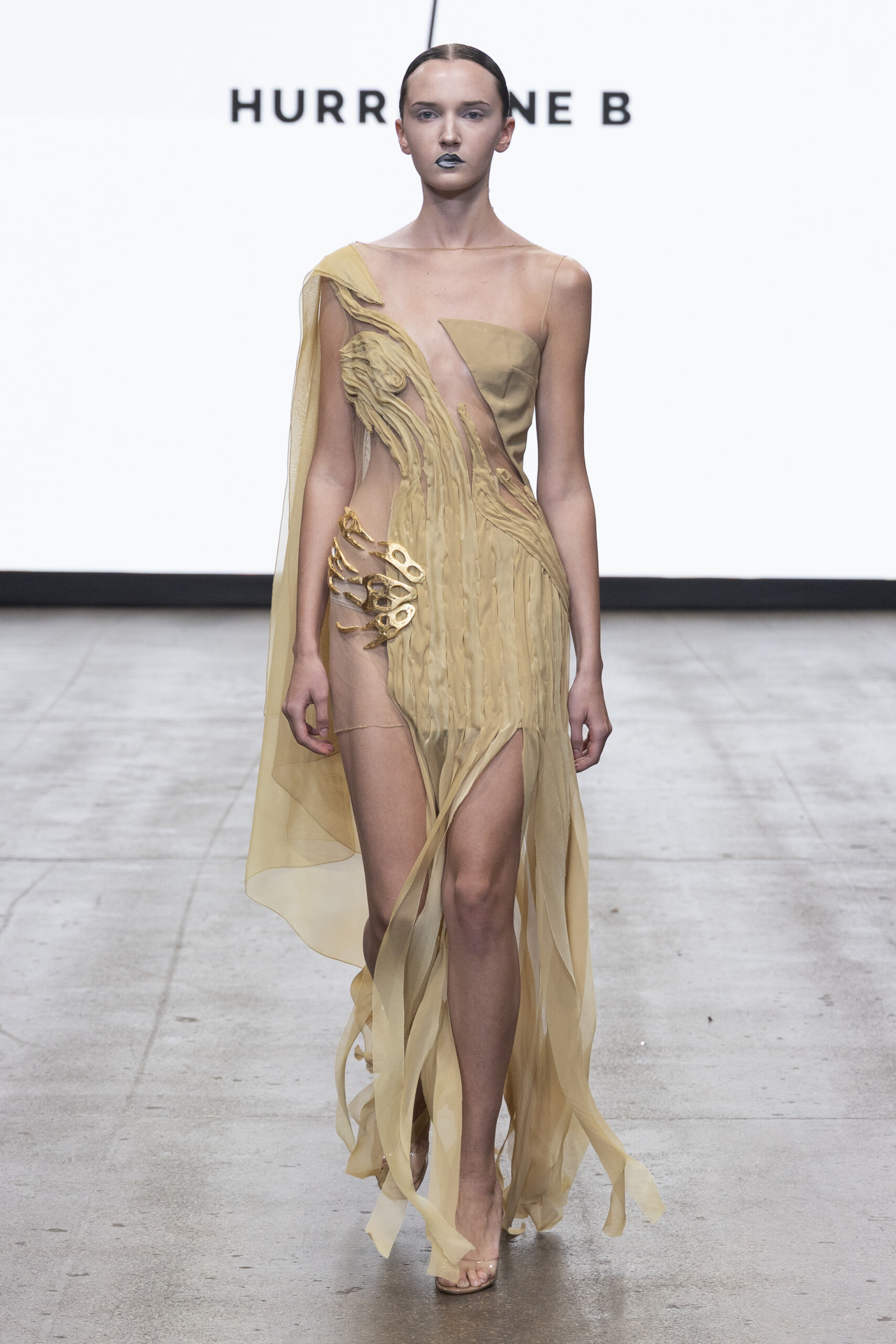
Hurricane B: A Sculptural Approach to Femininity
Established in Italy in 2018, Hurricane B approaches contemporary womenswear through the relationship between strength, sensuality and sculptural form.
The brand combines Italian craftsmanship with a futuristic design language, using experimental detailing, refined materials and assertive silhouettes to explore femininity.
Its position between fashion, art and design is reflected in the emphasis placed on construction and proportion.
Rather than relying solely on surface decoration, Hurricane B uses the shape of the garment itself to establish visual presence, treating the silhouette as an expressive object.
KOFFI MAAKO: Ghanaian Architecture in Fashion
Ghanaian designer Mako Akolam, founder of KOFFI MAAKO, turns to architecture and cultural identity as foundations for contemporary clothing.
The label draws particular inspiration from the geometric language of Gurunsi architecture, translating structural references into proportions, garment construction and handcrafted details.
Architectural influence becomes part of the design process rather than simply an applied pattern. The relationship between geometric form and the human body provides a framework through which Akolam examines silhouette and cultural storytelling.
KOFFI MAAKO works through made-to-order and limited production, allowing individual garments to develop as both functional pieces and expressions of the designer’s wider visual language.
The result connects Ghanaian architectural heritage with contemporary fashion construction without reducing its cultural references to ornament alone.
NMCG: Between Catholic Ceremony and Youth Culture
Irish designer Niamh McGovern uses NMCG to explore the tension between traditional Catholic ceremony and contemporary youth culture.
Corsetry and tailoring provide the structural foundation for exaggerated, playful silhouettes that reinterpret familiar religious and ceremonial references.
The collection considers the relationship between inherited symbolism and personal identity, particularly the ways younger generations negotiate traditions that have shaped their cultural environment.
That tension becomes visible through the contrast between controlled construction and more expressive proportions.
Rather than presenting tradition as something entirely rejected or unquestioningly preserved, NMCG places it within a contemporary conversation about memory, belief and individual freedom.
Raxada: Preserving the Craft Traditions of Asturias
Spanish label Raxada, founded by María Puente Silva and Marina Palacio Silva, draws on the landscapes, mythology and ancestral craftsmanship of Asturias in northern Spain.
Working closely with local artisans, the designers reinterpret regional techniques through contemporary garments, bringing traditional knowledge into a new design setting.
The collaboration with craftspeople is particularly significant to the label’s approach. It allows techniques connected to a specific place and cultural history to remain active through their application to new forms.
Rather than using Asturias simply as a source of visual inspiration, Raxada connects regional identity to the physical processes through which its clothing is made.
The resulting practice positions fashion as a means of cultural continuity, where craftsmanship can evolve without losing its relationship to the communities and traditions from which it emerged.
Yukito Lim: Reconstructing Memory Through Material
London-based designer Yukito Lim takes a more material-led approach, exploring memory, displacement and the emotional relationship between clothing and the body.
Deadstock fabrics, second-hand garments and discarded materials form the starting point for pieces reconstructed through experimental textile techniques.
Rather than attempting to conceal their previous existence, Lim allows traces of earlier garments to remain part of the new designs.
These fragments become both material resources and elements of the collection’s narrative, connecting the physical act of reconstruction with questions about identity and personal history.
The resulting sculptural forms suggest that reuse can involve more than extending the life of a textile. It can also preserve evidence of what the material once was, allowing past and present to occupy the same garment.
Twenty Years of Discovering New Fashion Talent
Edition 03 marked the conclusion of Fashion Scout’s anniversary Ones To Watch programme, following two earlier showcases during London Fashion Week.
Across the three editions, the platform brought together designers working through very different creative methods, from digital fabrication and textile experimentation to tailoring, cultural preservation and conceptual fashion.
According to Fashion Scout, the organisation has supported more than 1,500 designers from over 70 countries during its two decades of activity, providing access to professional runway production and opportunities for international industry exposure.
For emerging labels, a platform of this kind offers an opportunity to present an individual design identity within the professional context of London Fashion Week.
The final edition illustrated that purpose through contrast. BAM-BAM’s illustration-led streetwear sat alongside Sri Lankan textile craftsmanship, Ghanaian architectural references, Irish ceremonial symbolism and material reconstruction.
Hurricane B, Raxada and Yukito Lim similarly demonstrated that contemporary design can emerge from different relationships with form, place and existing materials.
What connected the seven collections was not a common interpretation of Spring/Summer 2027, but the decision to develop individual creative perspectives rather than follow a single seasonal formula.
For Fashion Scout, closing its 20th anniversary Ones To Watch programme with such a varied group reinforced the value of providing emerging designers with a platform on which their differences can remain visible.
Show Credits
The presentation was produced by Fashion Scout, with show production led by Martyn Roberts and styling by Rebekah Roy. Hair was supported by Sally Beauty and UNITE Hair, led by Narad Kutowaroo, UK Creative Director and Ambassador for UNITE Hair. Make-up was led by Mandy Gakhal for AOFM Makeup Academy. Black PR Global handled PR, with backstage food provided by People Pleaser Salads and steamers by Propress. Photography was by Chris Yates (@itschrisyates).
Fashion Frontier is a London-based digital fashion magazine exploring the edge of modern style, creativity, and culture. The platform features designer lookbooks, runway reports, event coverage, and stories redefining the future of fashion in the UK and beyond.







Post a comment