


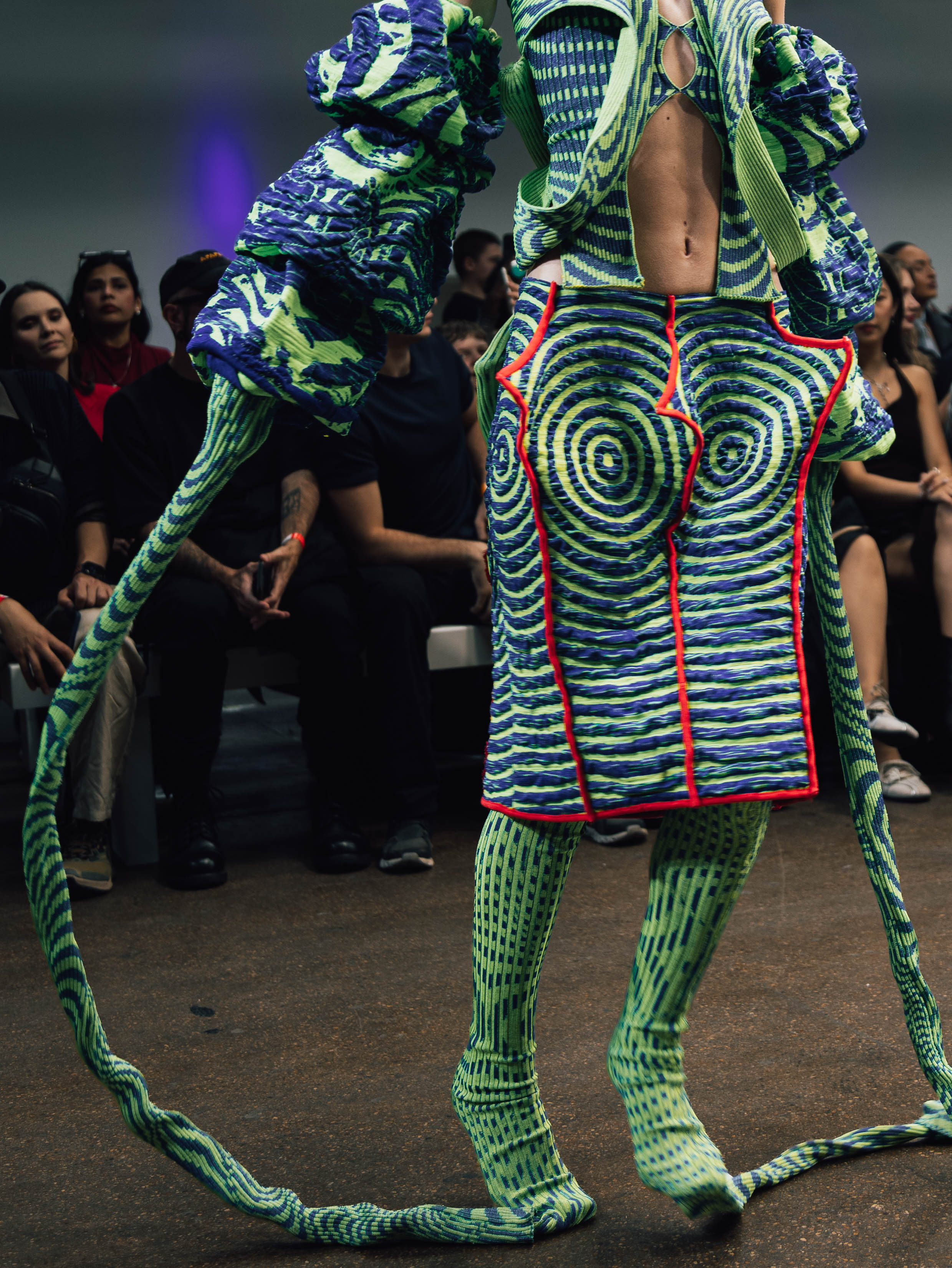
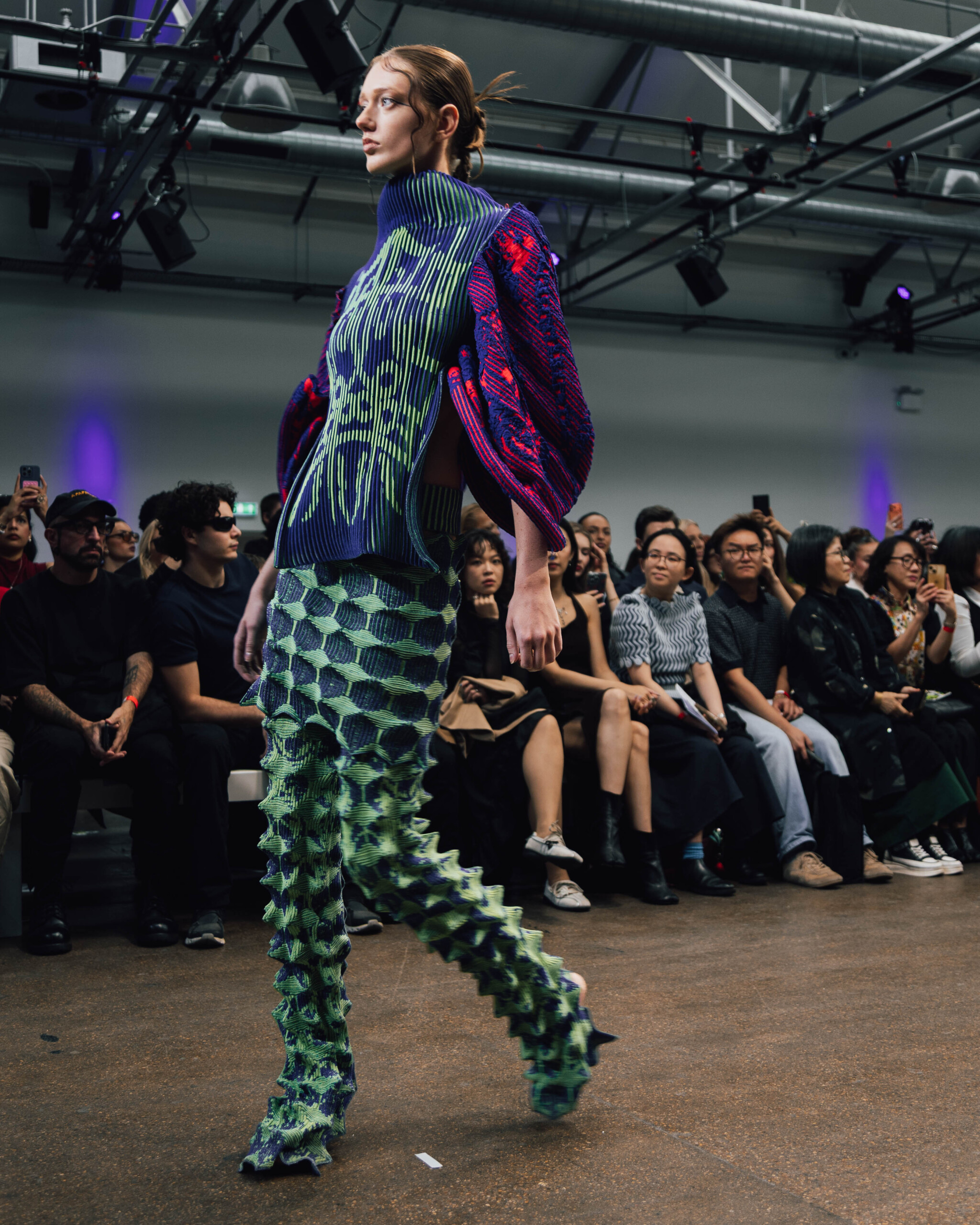
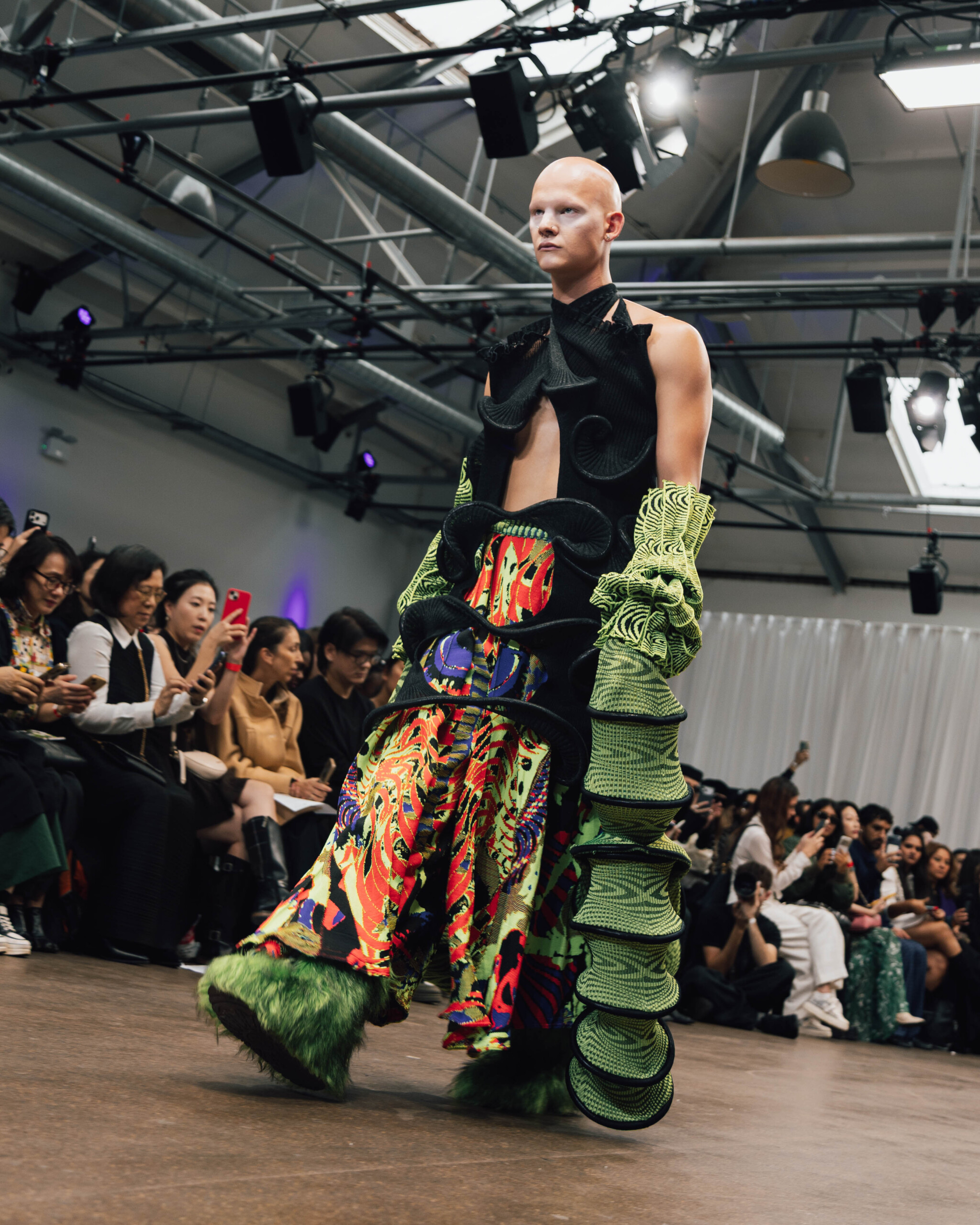
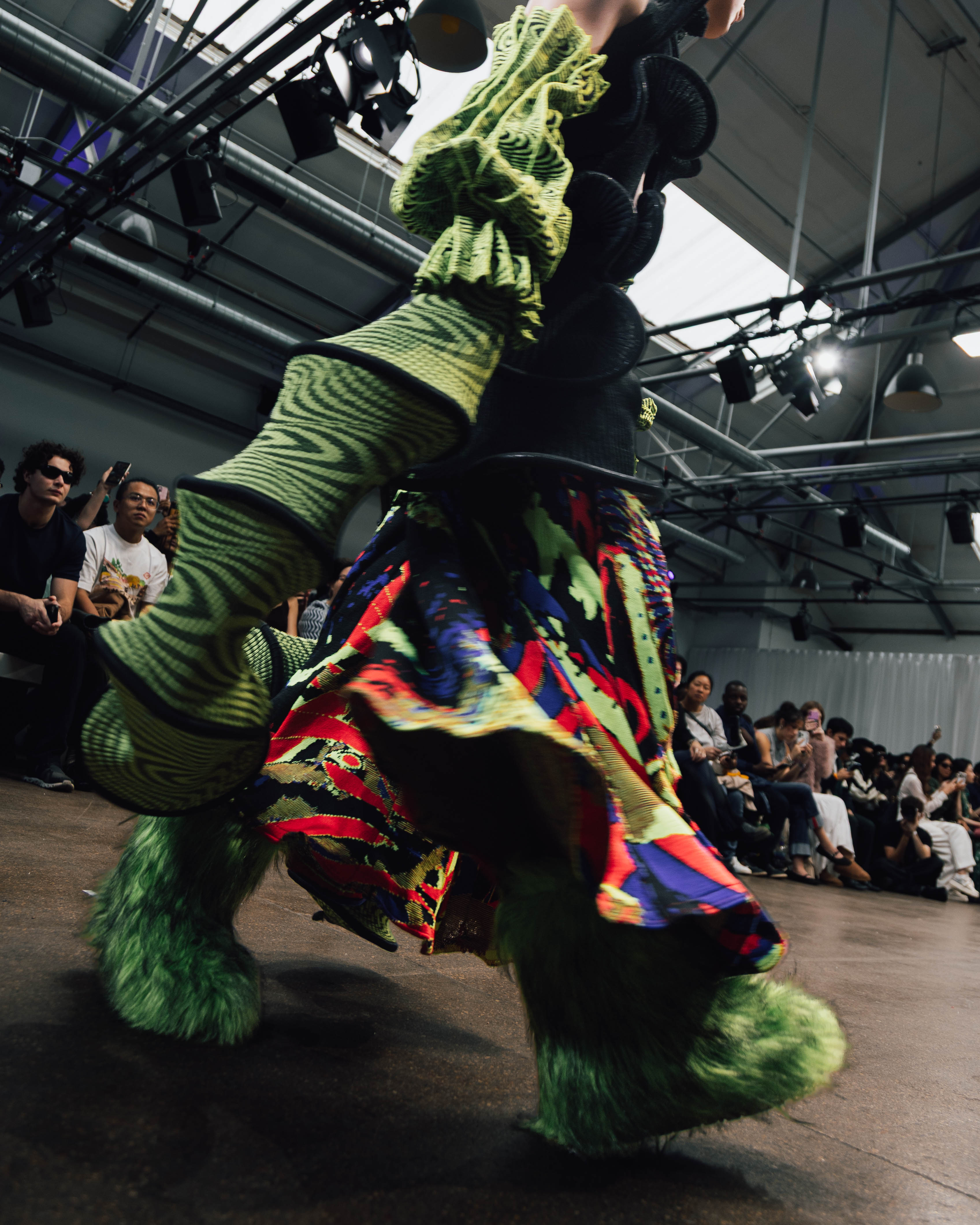
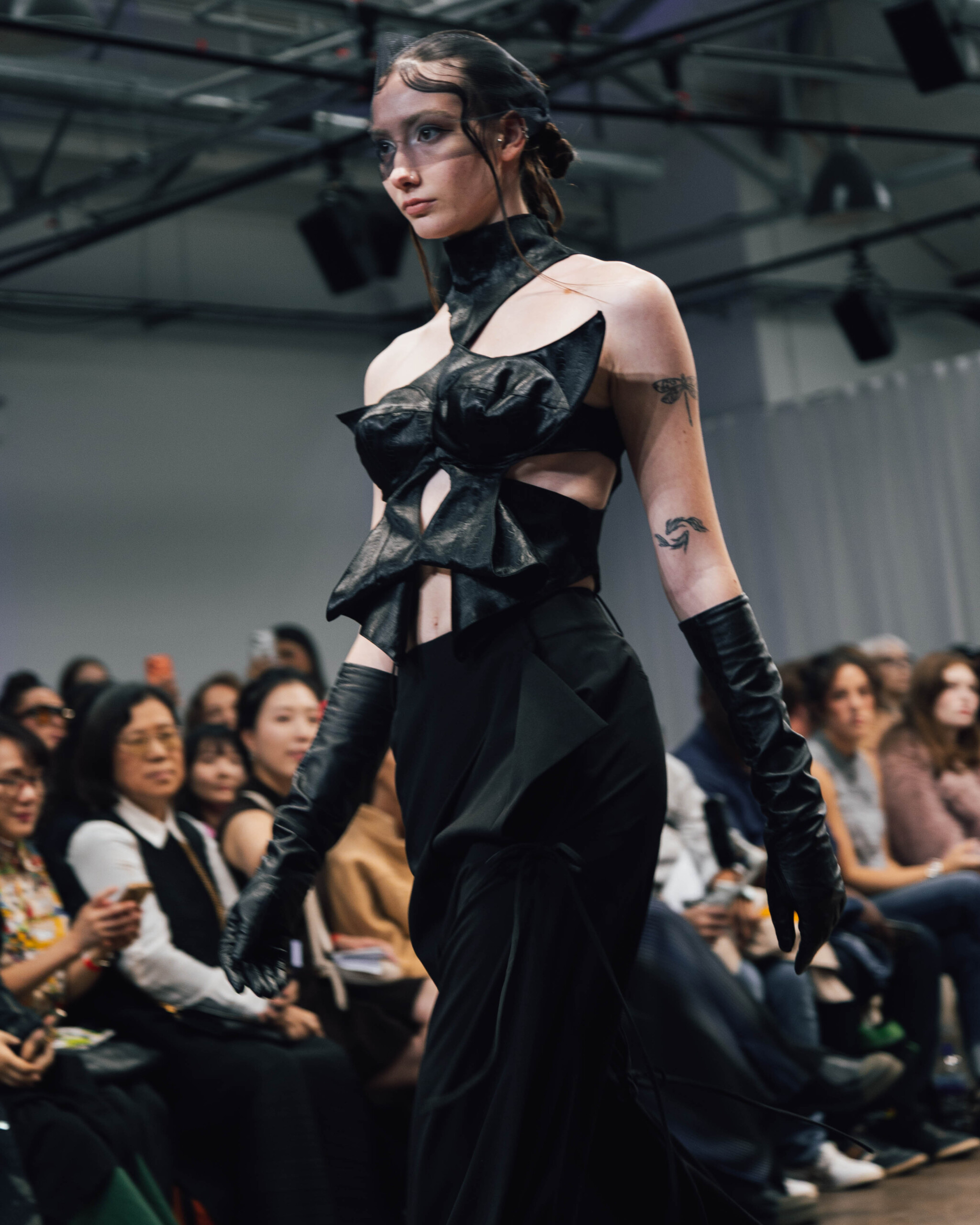
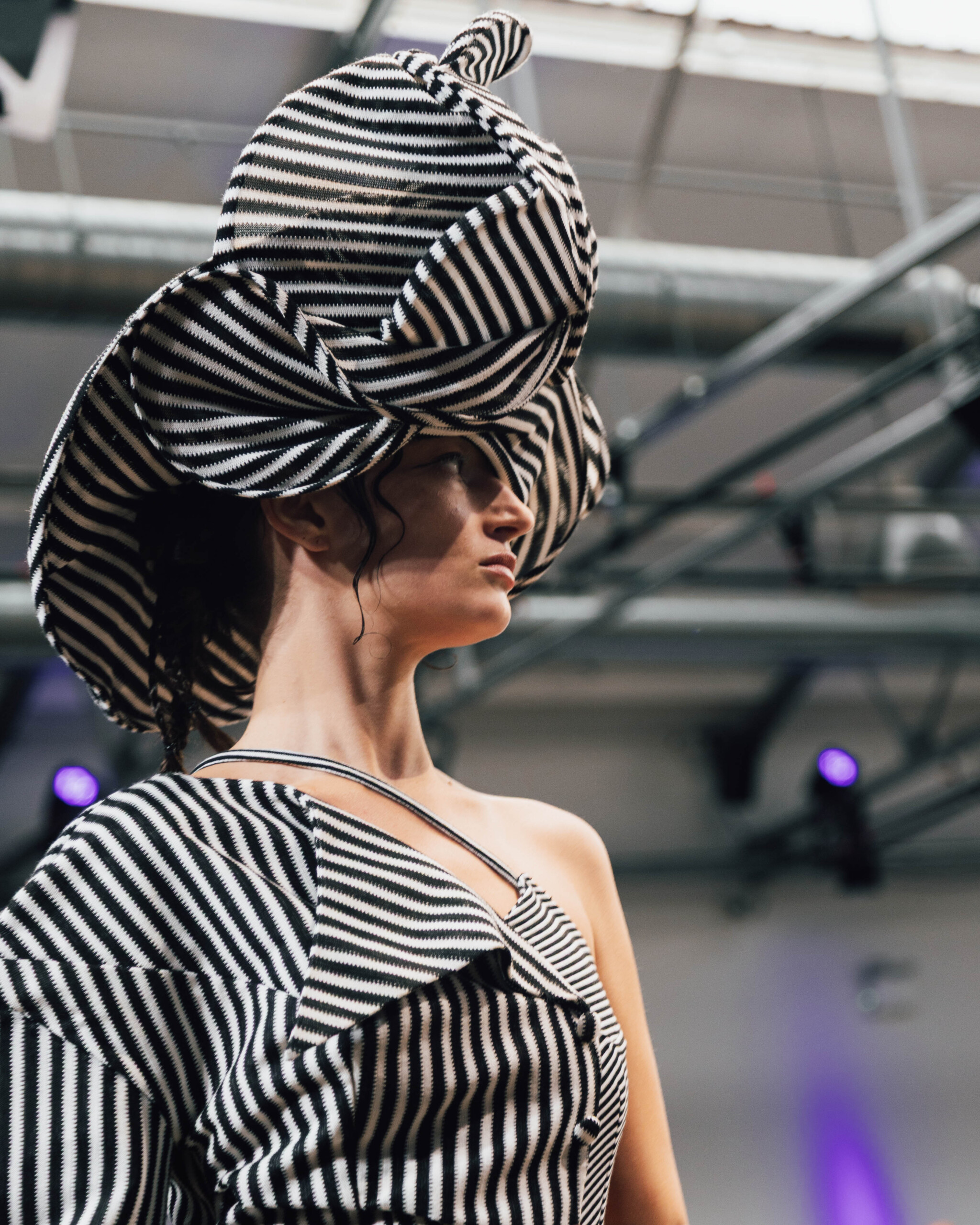
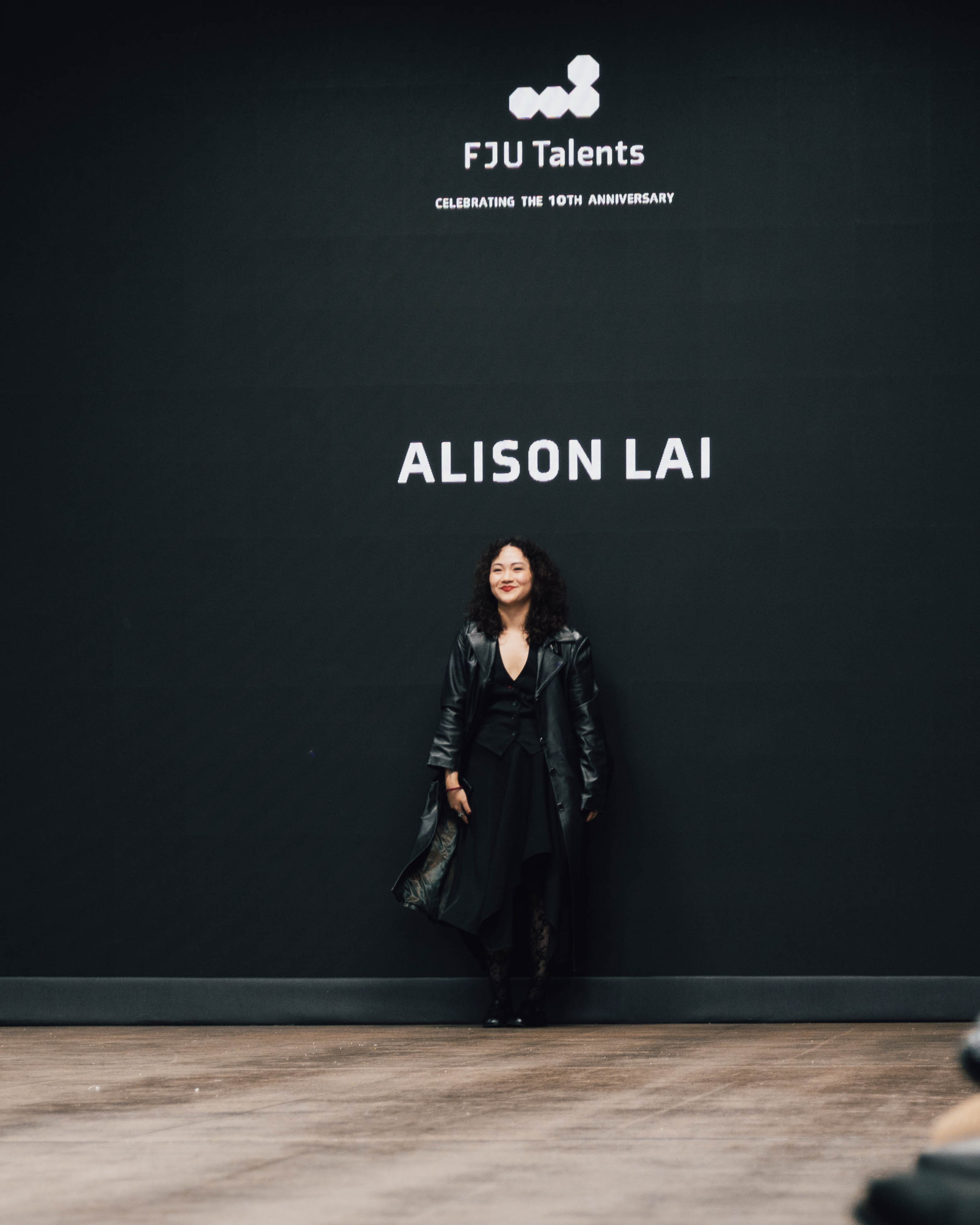
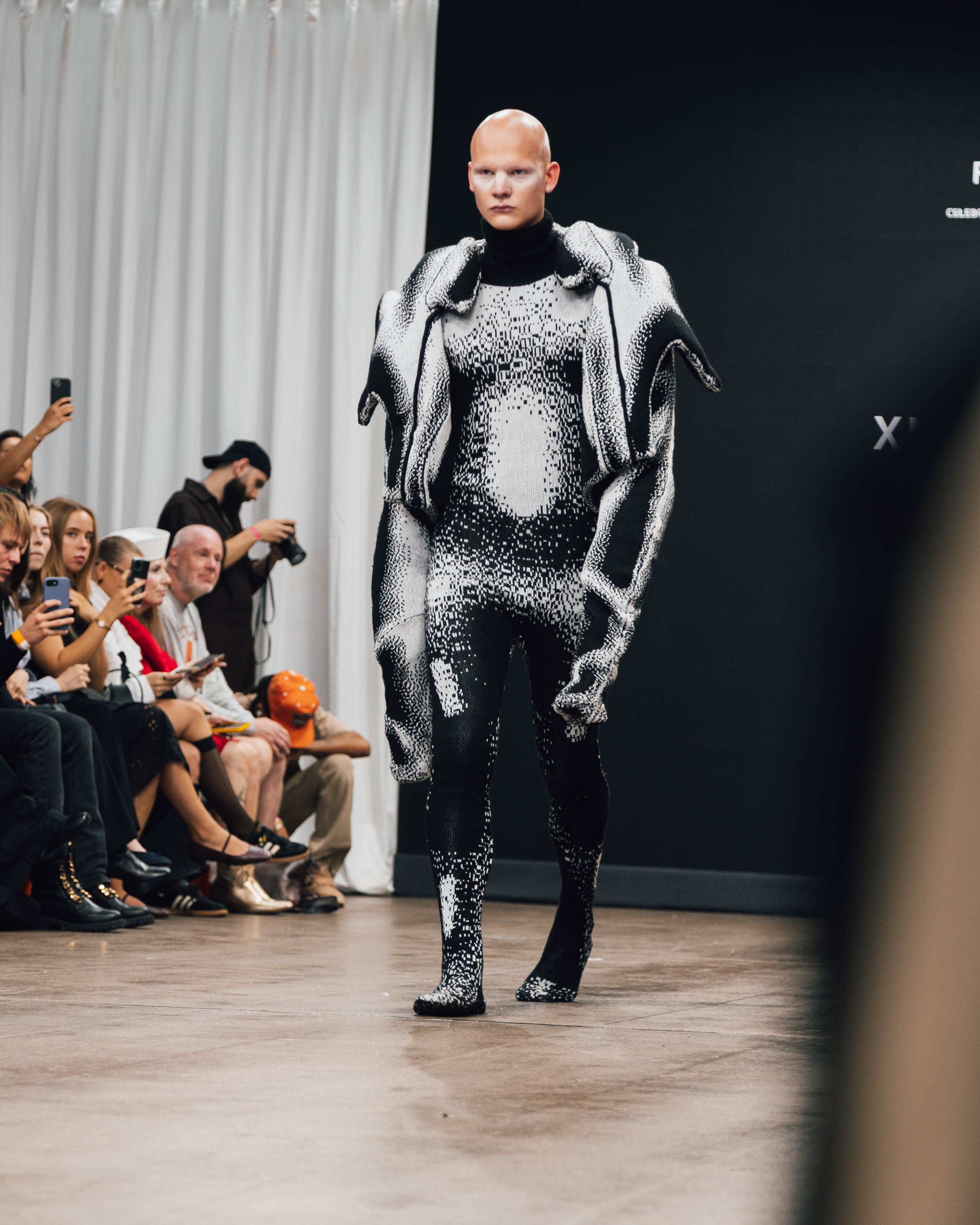
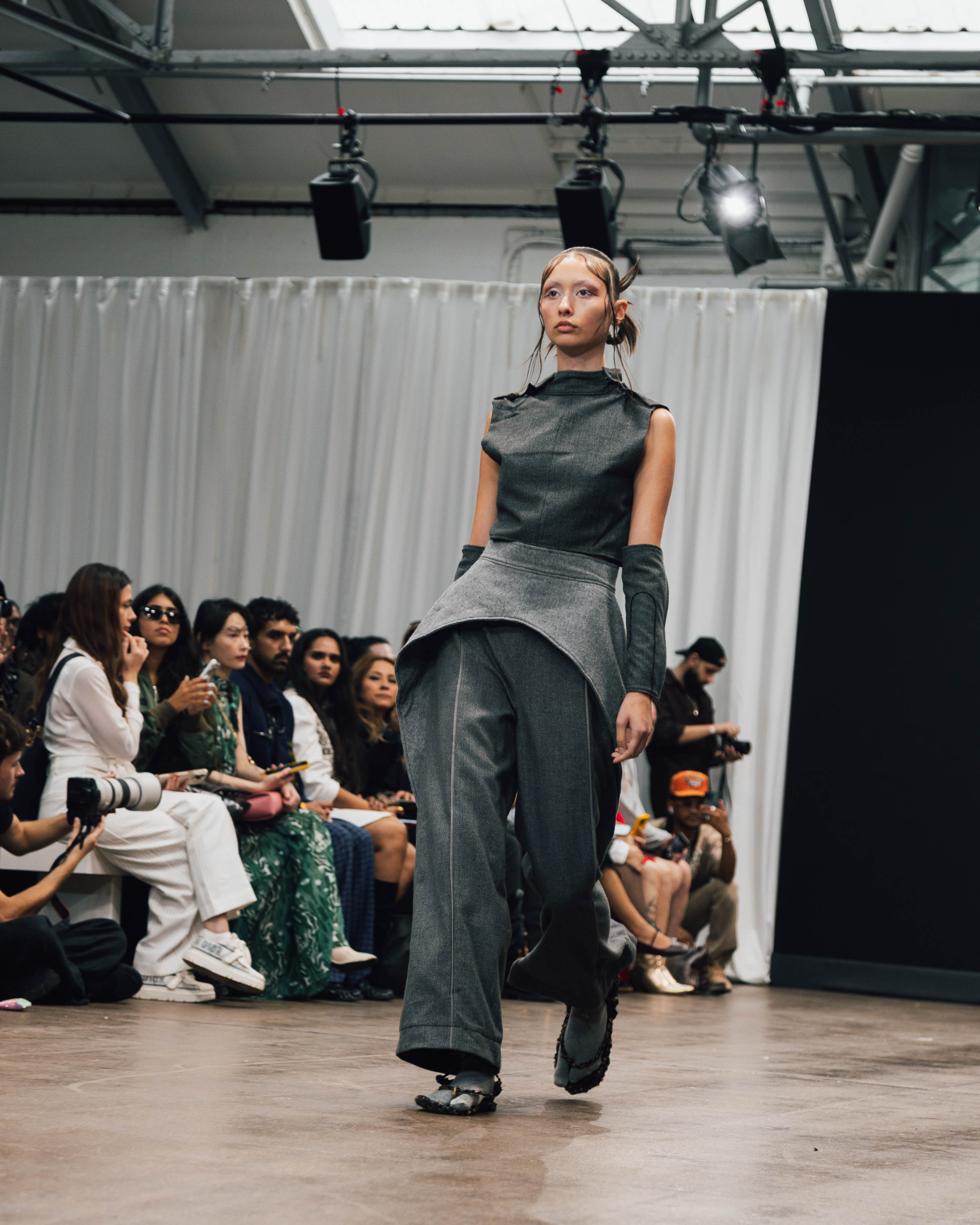
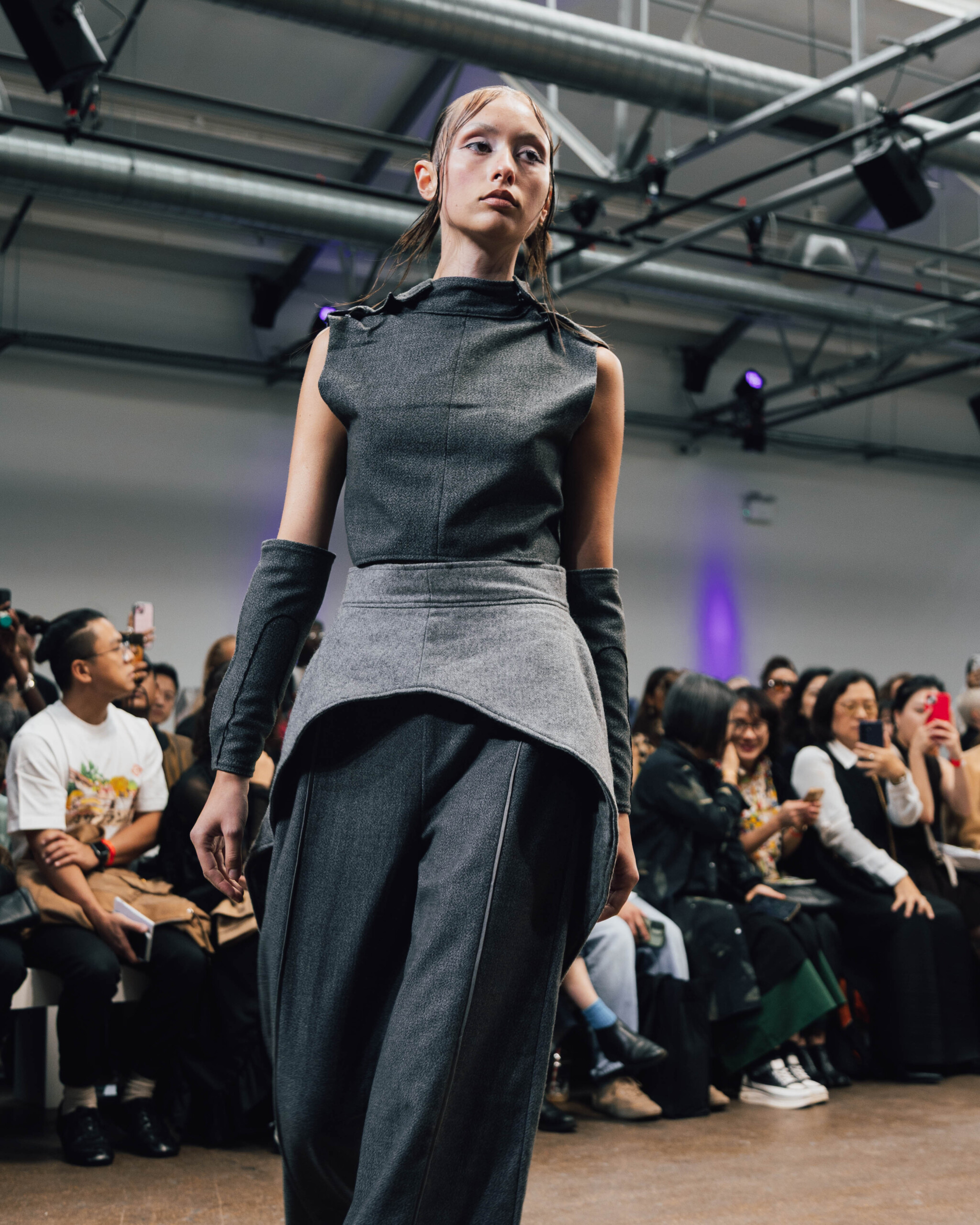
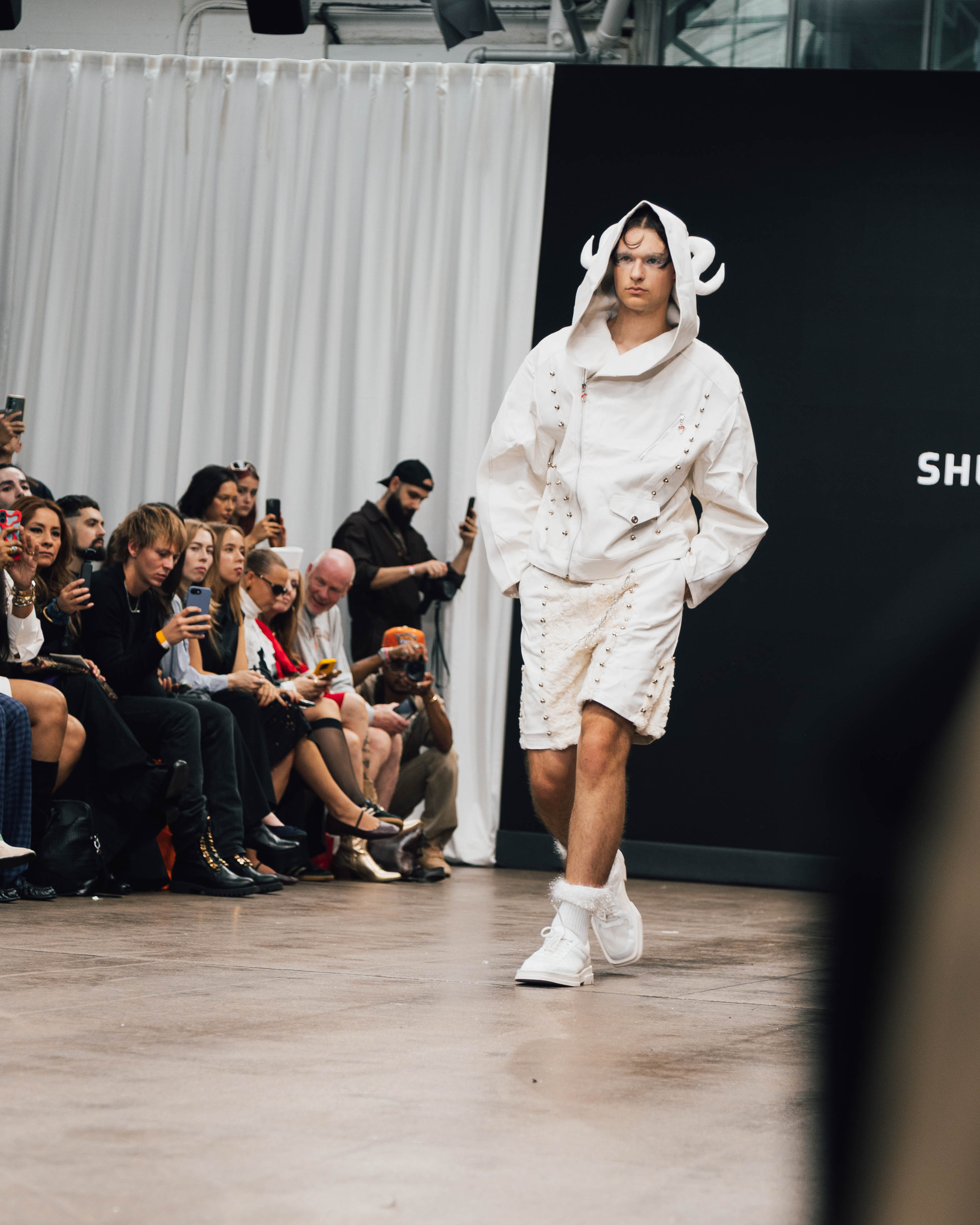
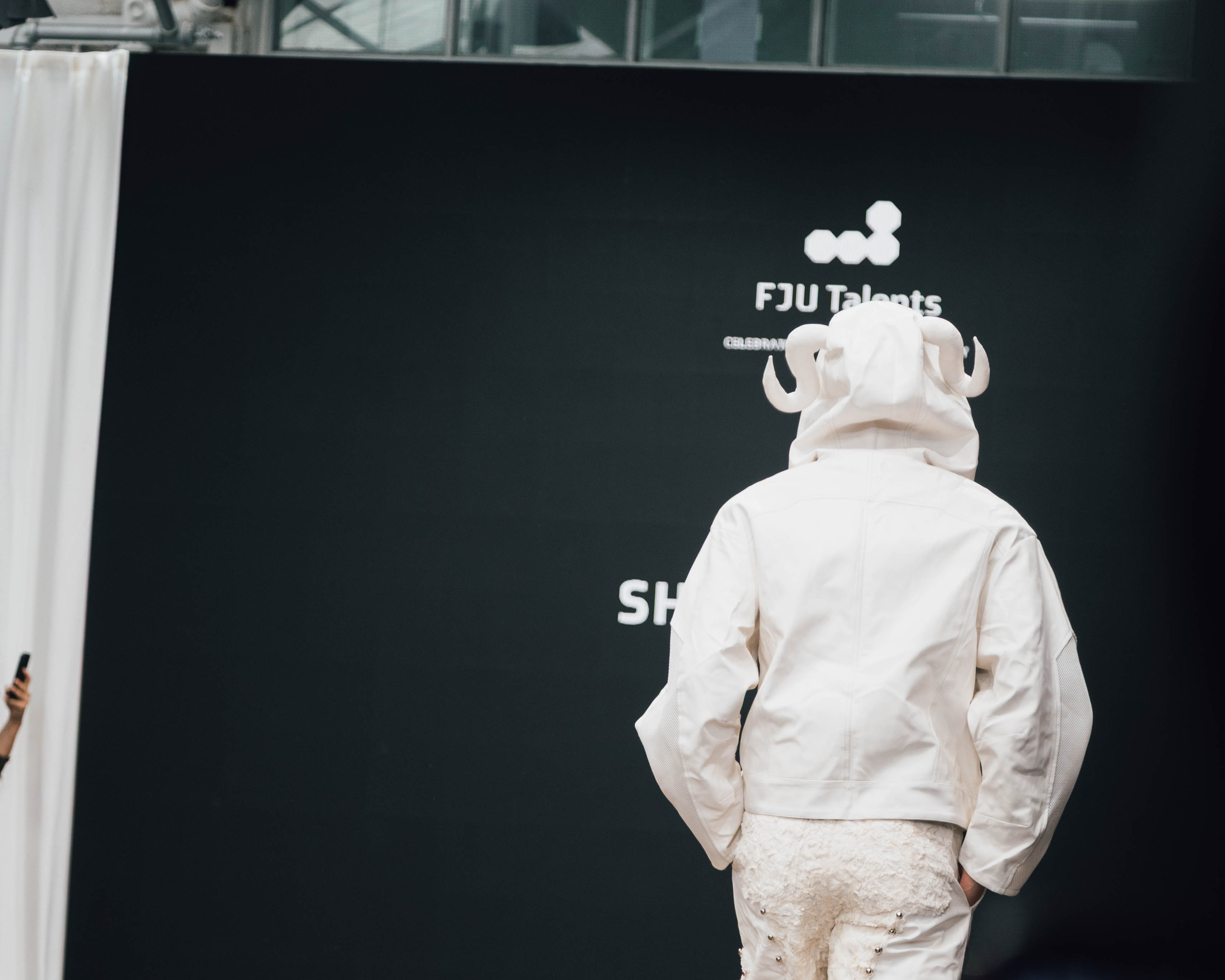
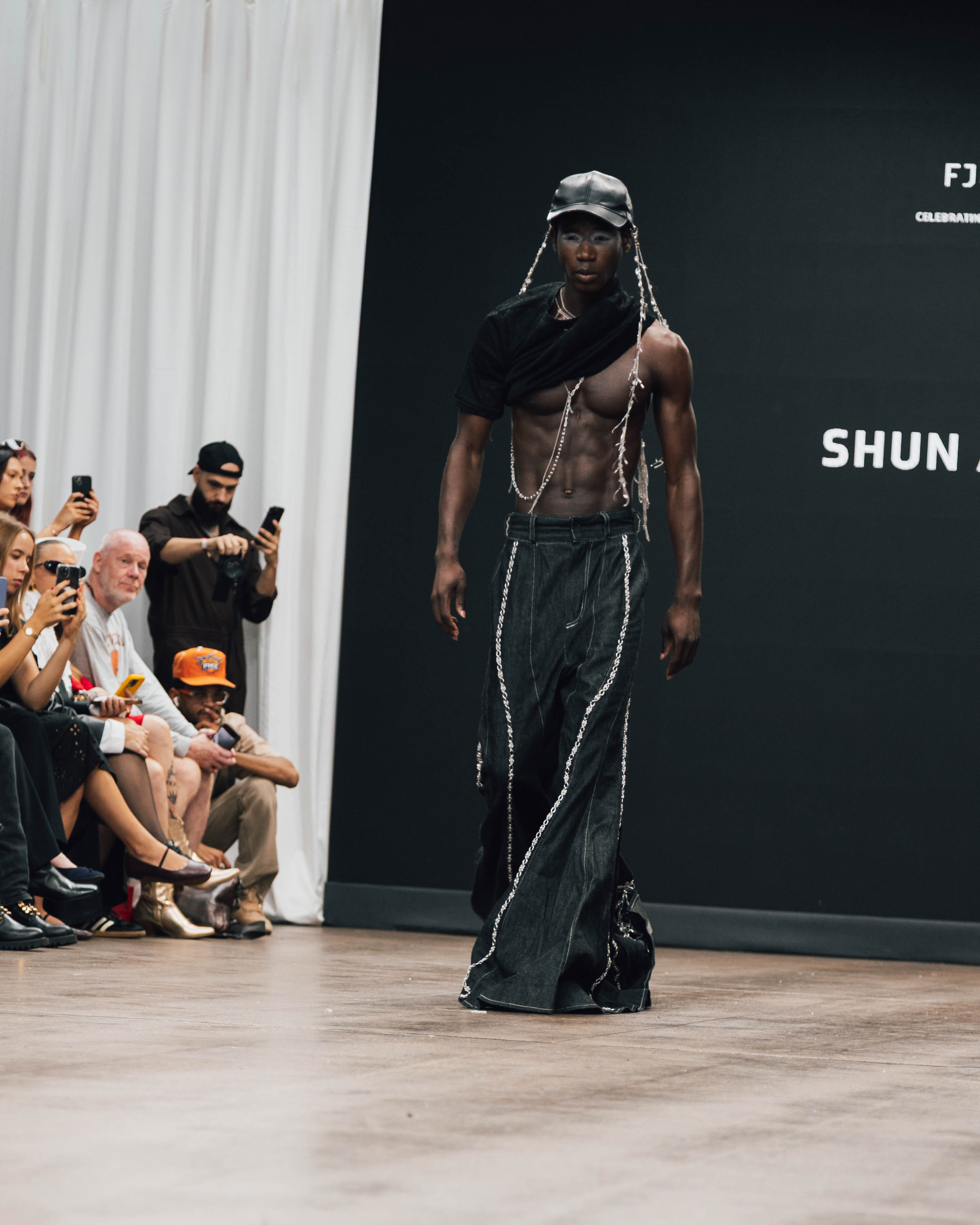
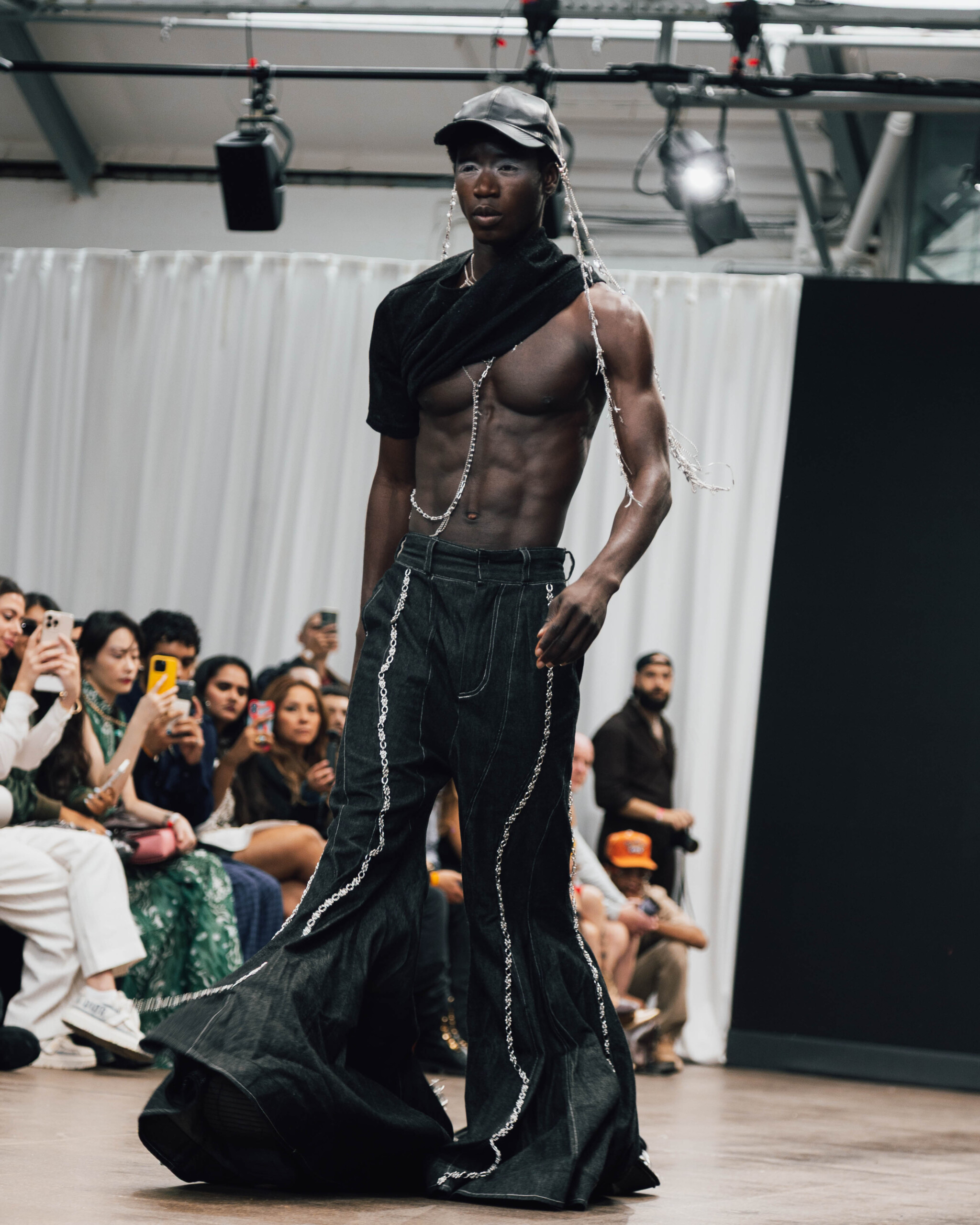
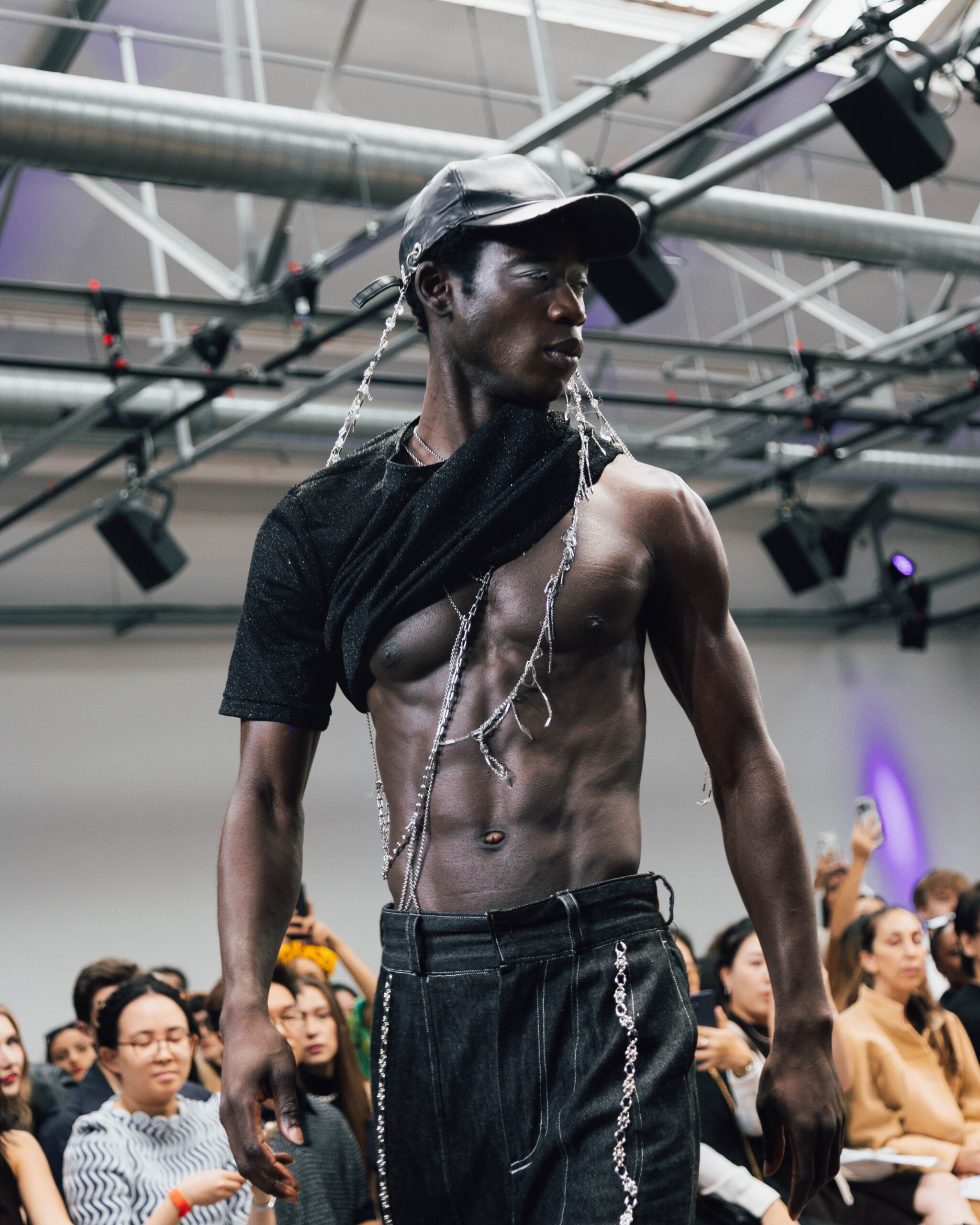
FJU Talents marked its 10th anniversary at London Fashion Week on 19 September with a Fashion Scout showcase bringing together four Taiwanese fashion and textile designers alongside selected work from the platform’s previous decade. Presented by the Department of Textiles and Clothing at Fu Jen Catholic University, the 2026 edition placed Min-Hsin Yu, YUI Kao, Alison Lai and Ting Hsuan Chang side by side, revealing markedly different approaches to colour, sexuality, the female gaze, belief and textile construction. Fashion Scout describes FJU Talents as an annual international showcase created to connect emerging Taiwanese design talent with an international audience.
Four Designers, Four Different Languages
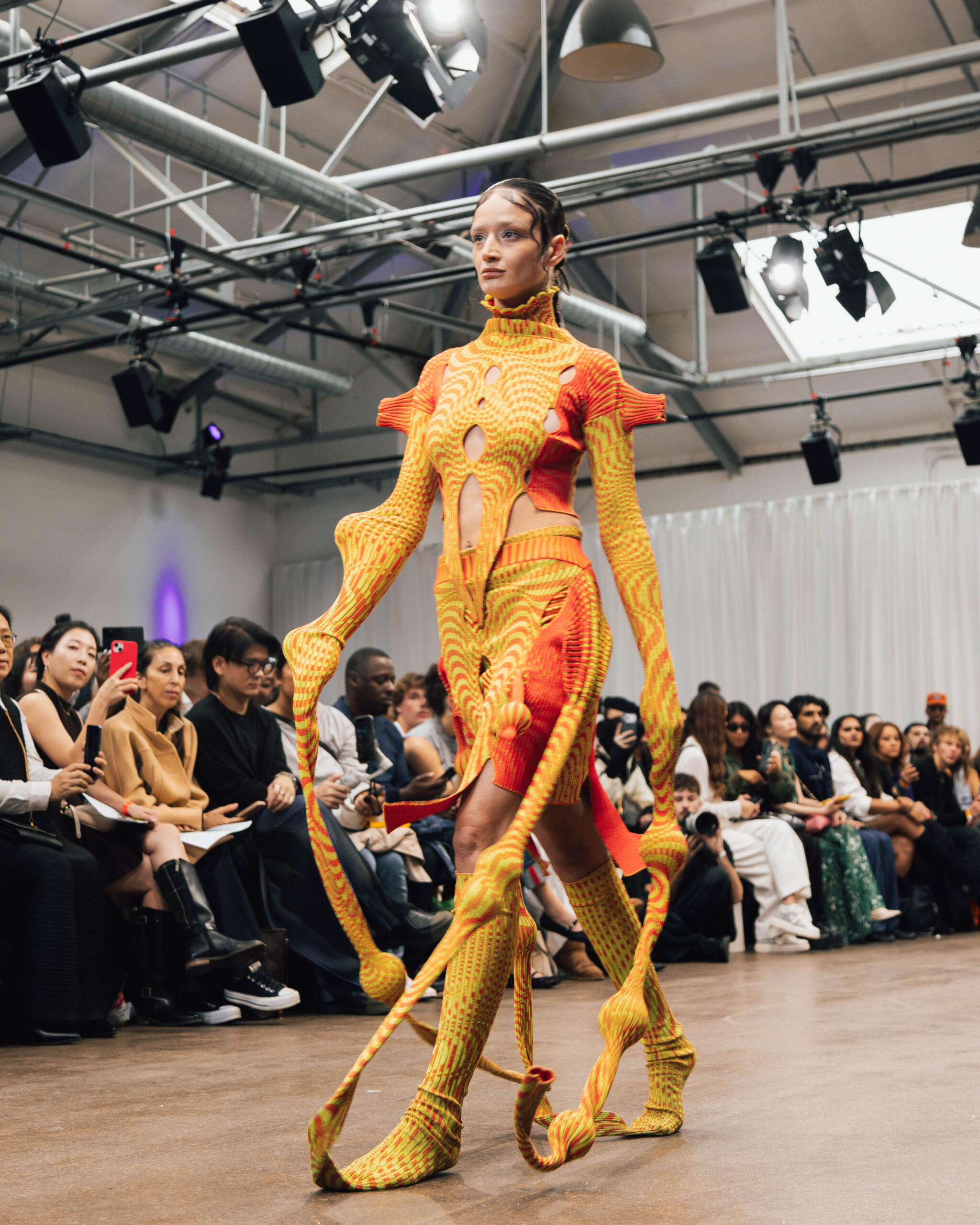
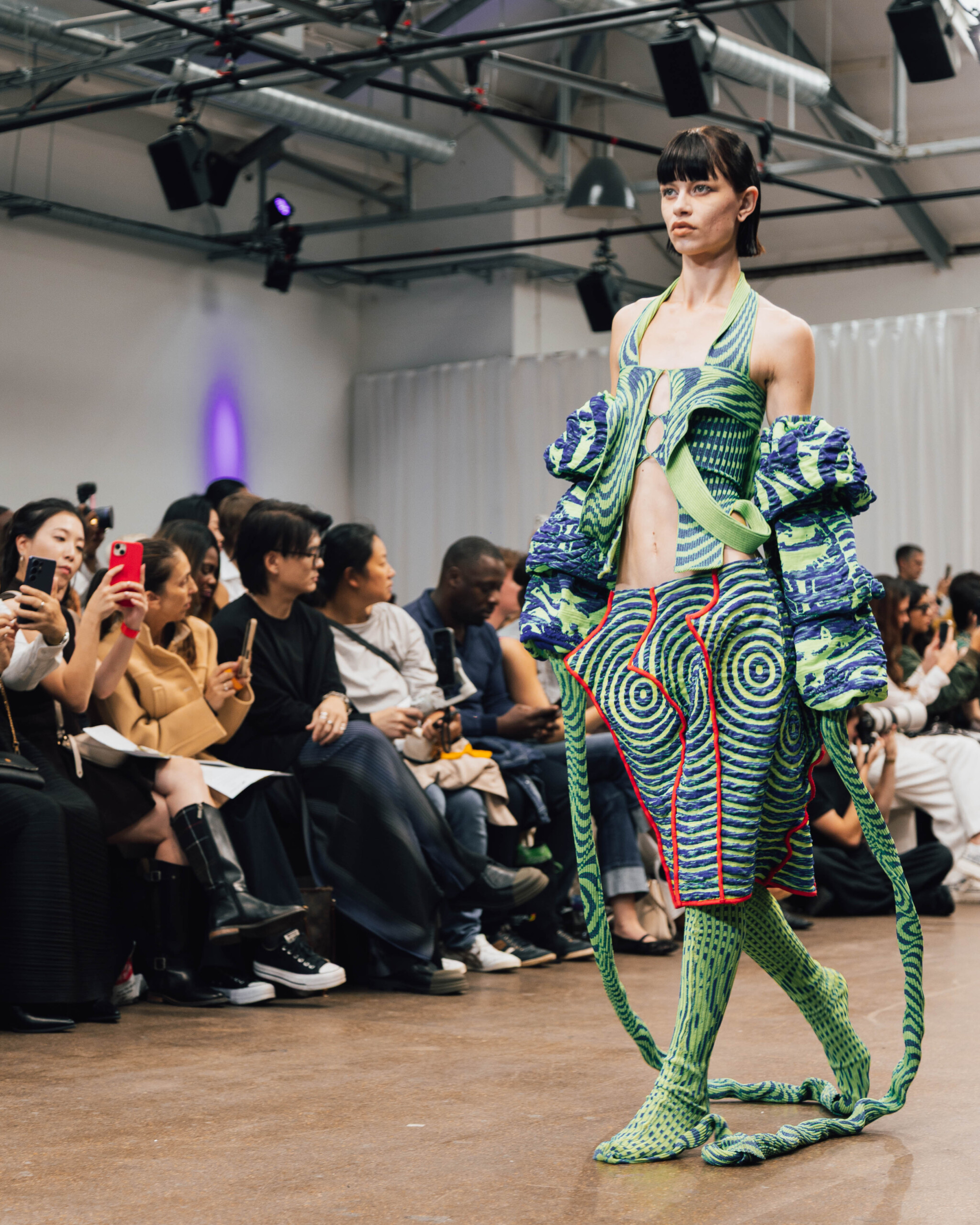
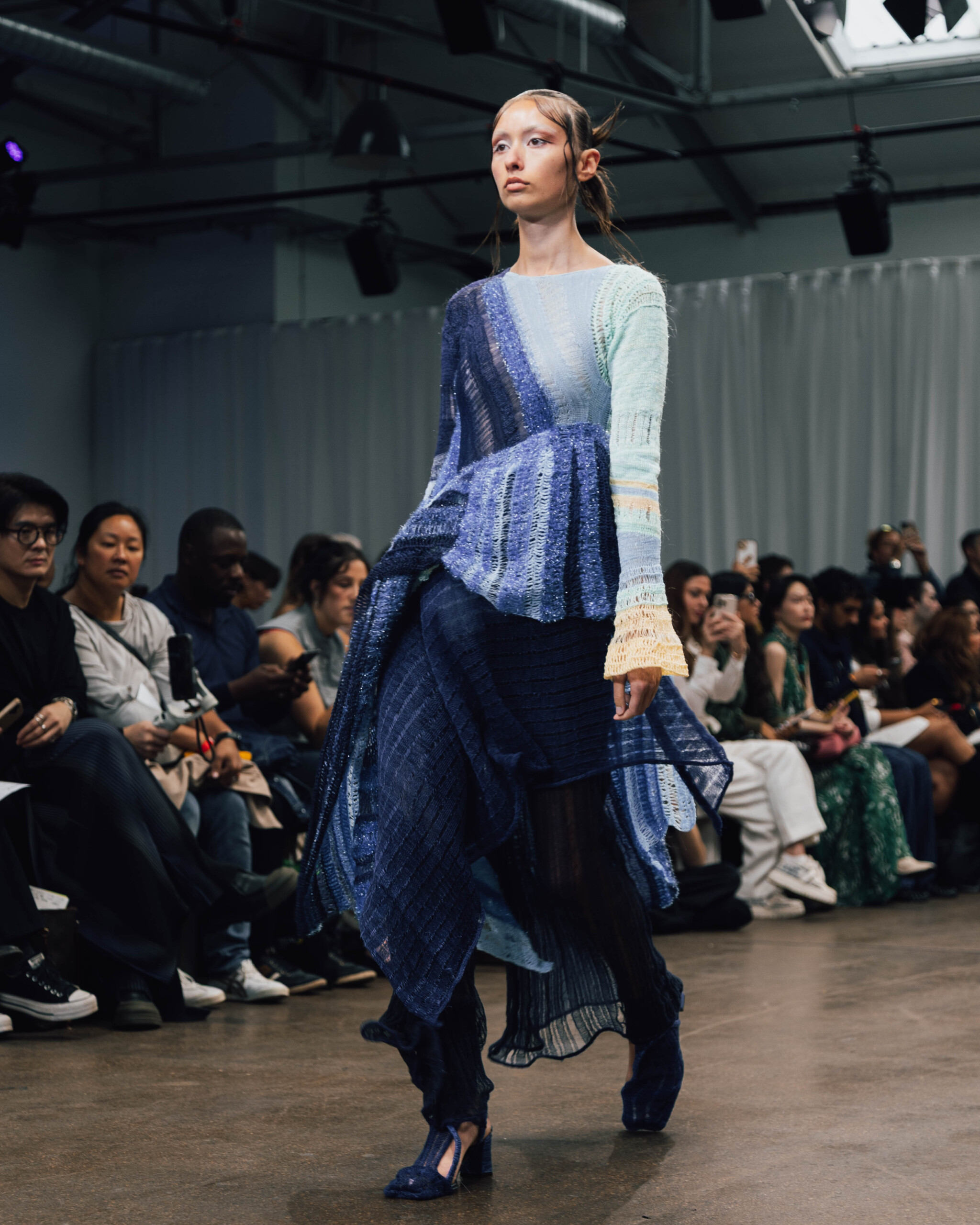
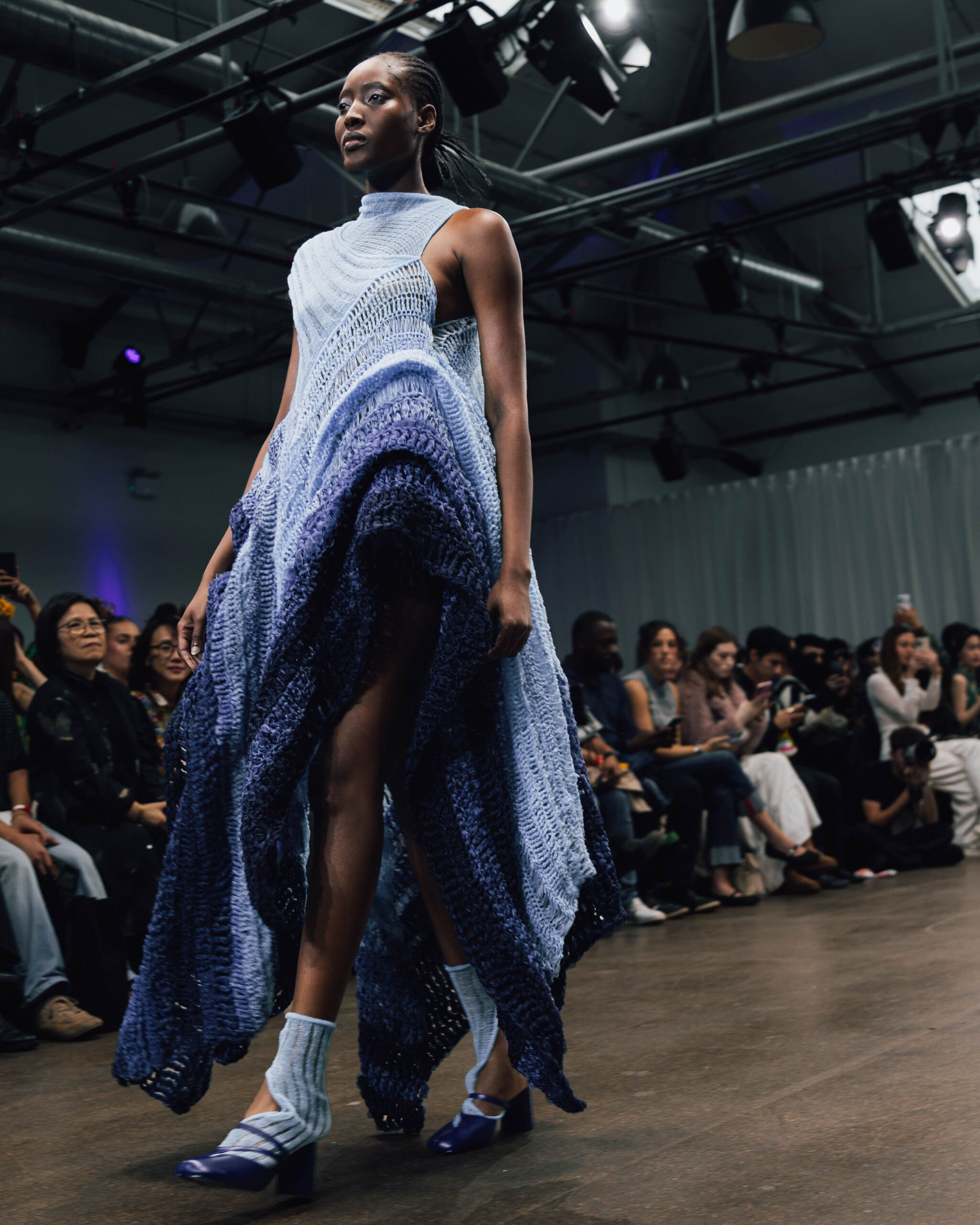
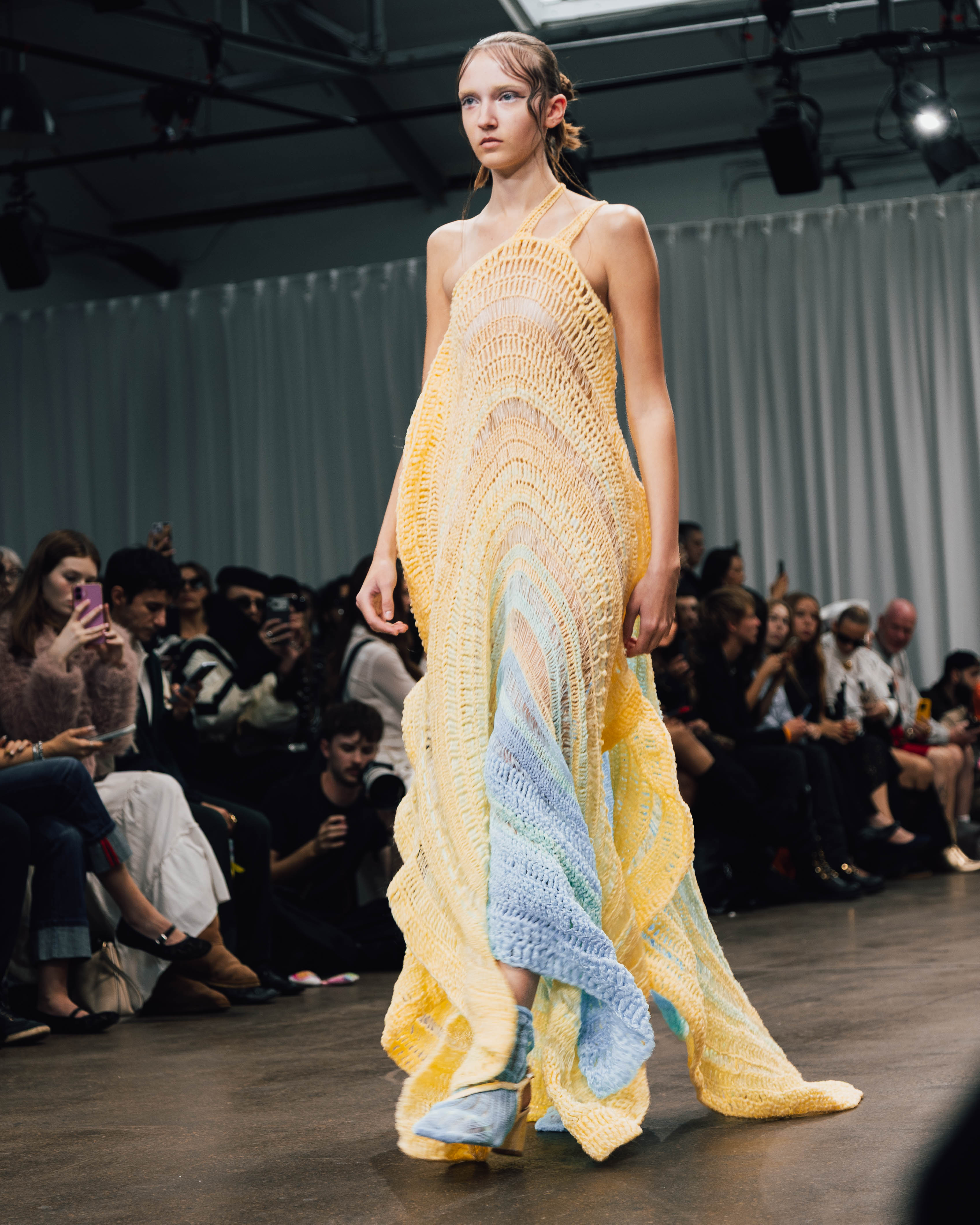
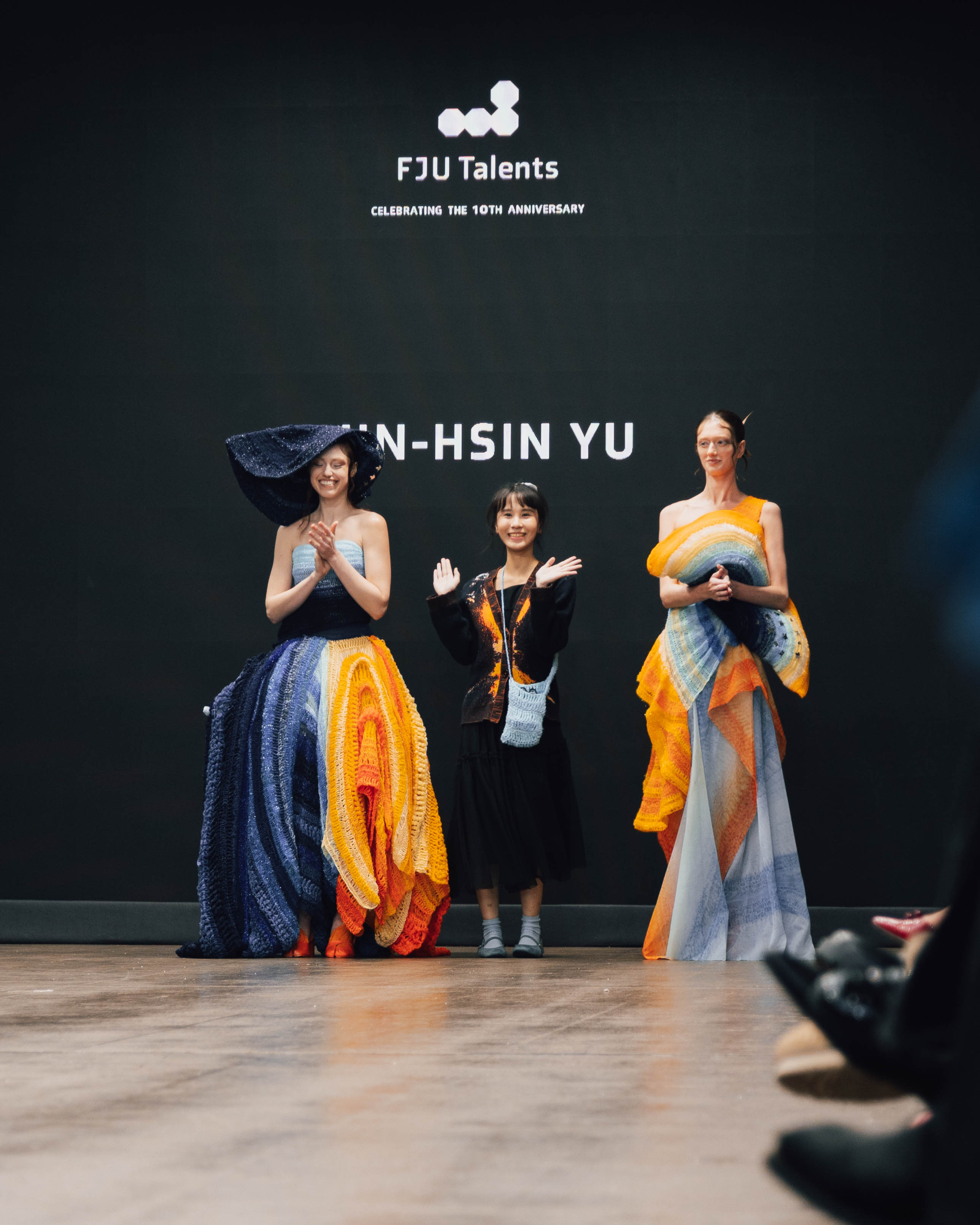
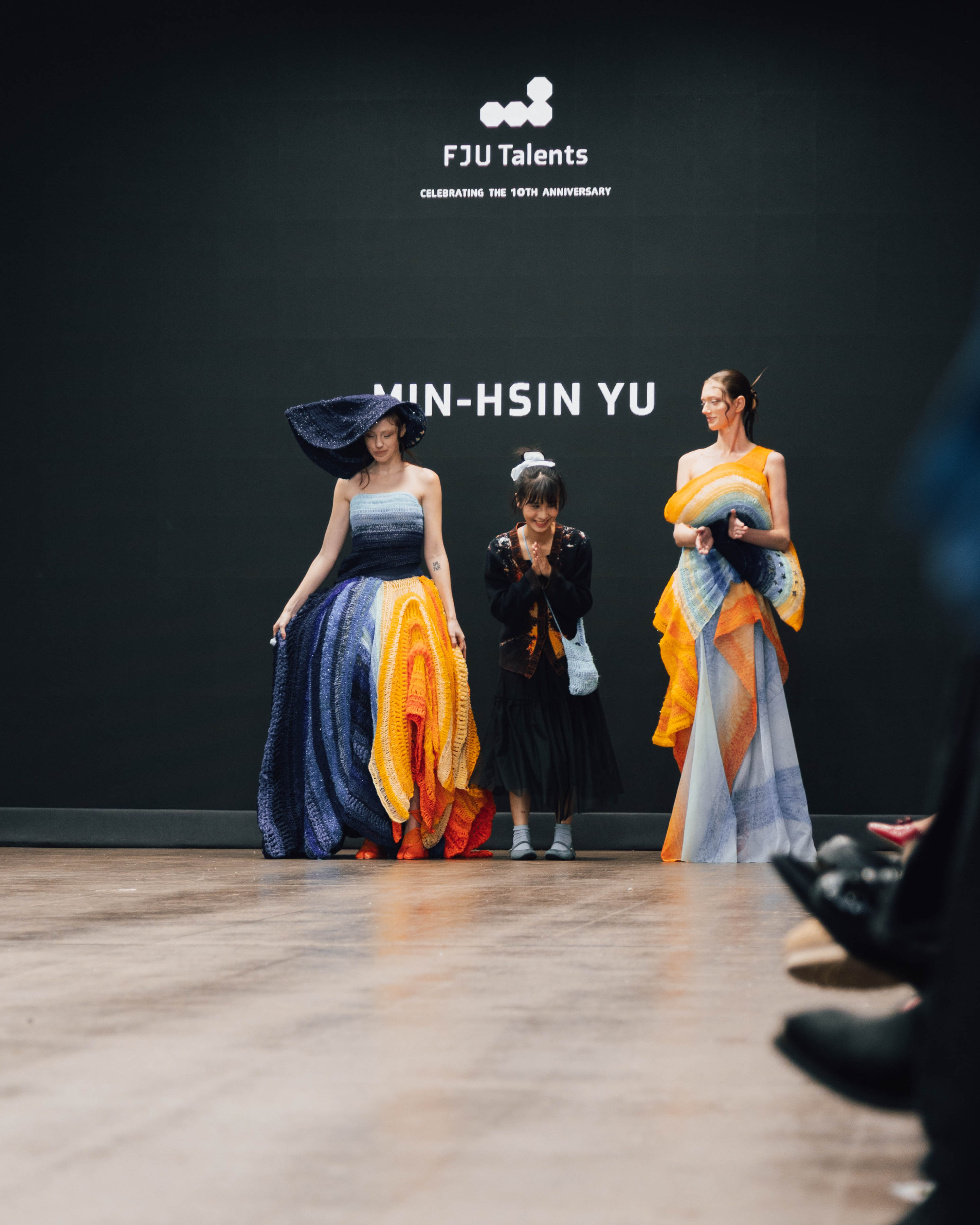
Min-Hsin Yu begins with an unusually expansive colour reference: the contrasting sunsets of Earth and Mars. A graduate of Textile Design at Fu Jen Catholic University, Yu translates changing light through hand crochet and ribbon yarns, moving between warm orange-red tones and deep blues. The resulting layered surfaces make colour and texture the primary tools for exploring individuality as something mutable rather than fixed.
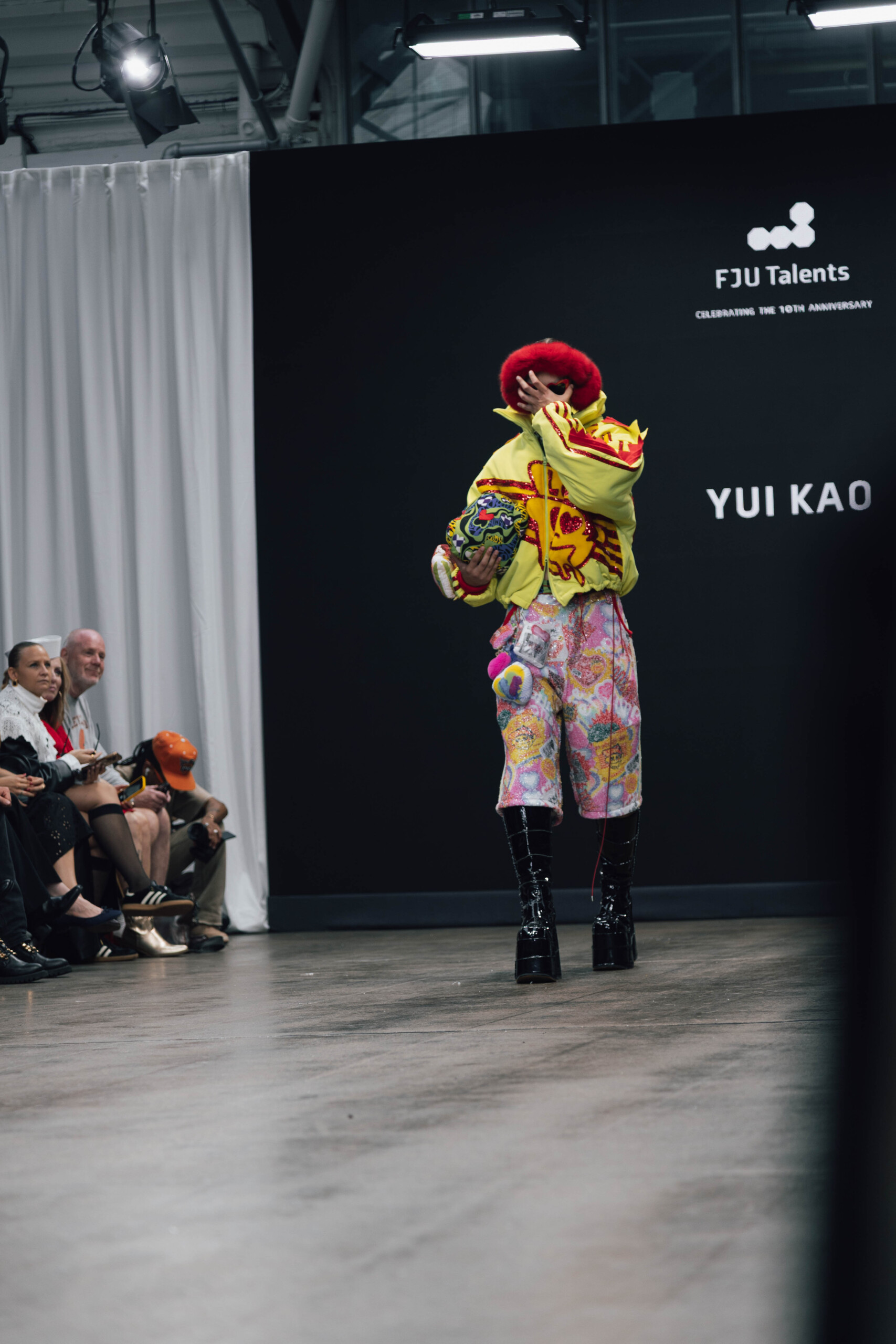
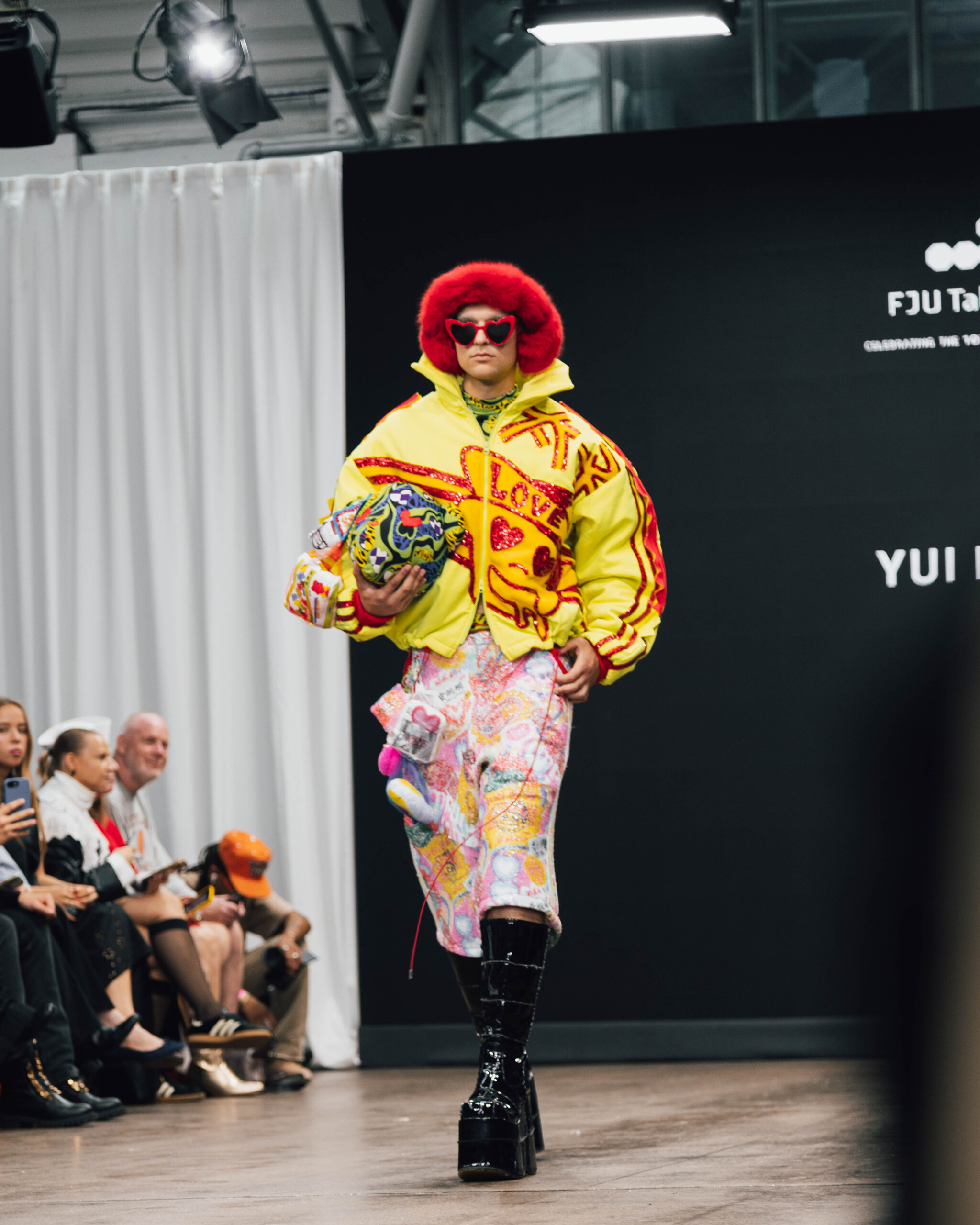
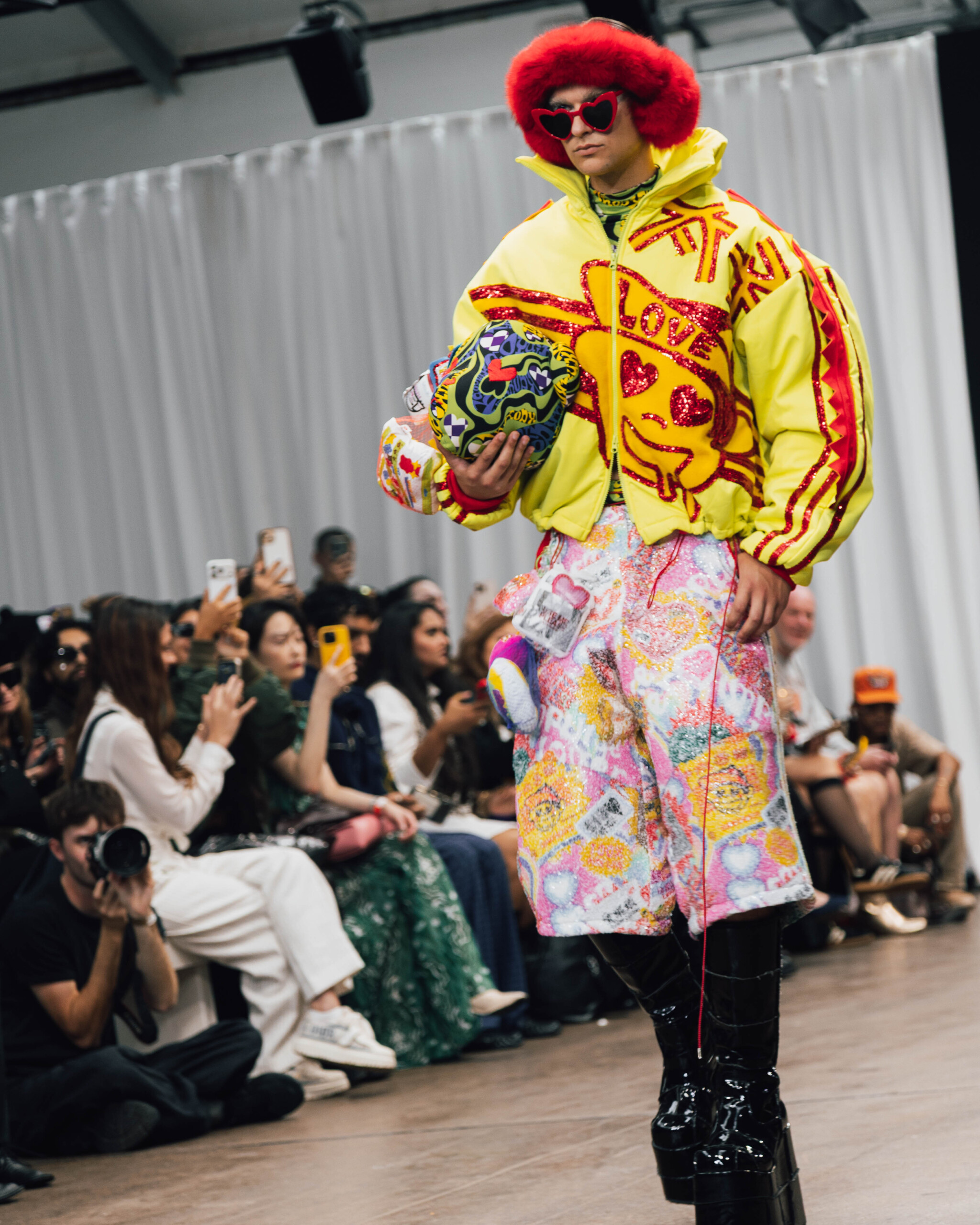
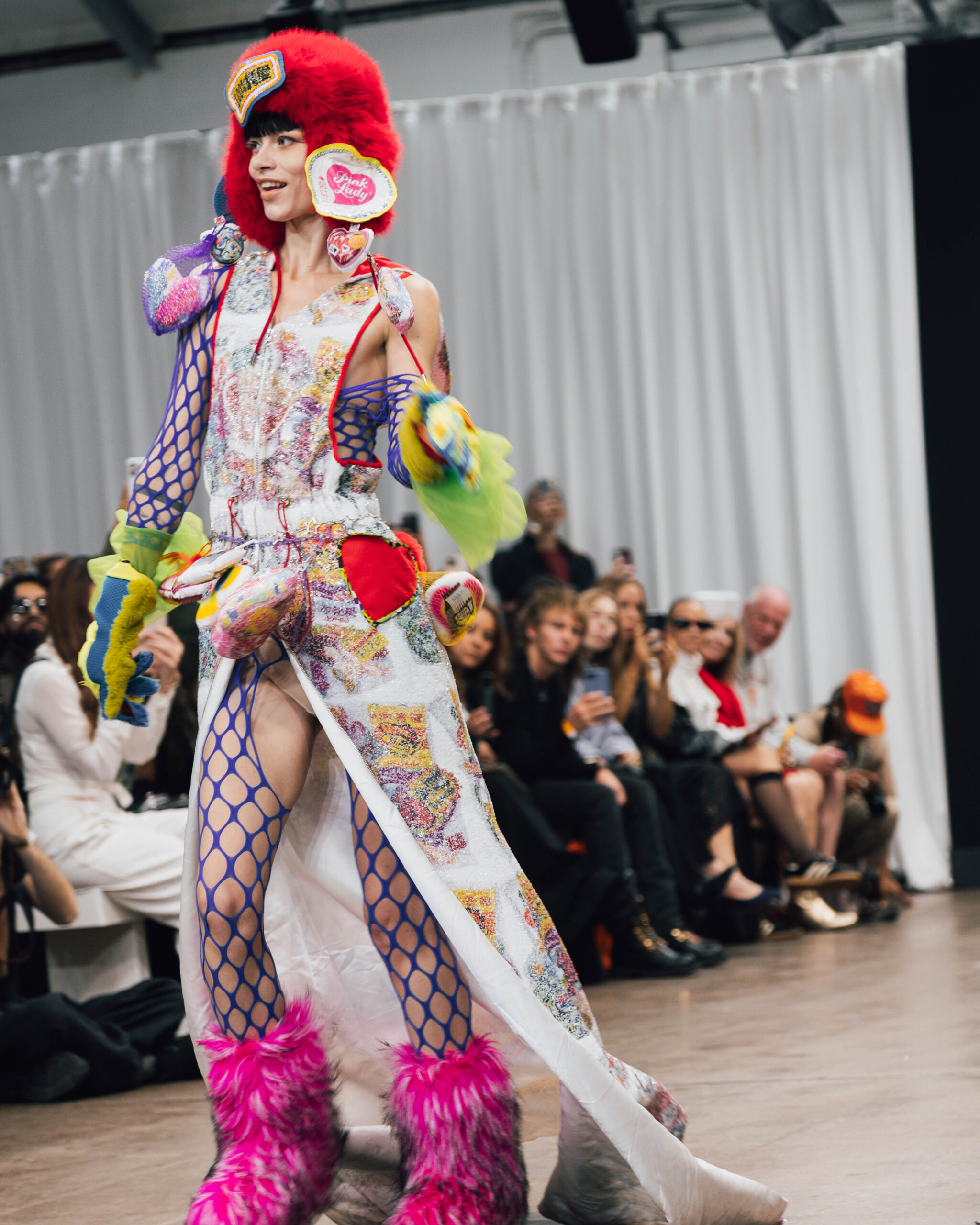
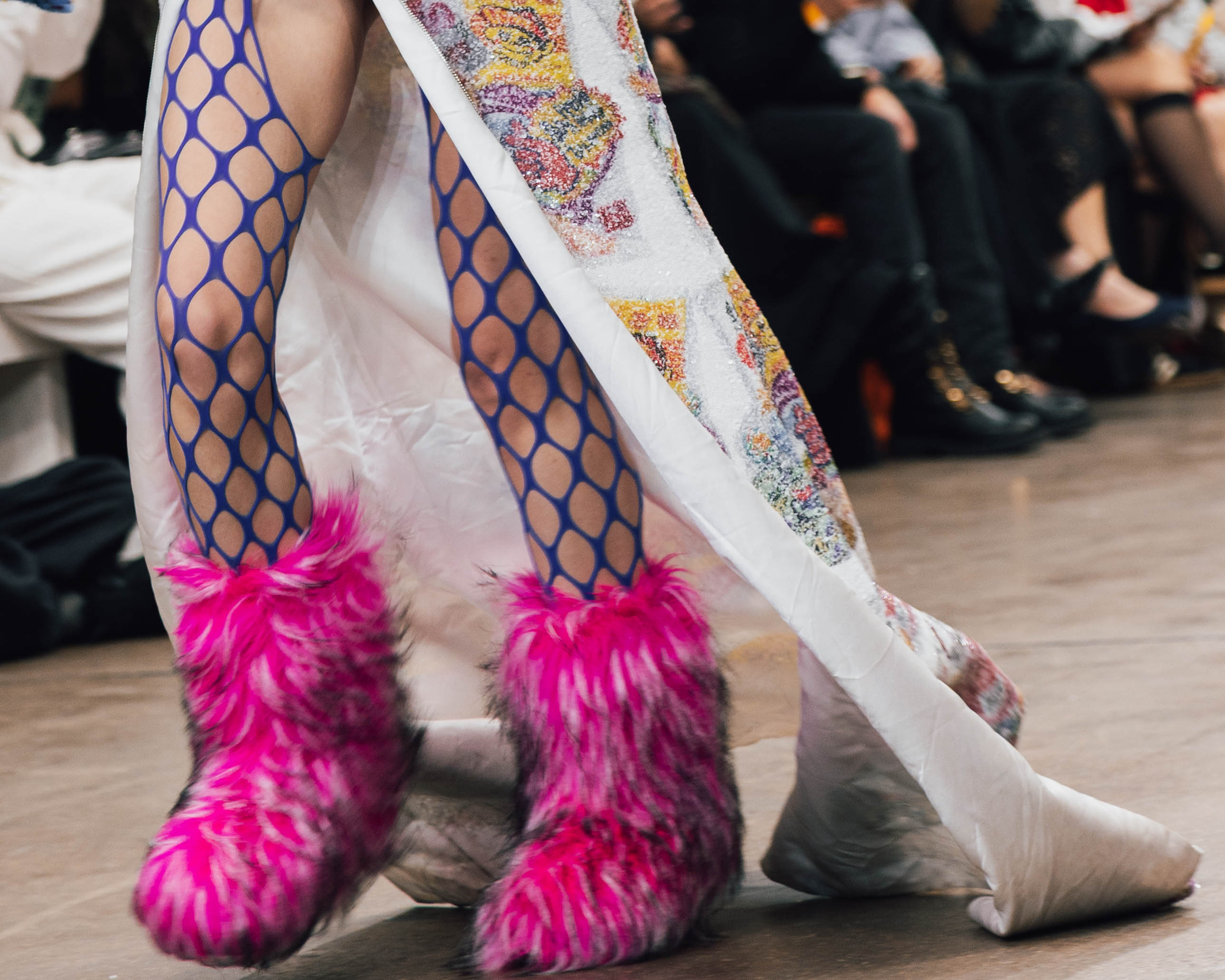
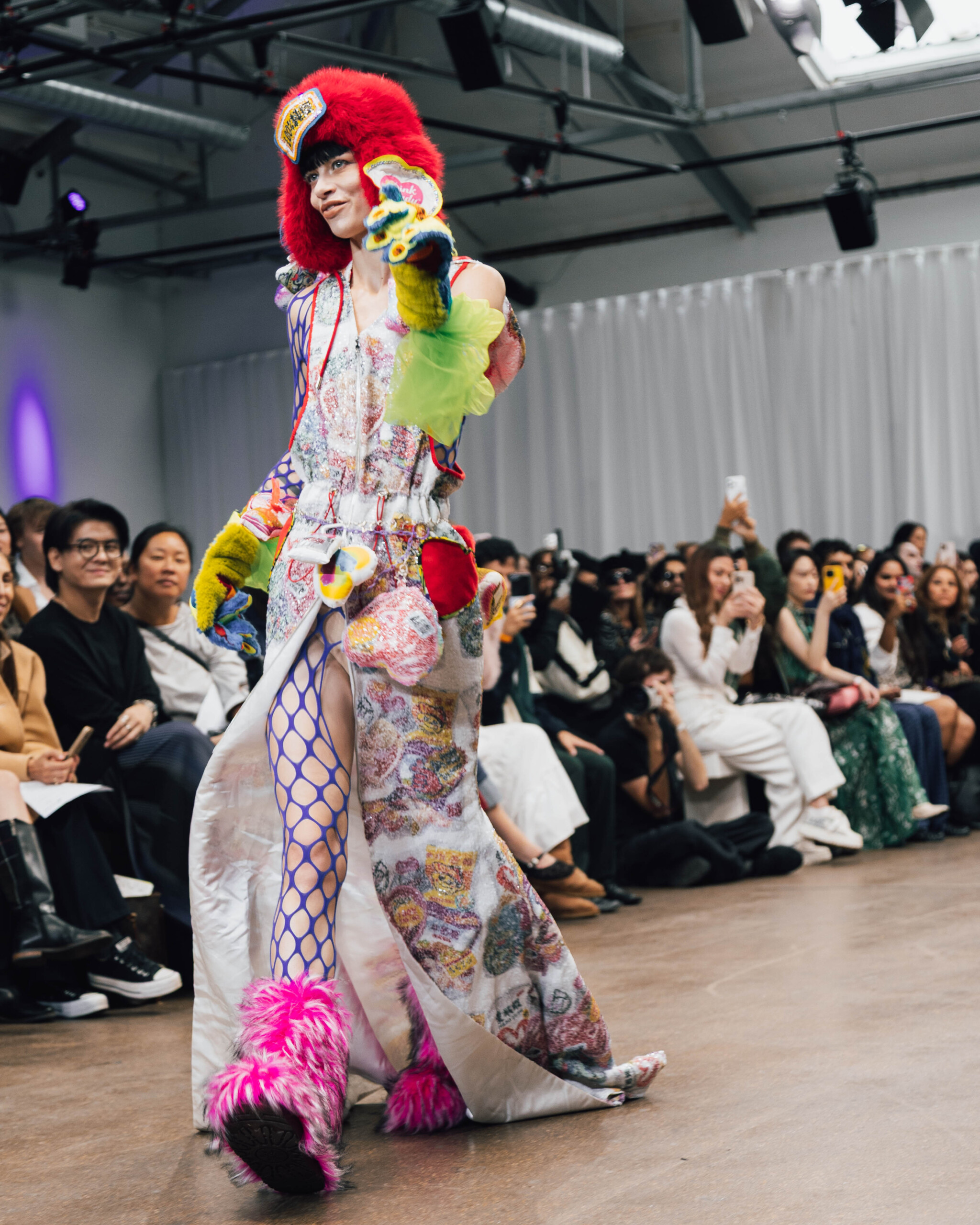
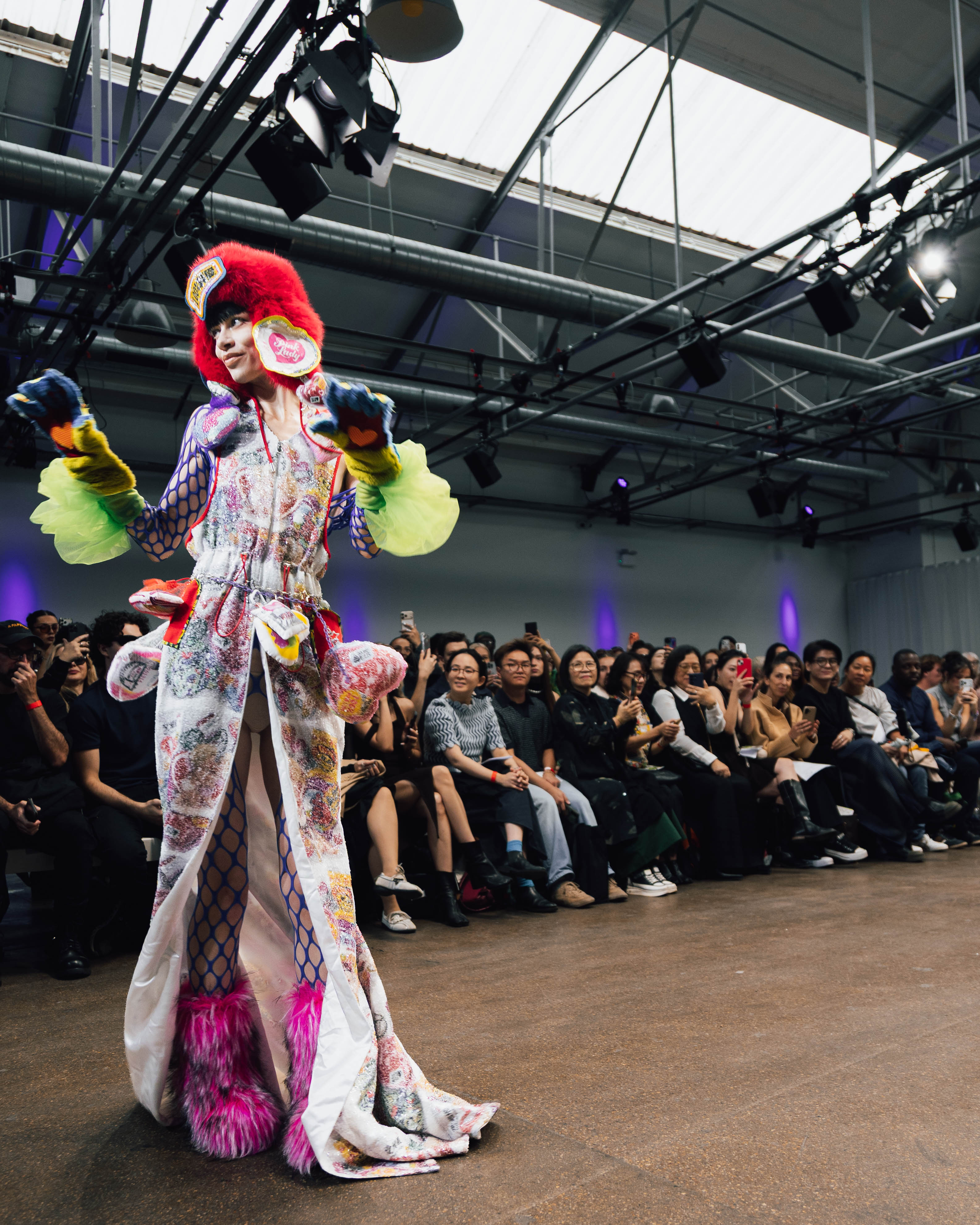
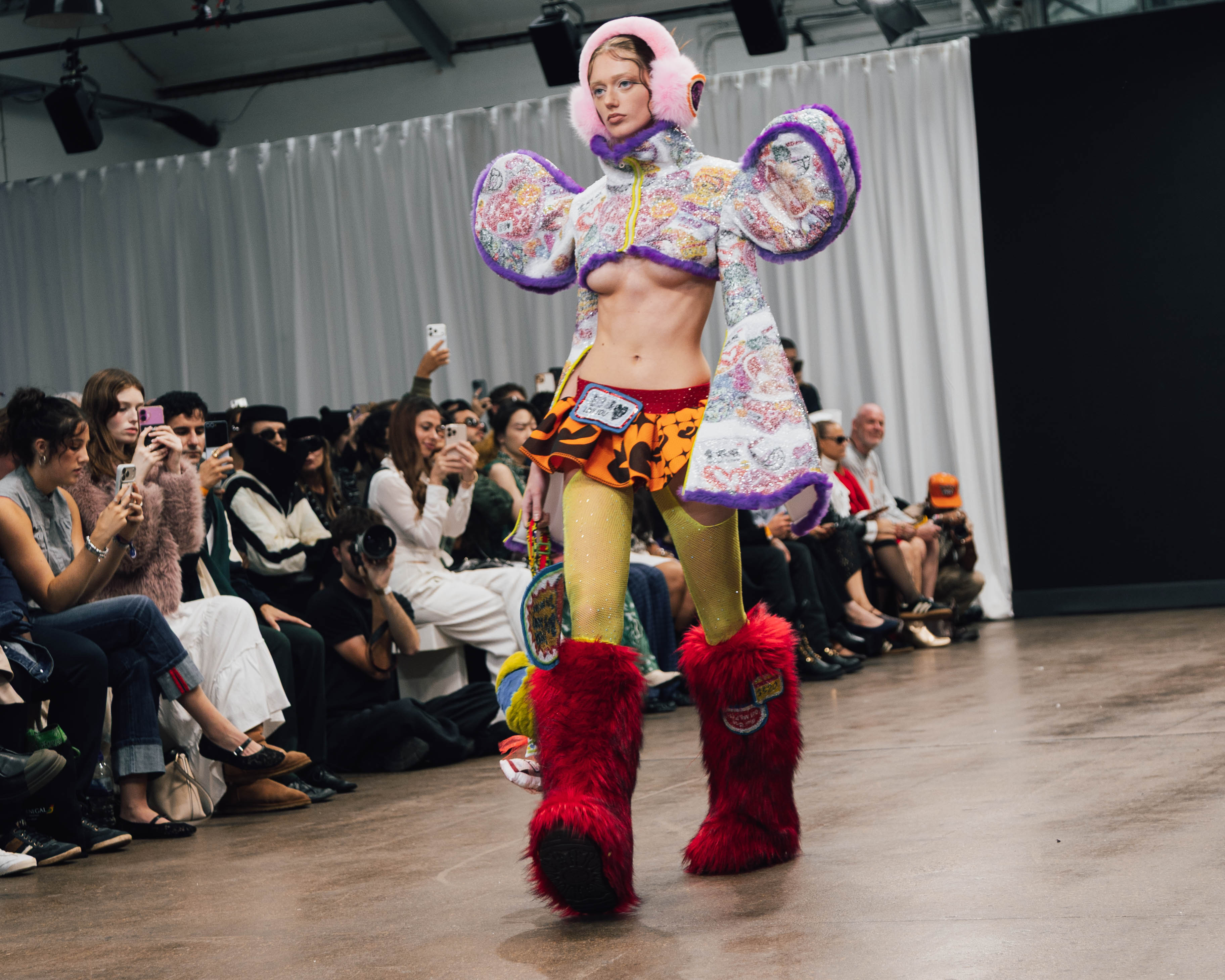
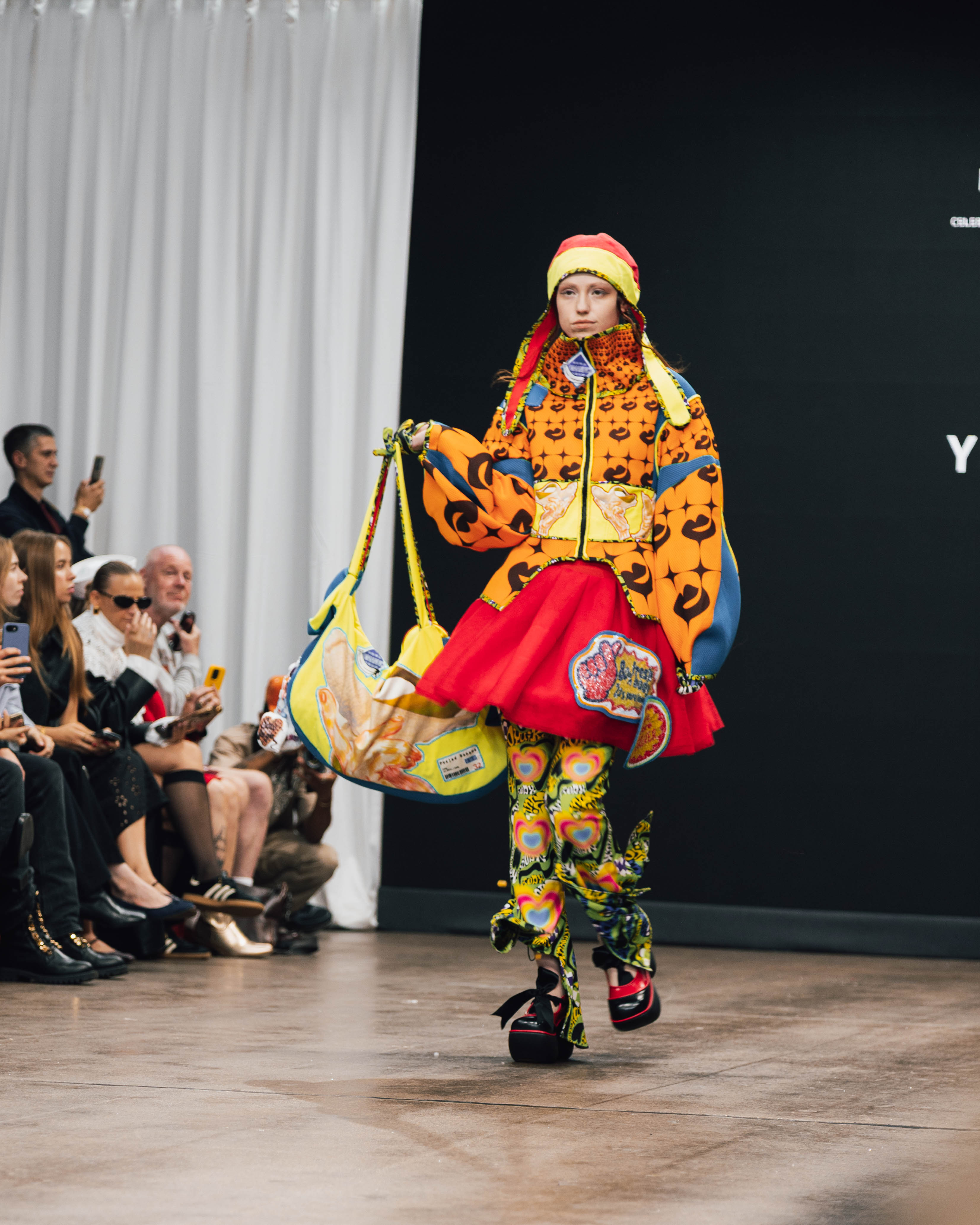
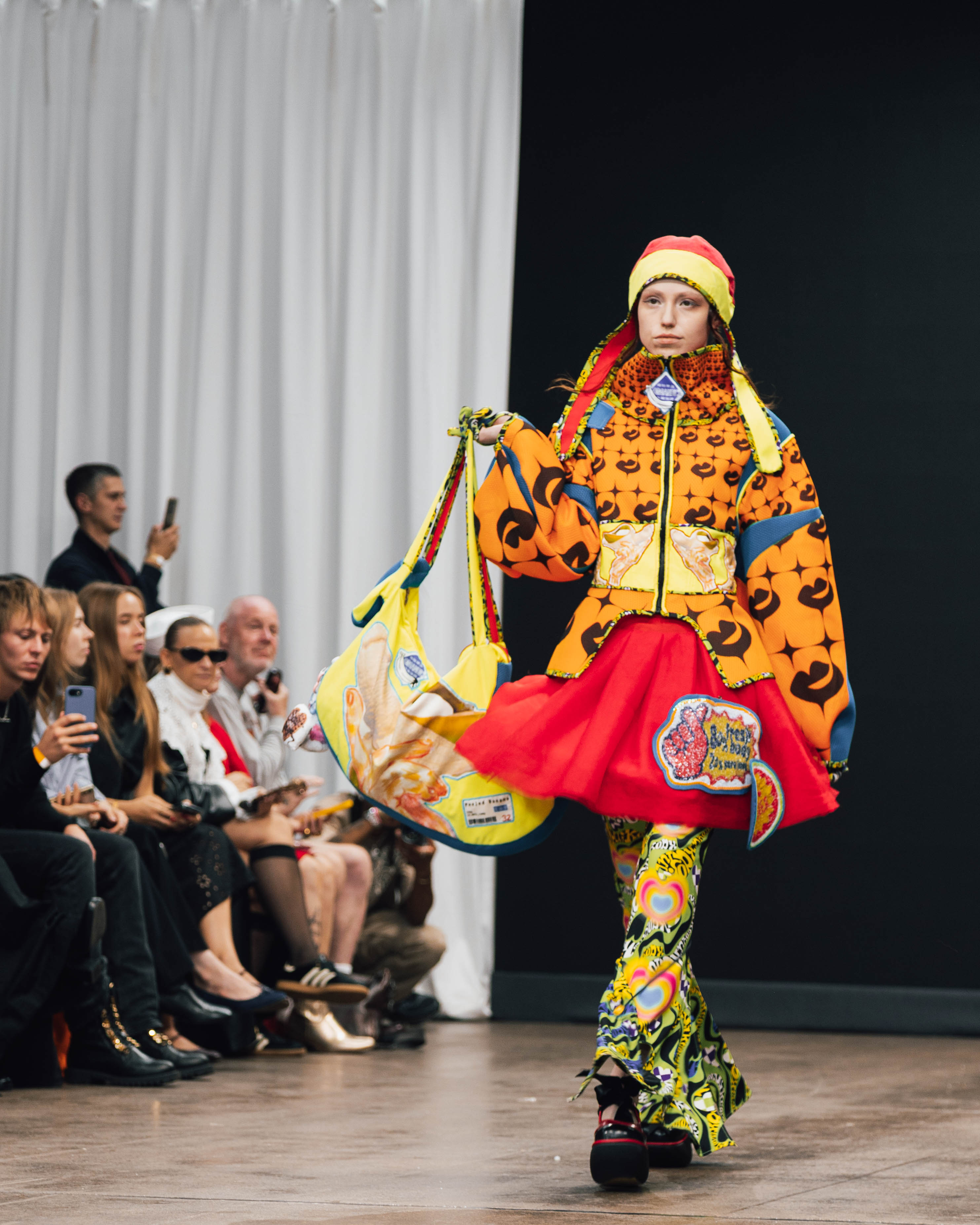
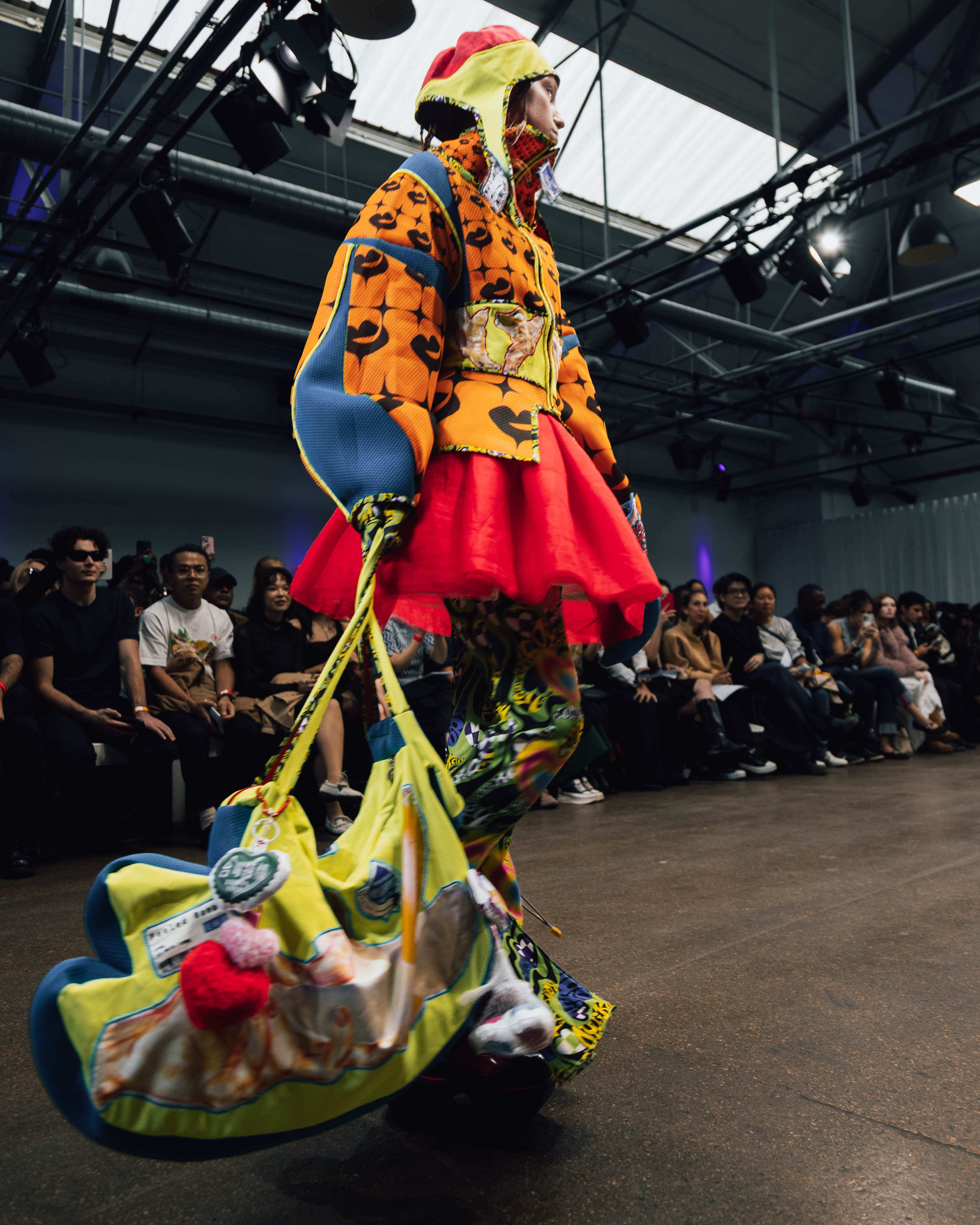
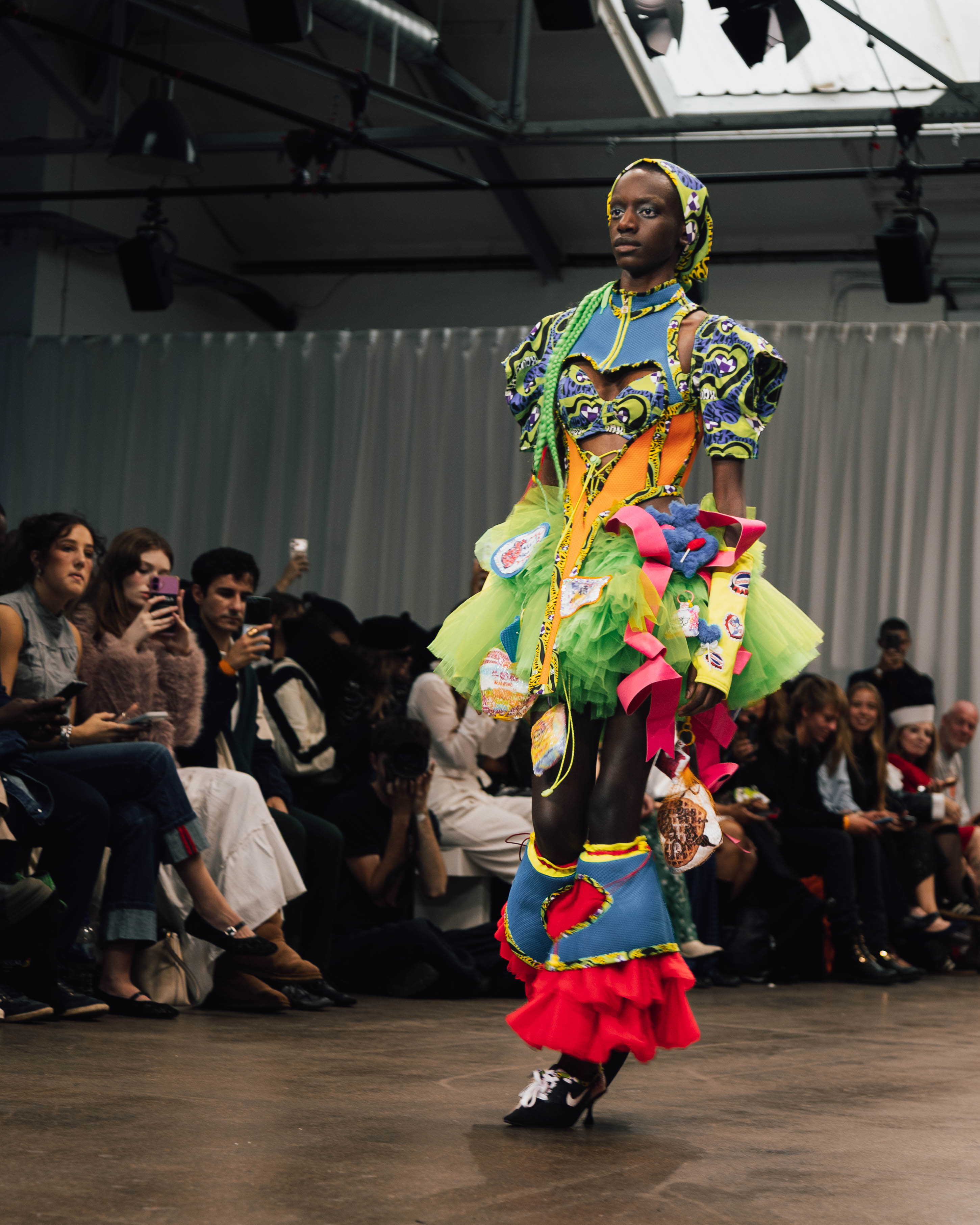
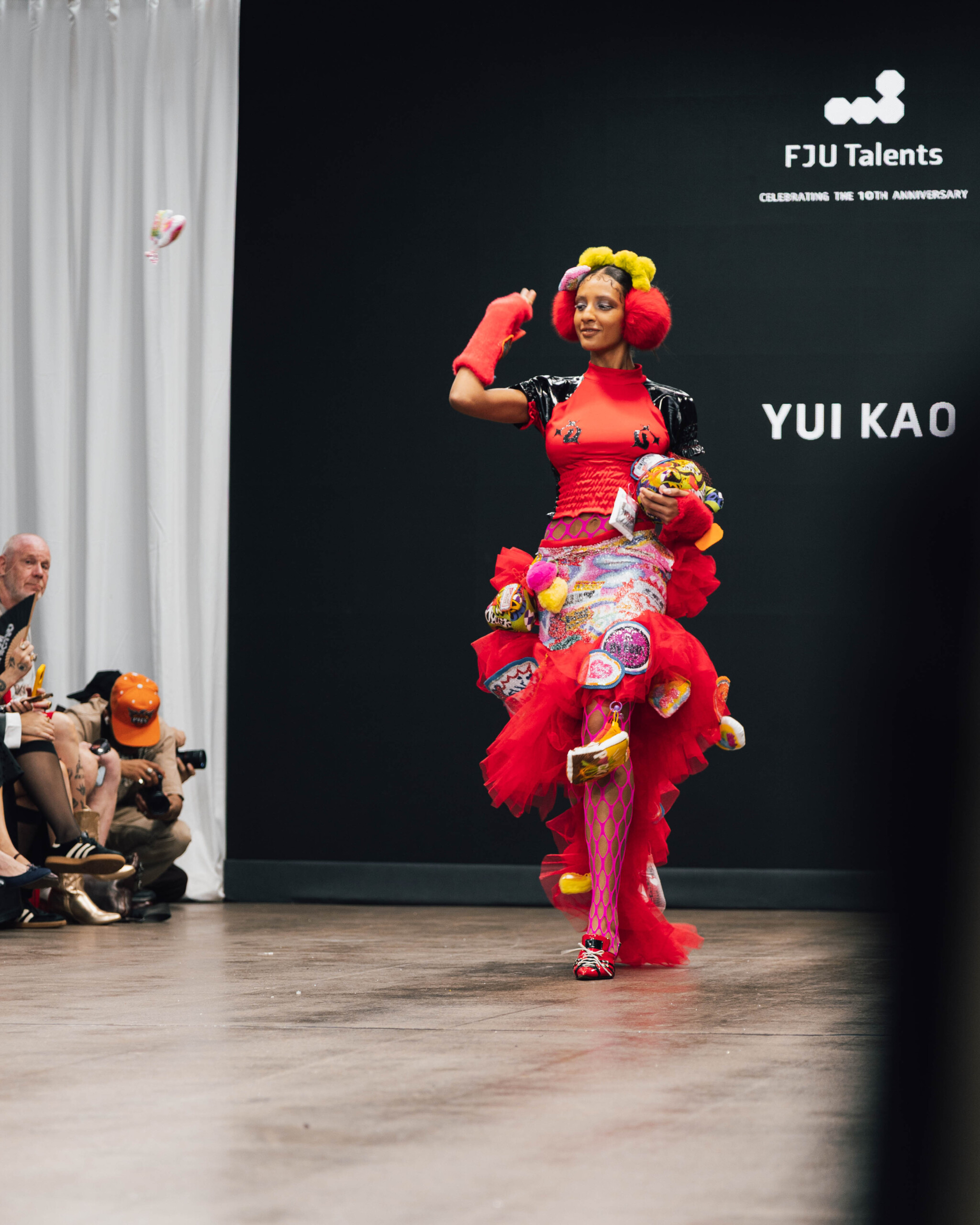
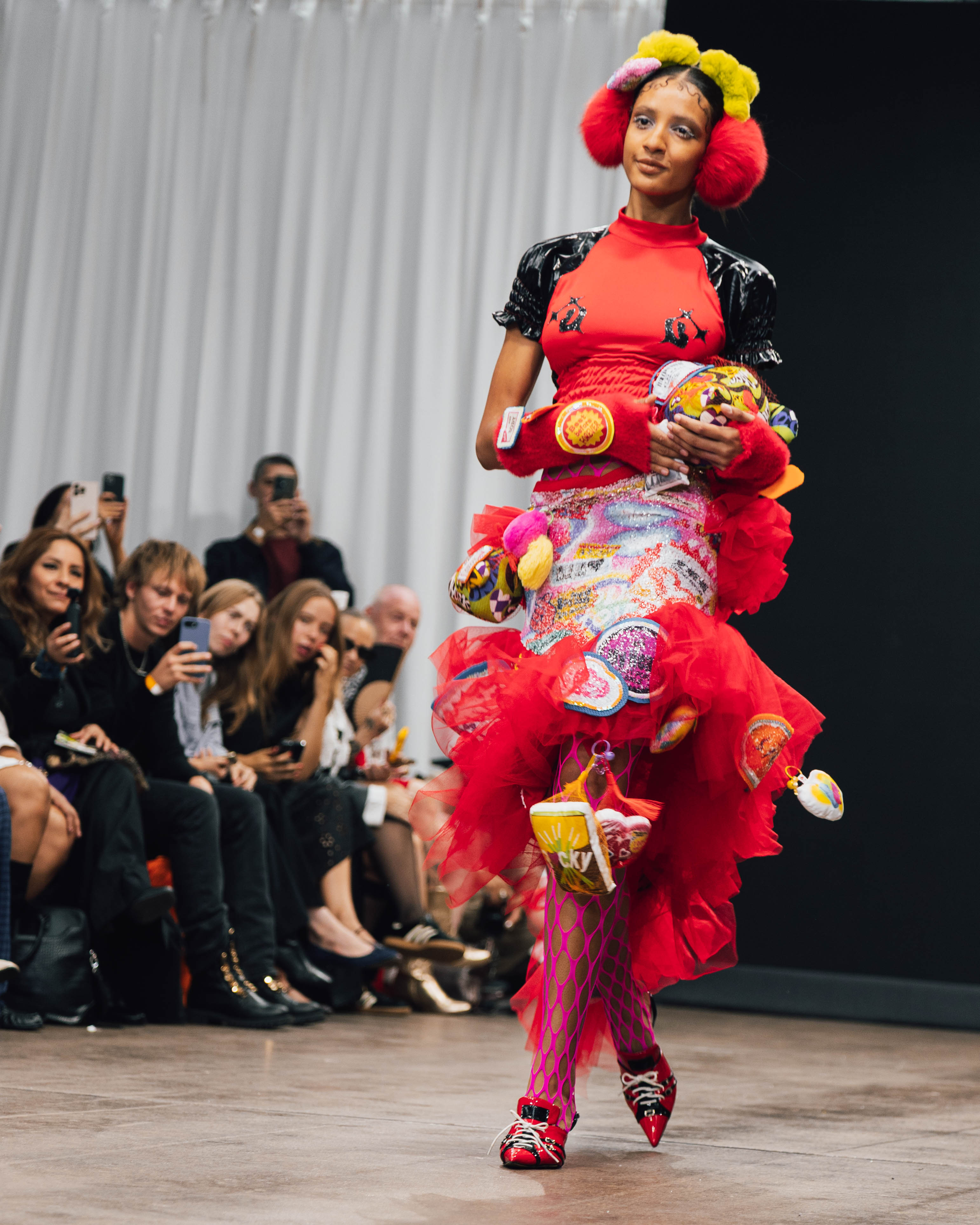
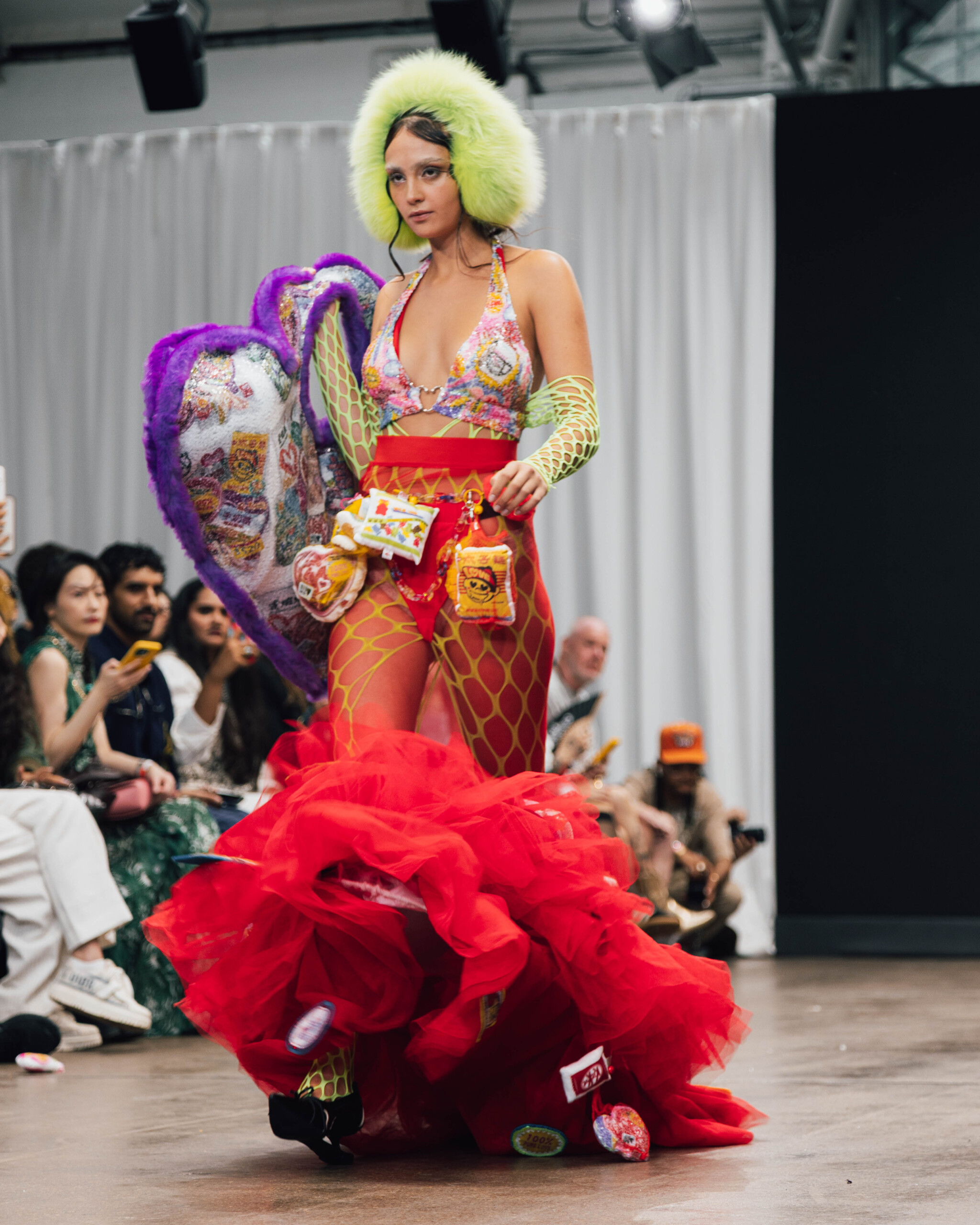
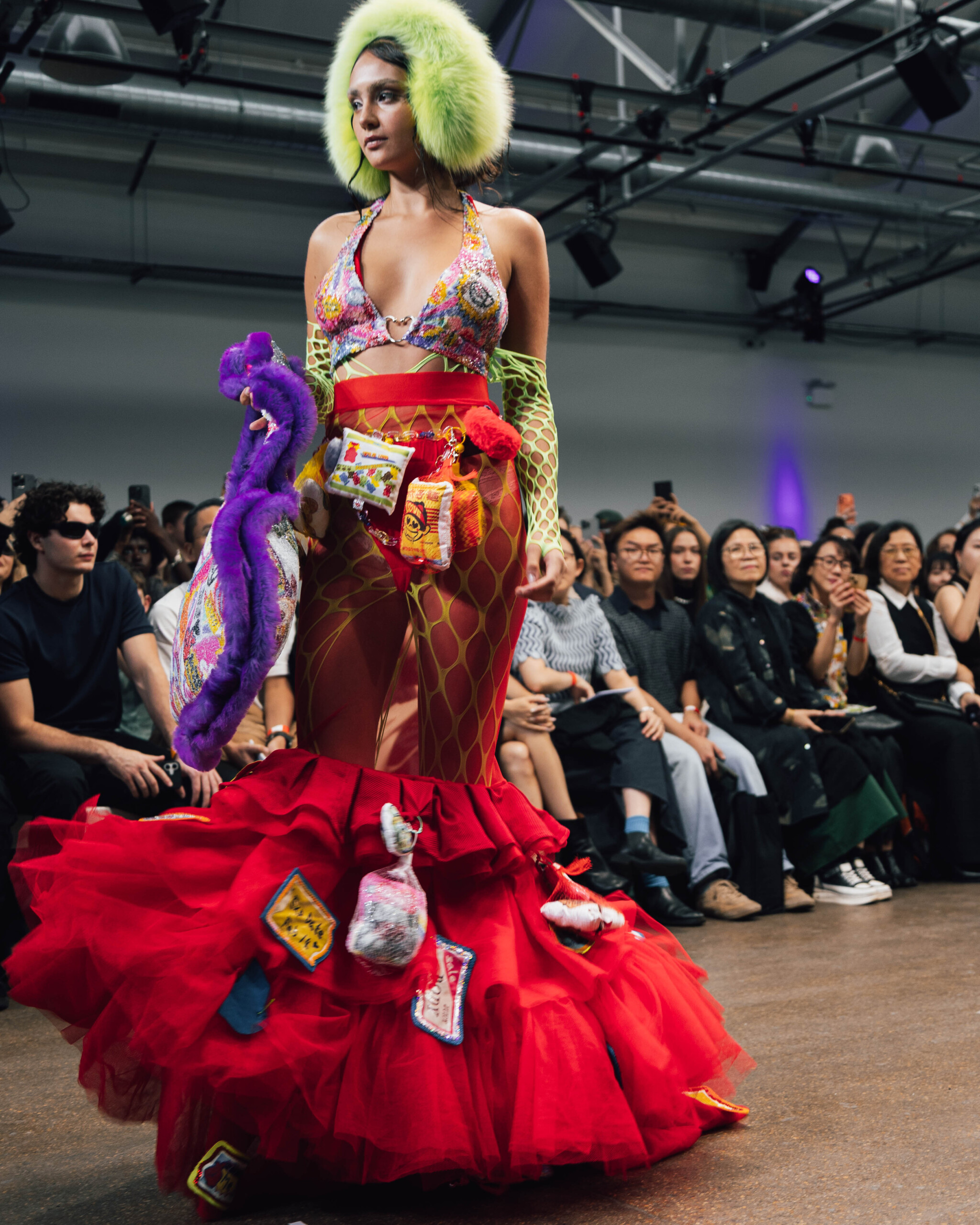
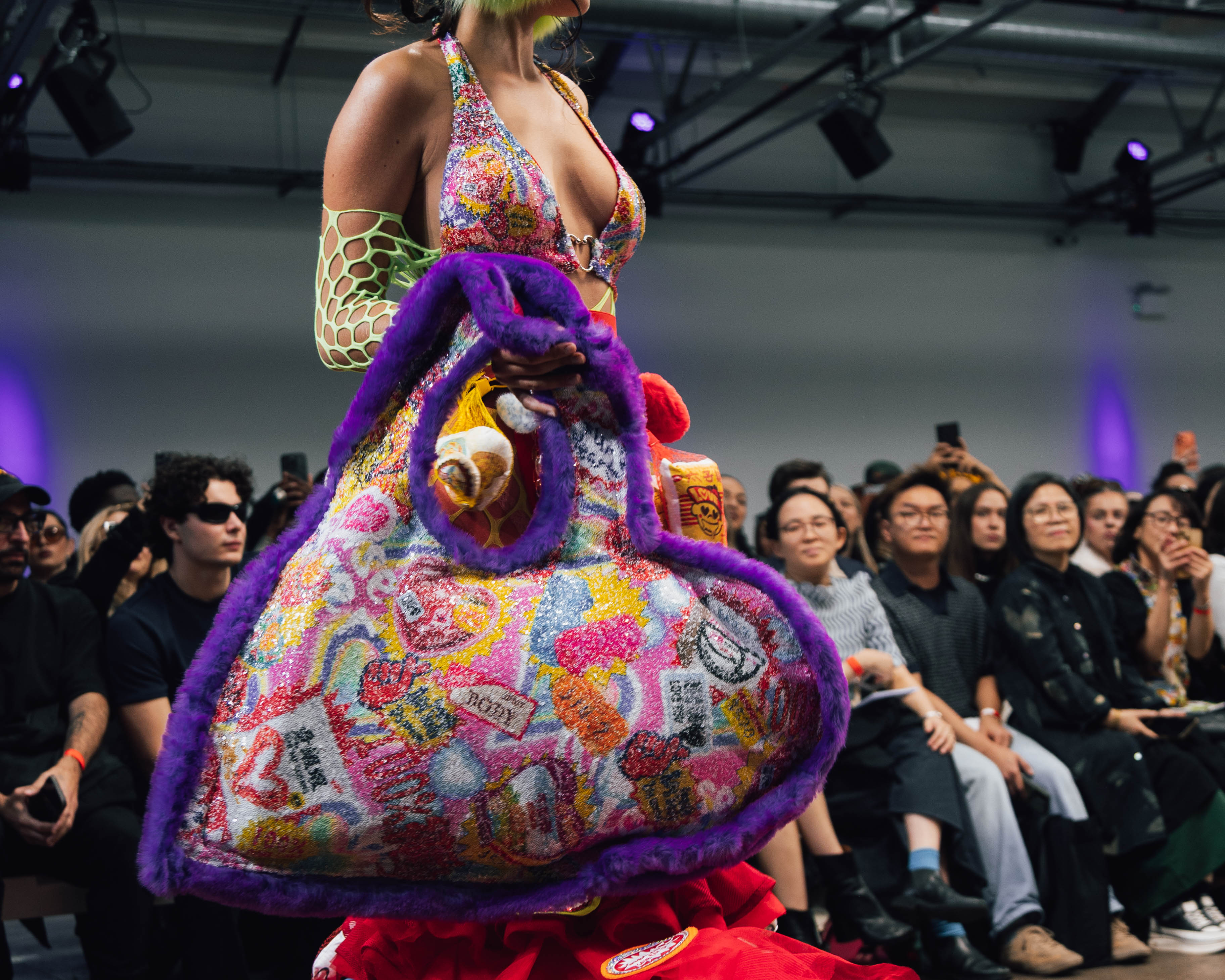
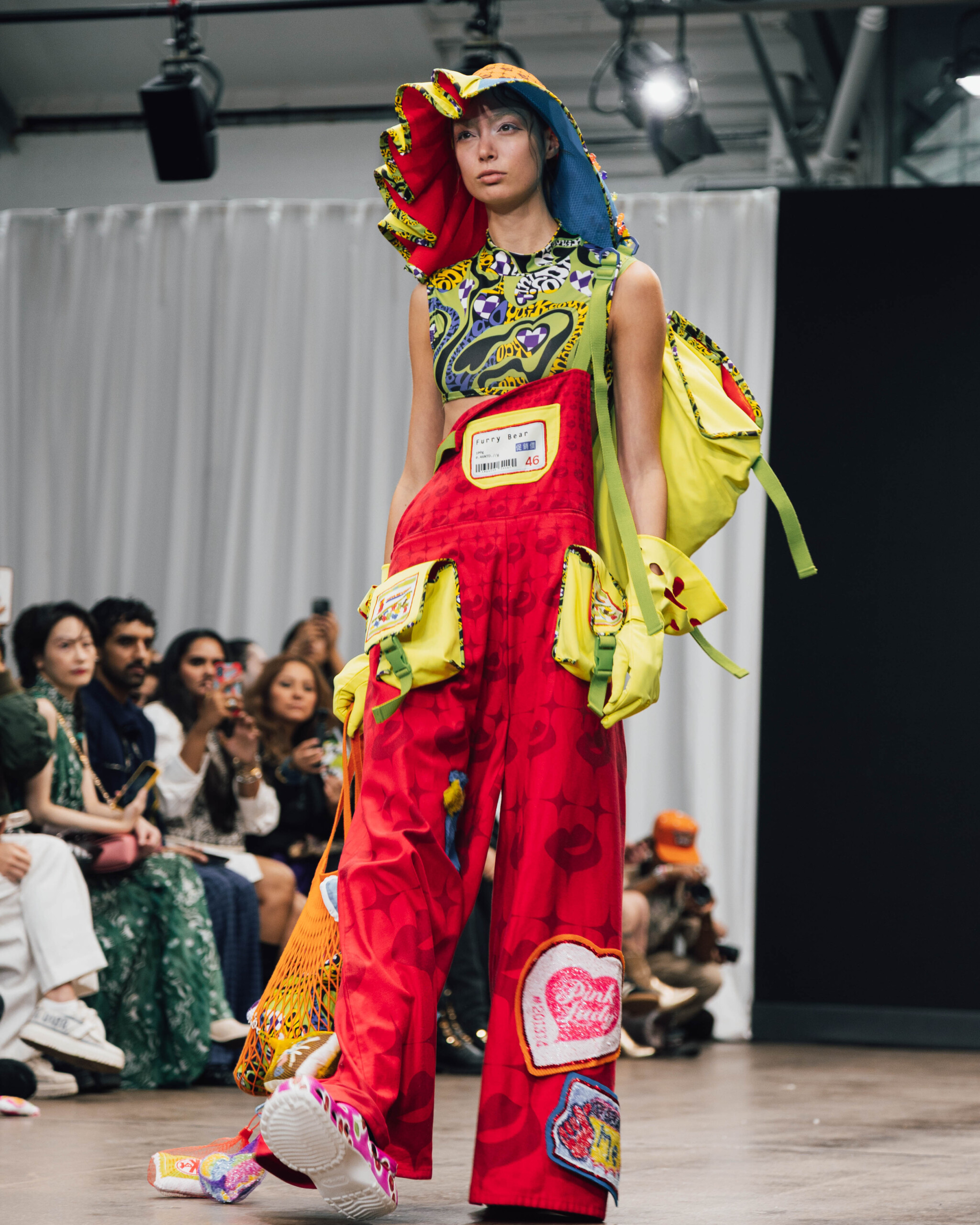
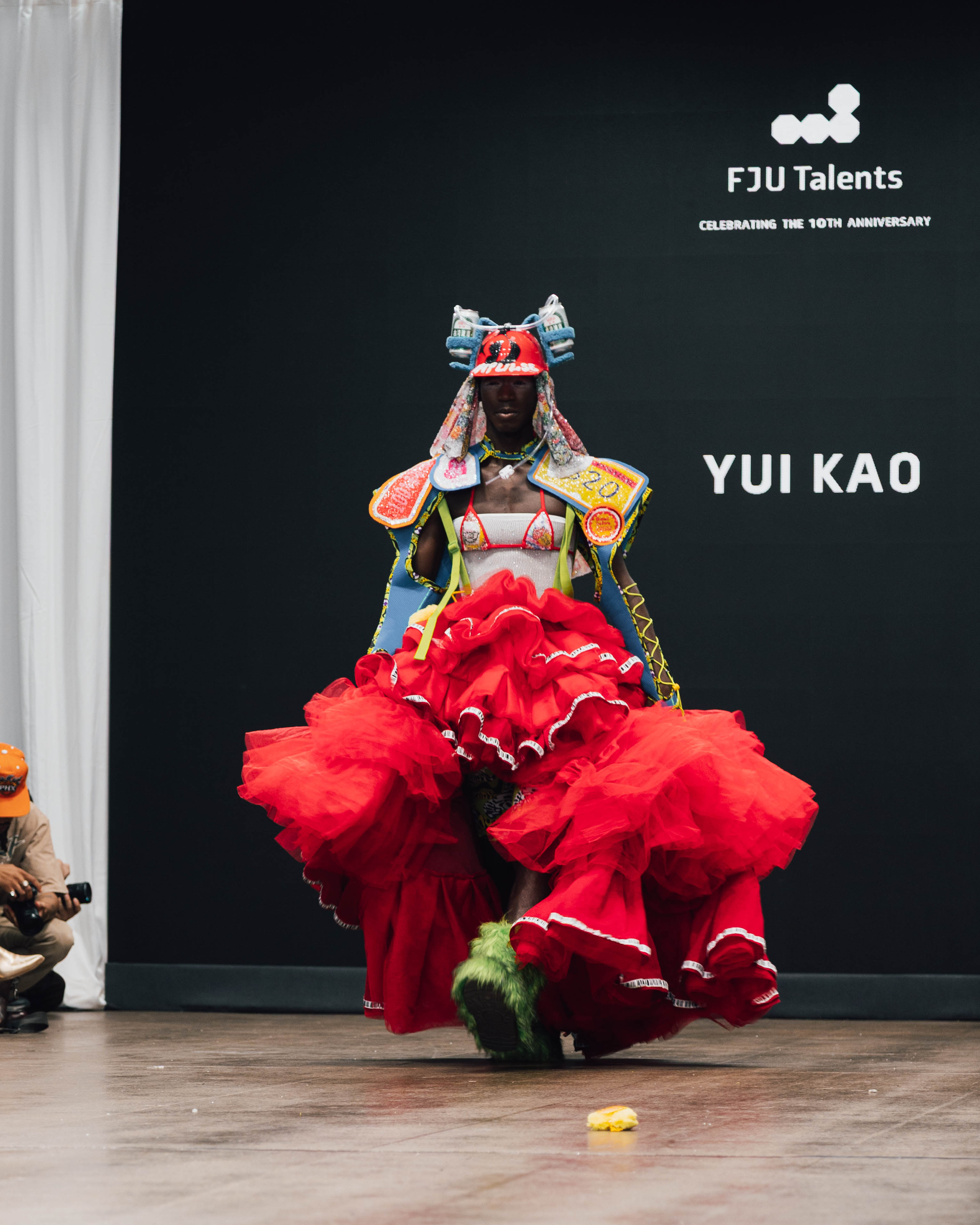
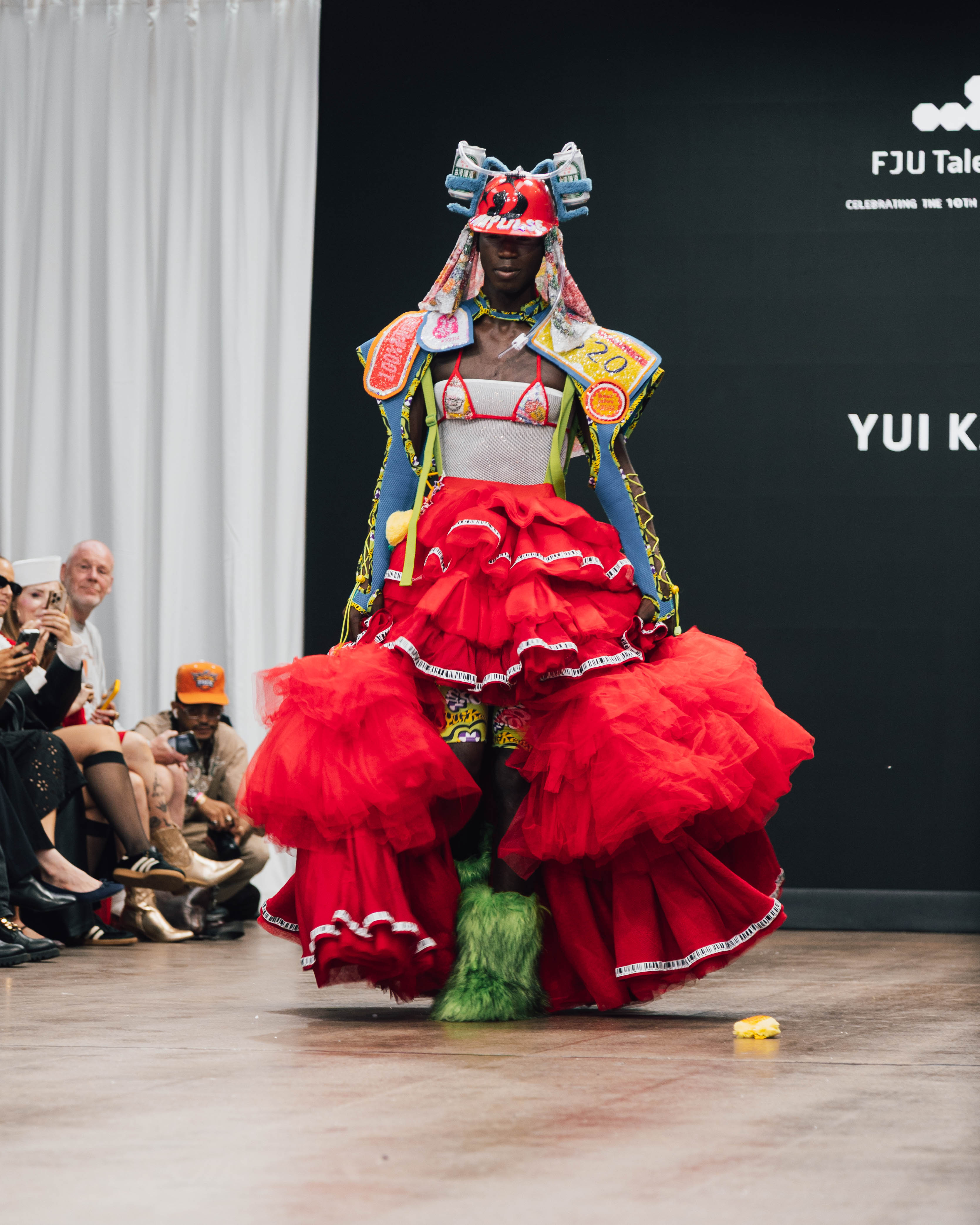
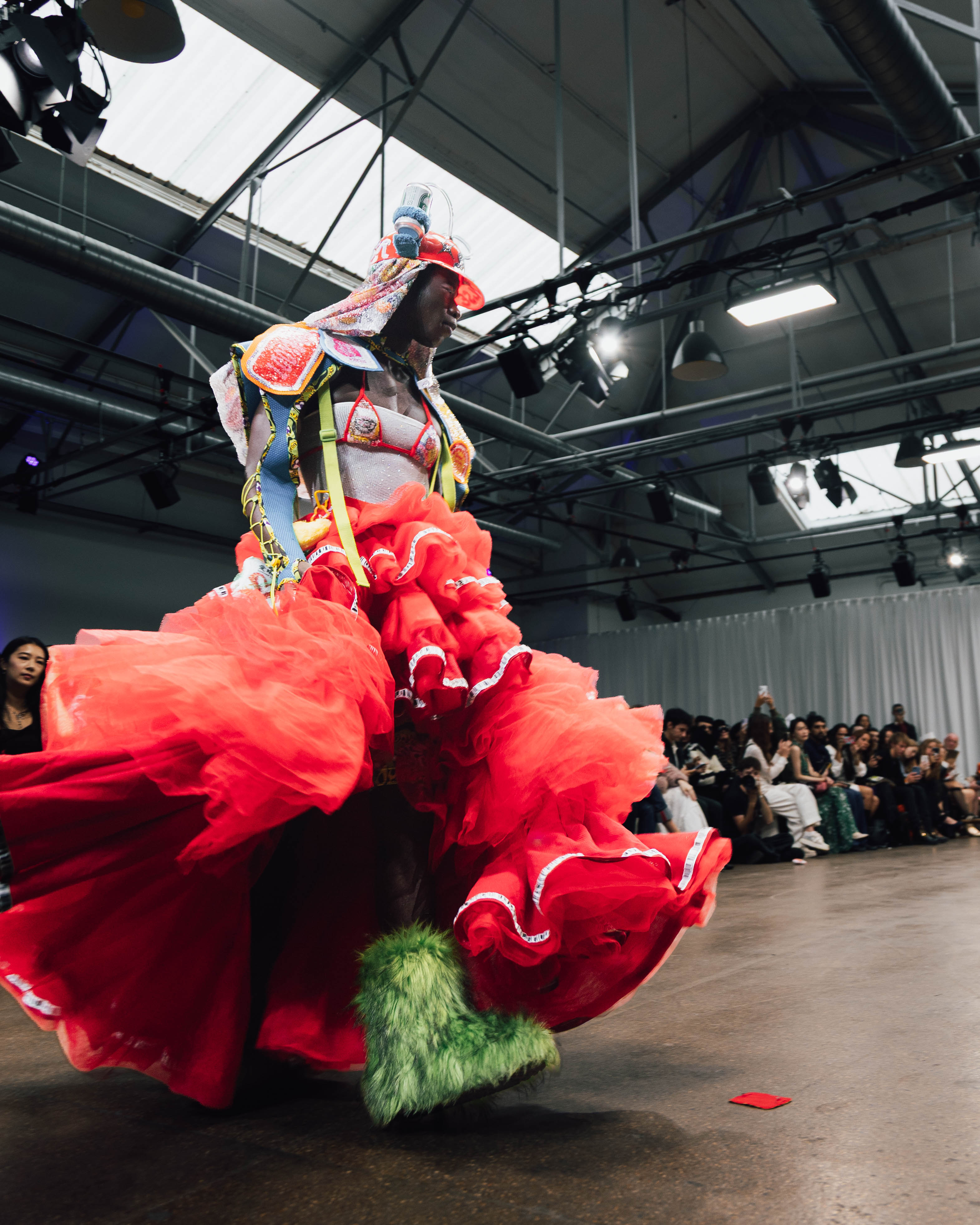
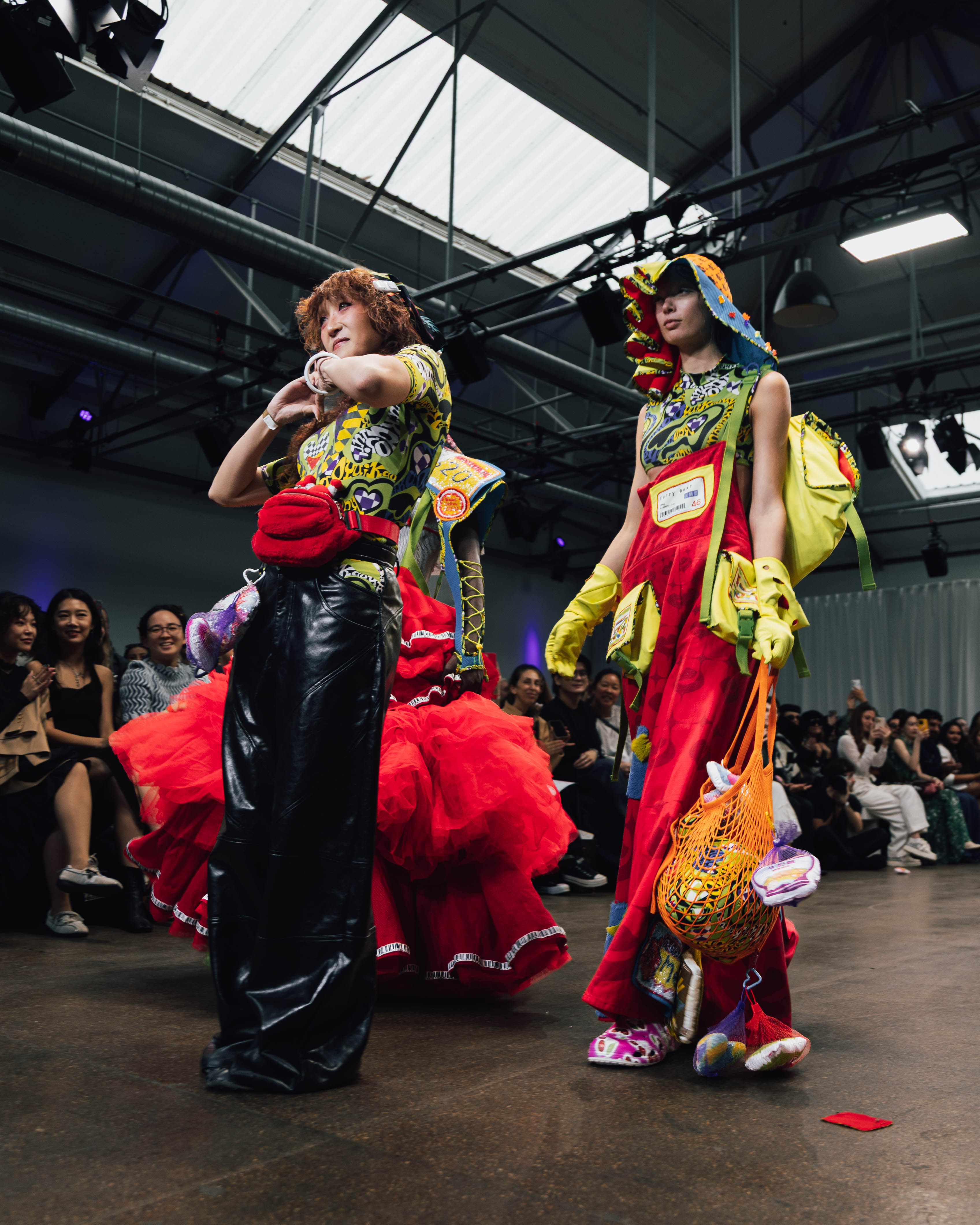
YUI Kao takes the body in a more provocative direction. Impulse Lover examines self-presentation and desire in contemporary romance through the idea of lovers packaged as products to be wanted. Genderless oversized silhouettes are disrupted by cord corsets, while references to Taiwanese snack packaging appear alongside heart-shaped charms and vivid red tulle. The humour and deliberate excess sharpen the collection’s examination of desirability and conventional codes around the body.
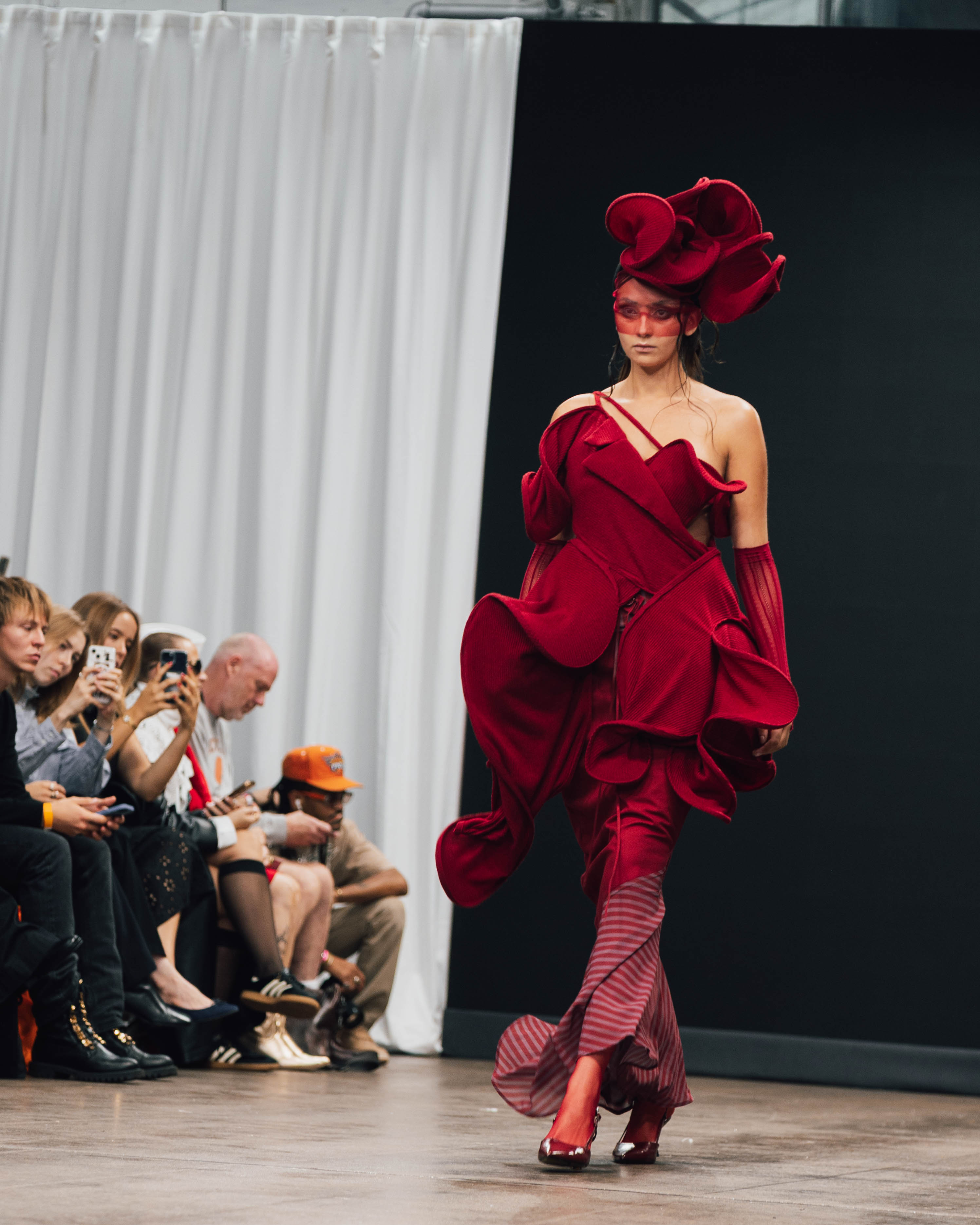
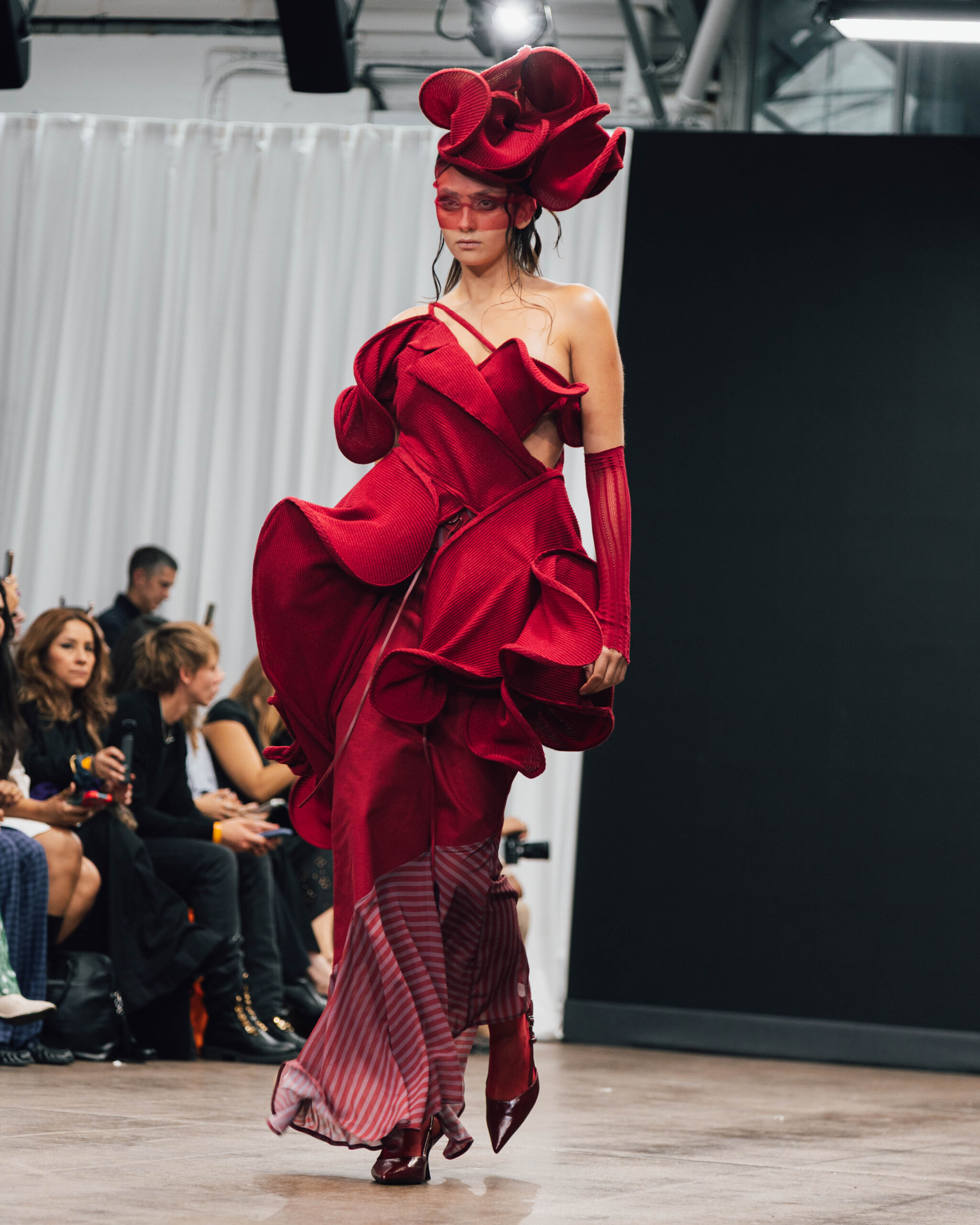
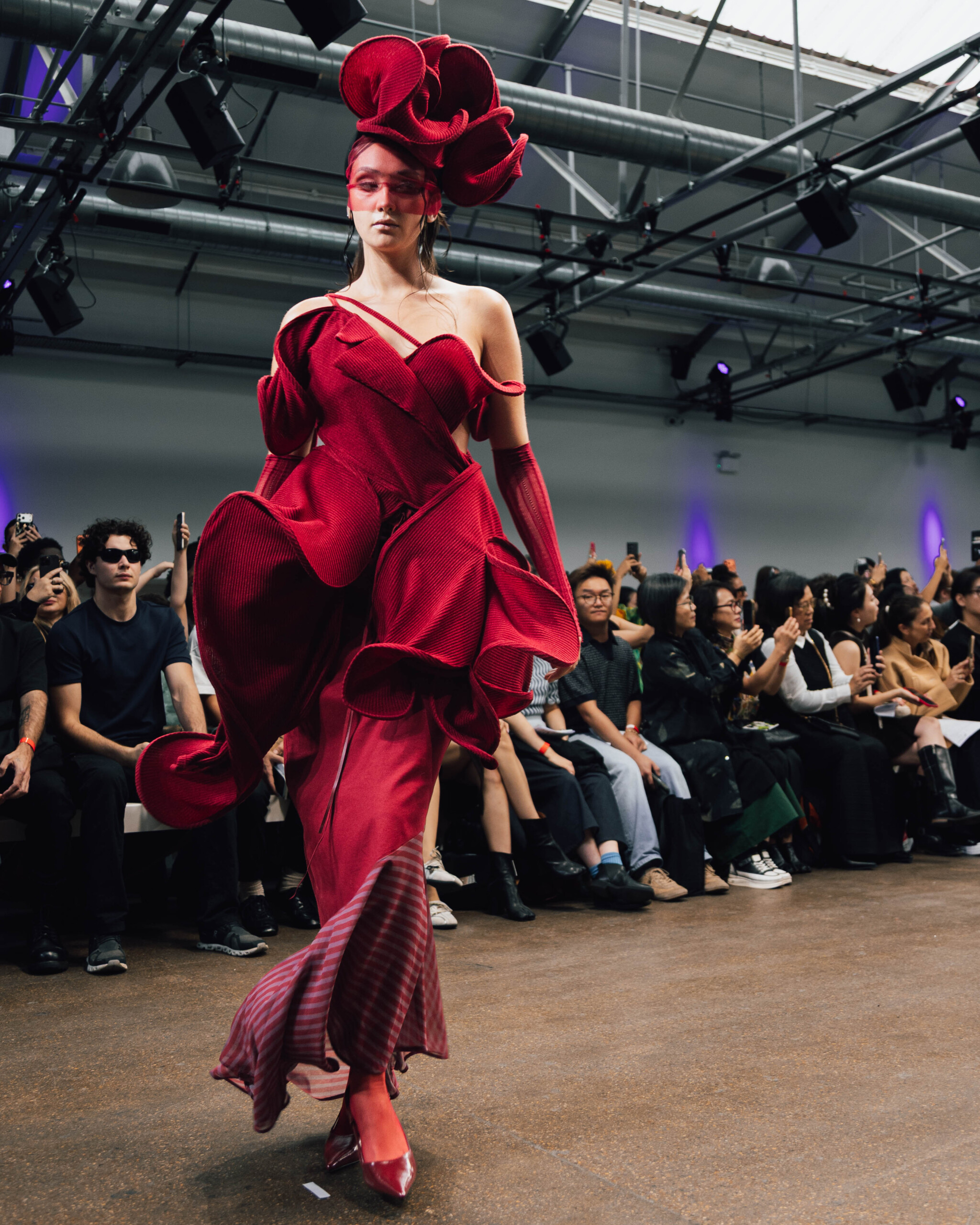
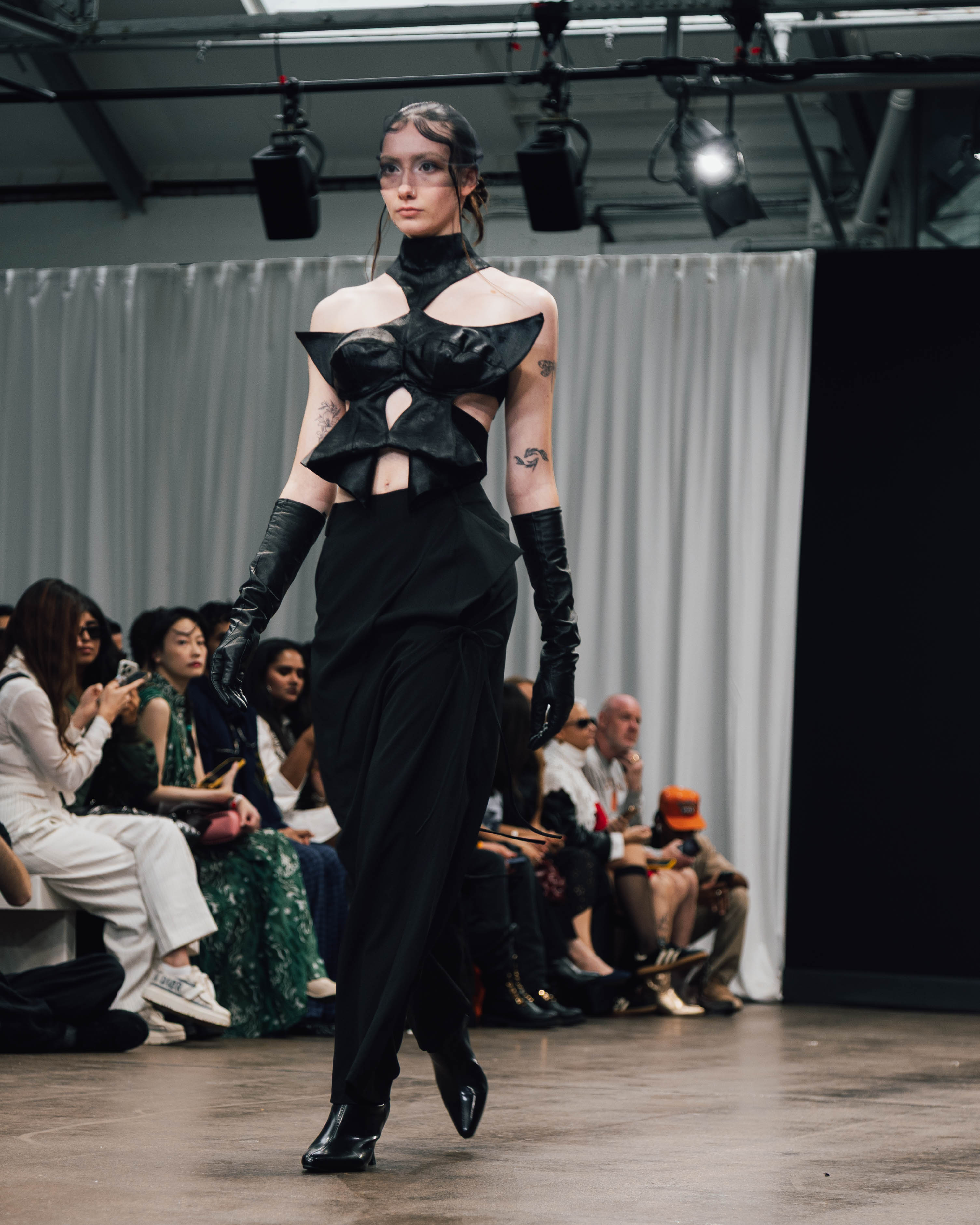
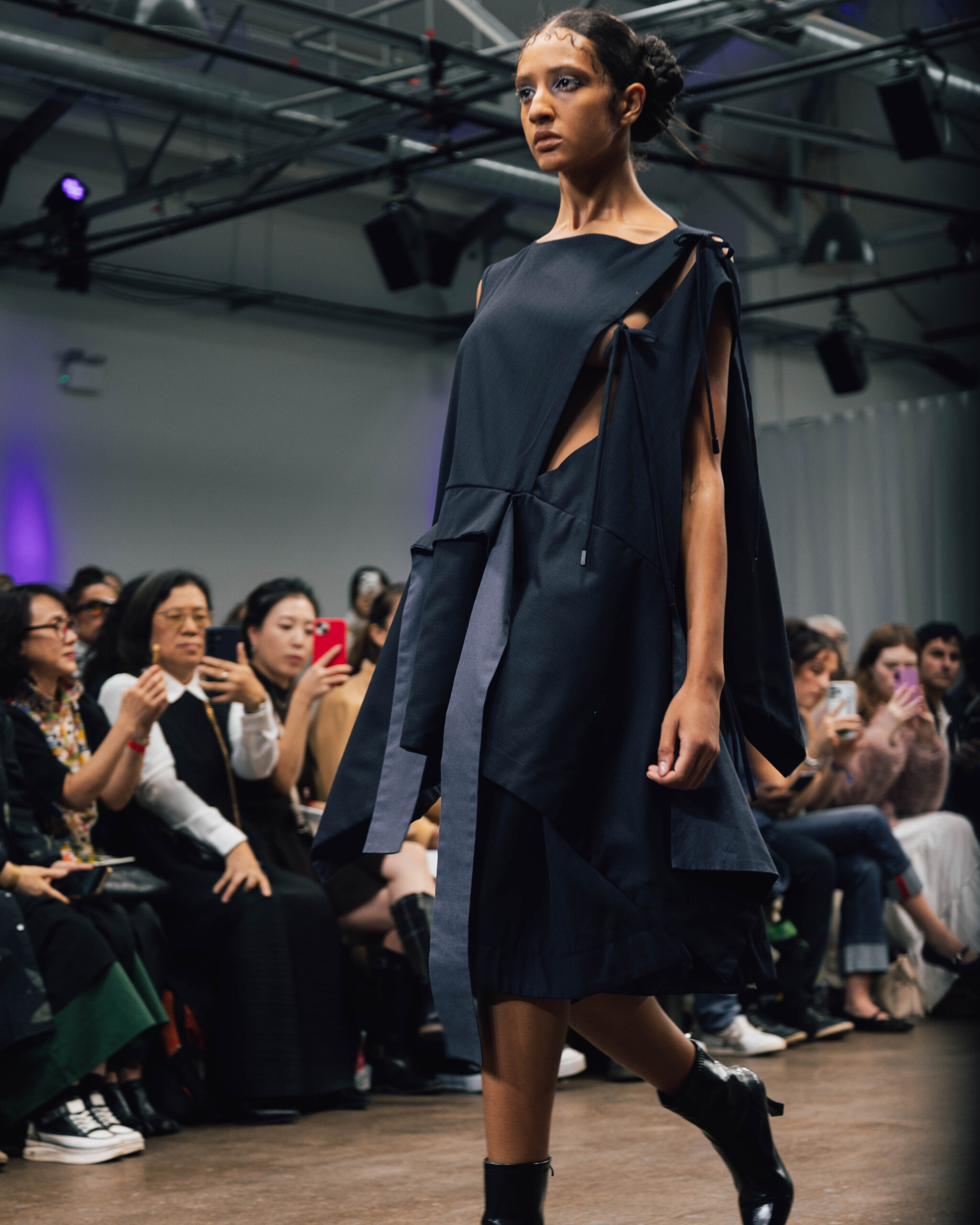
Alison Lai returns to FJU Talents after first being selected for the platform in 2019 and founding her label (She)nanigans in 2024. Her latest work examines patriarchal structures and the gaze directed at the female body from a woman’s perspective. Drawing on the surreal world of David Lynch’s Twin Peaks, Lai works with deconstructed tailoring, distorted black-and-white stripes and vivid red, using visual tension to place social restraint against female desire.
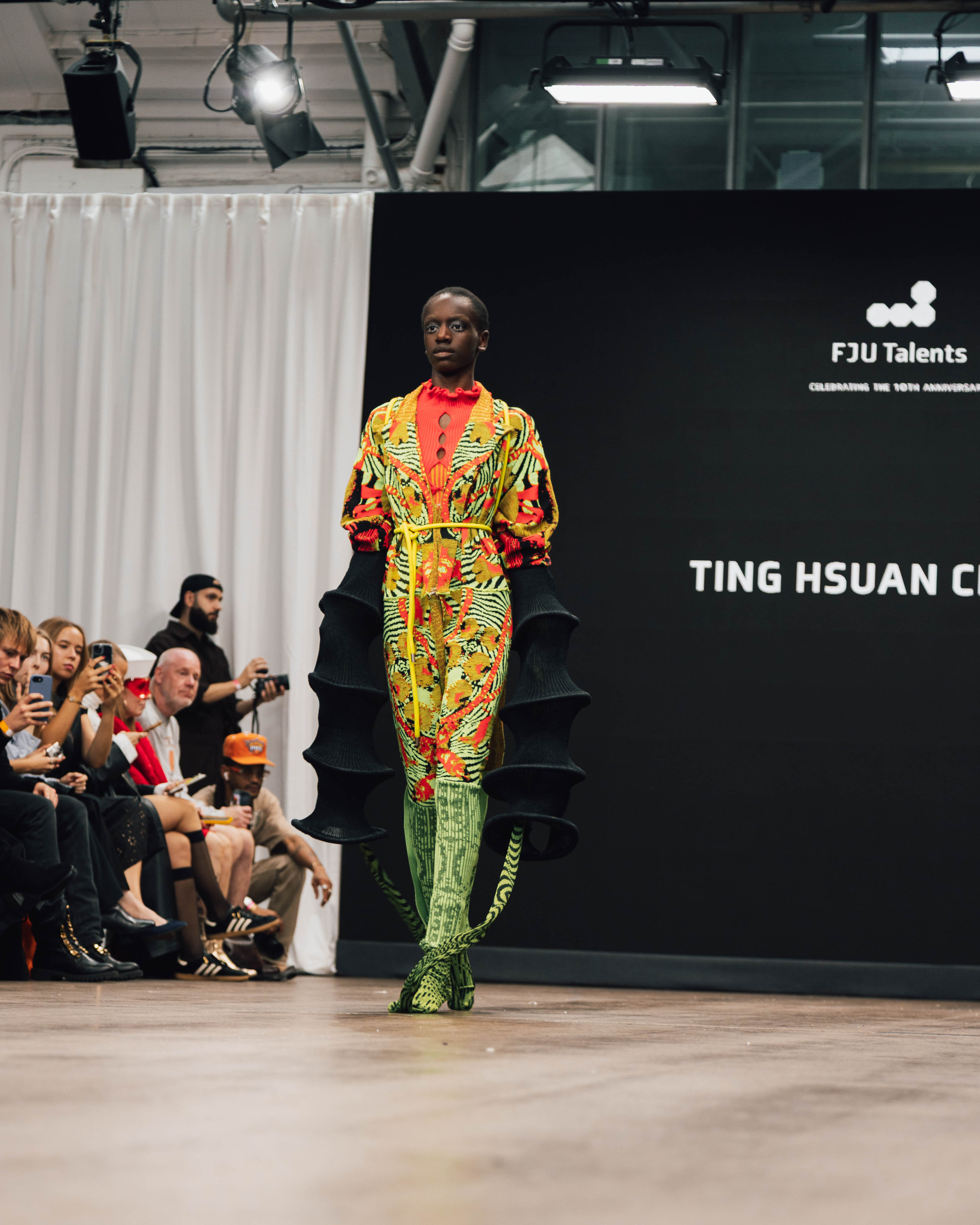
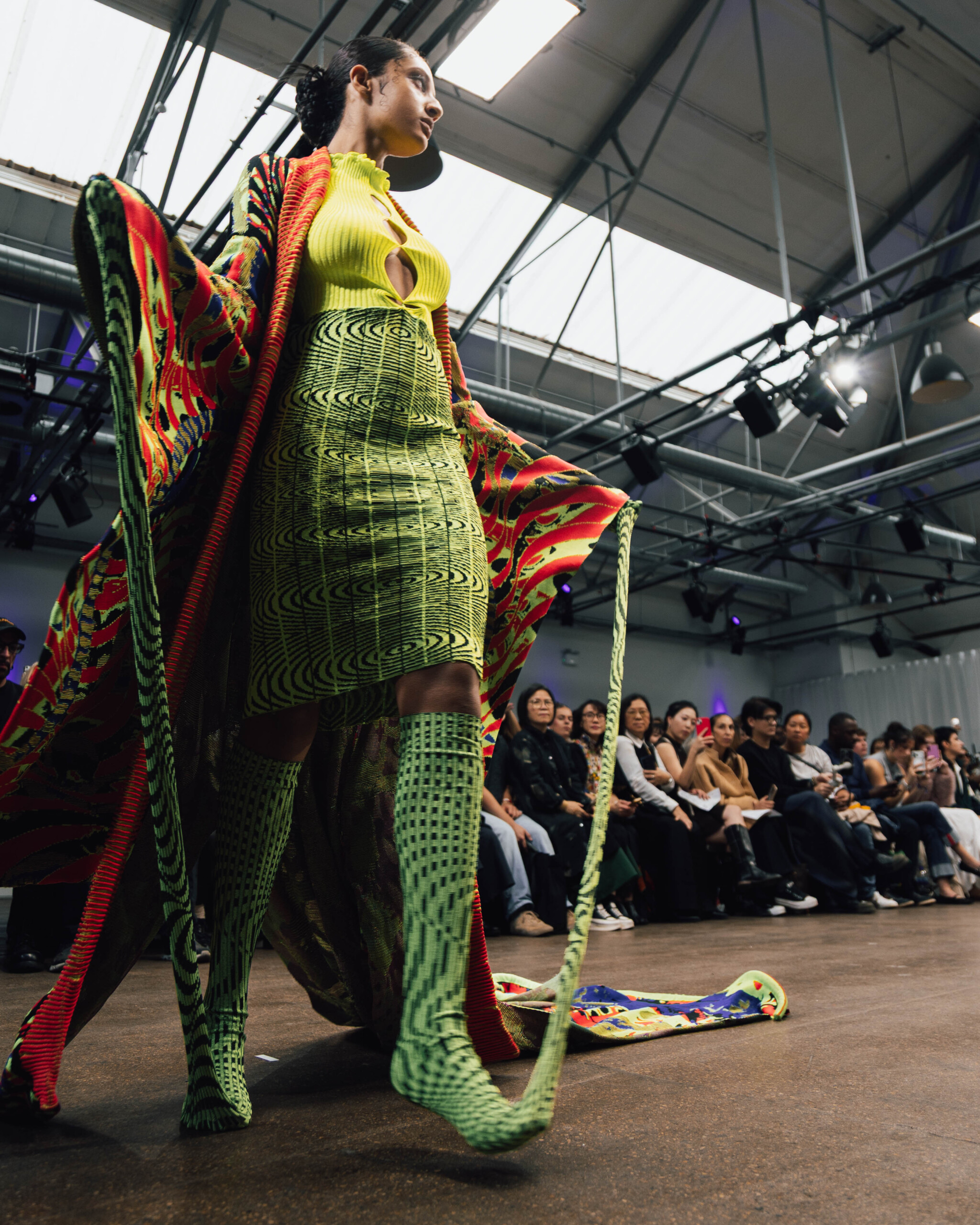
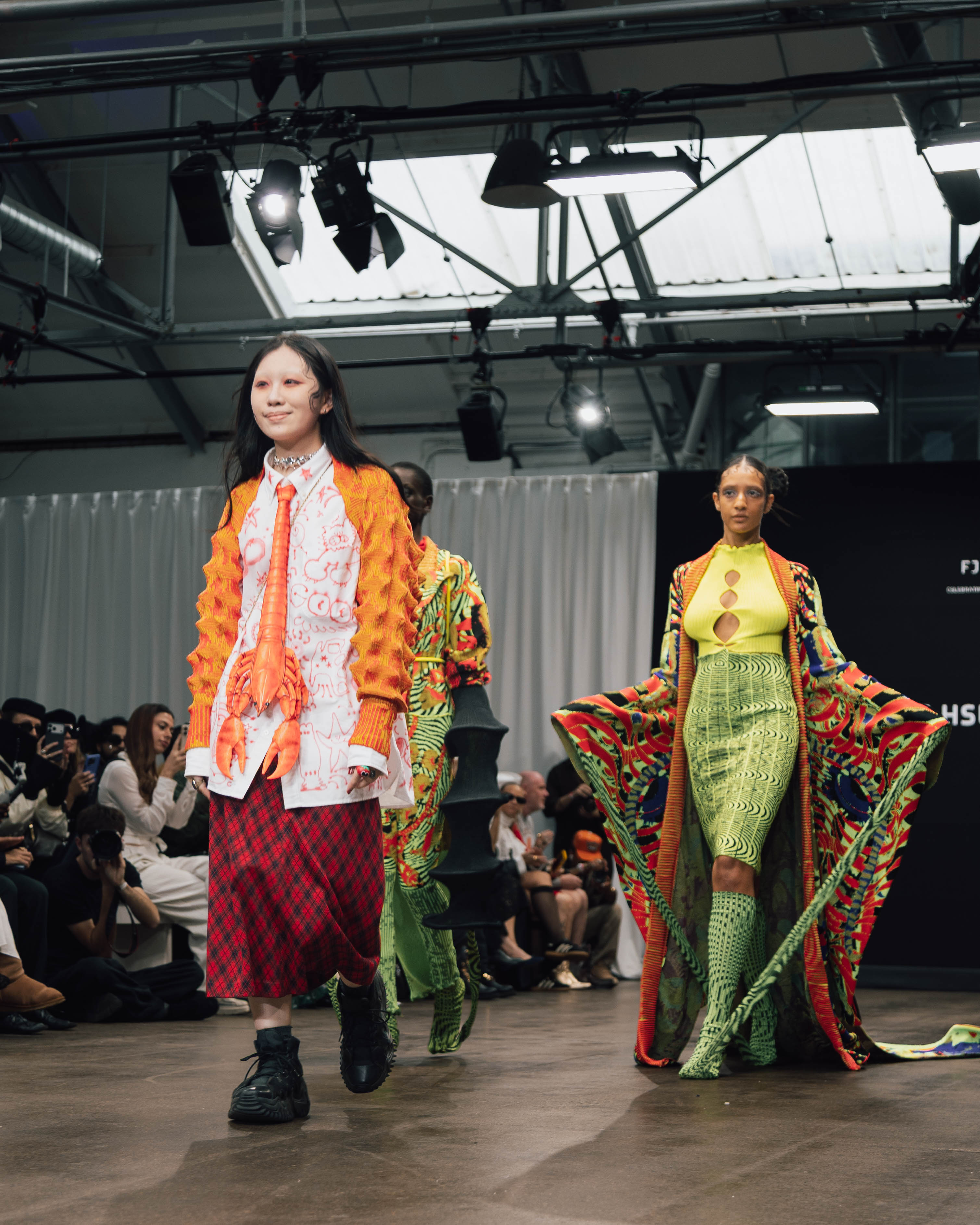
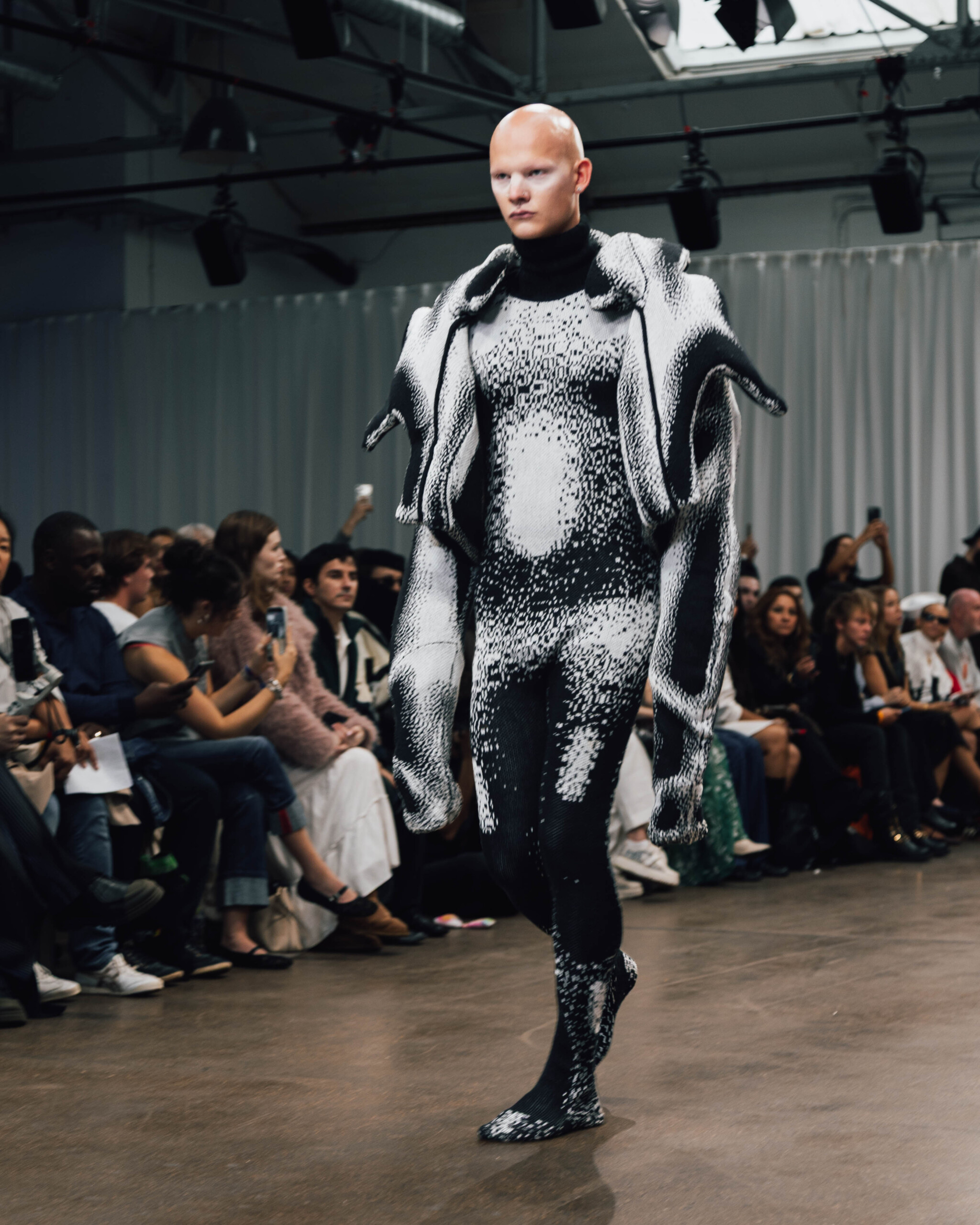
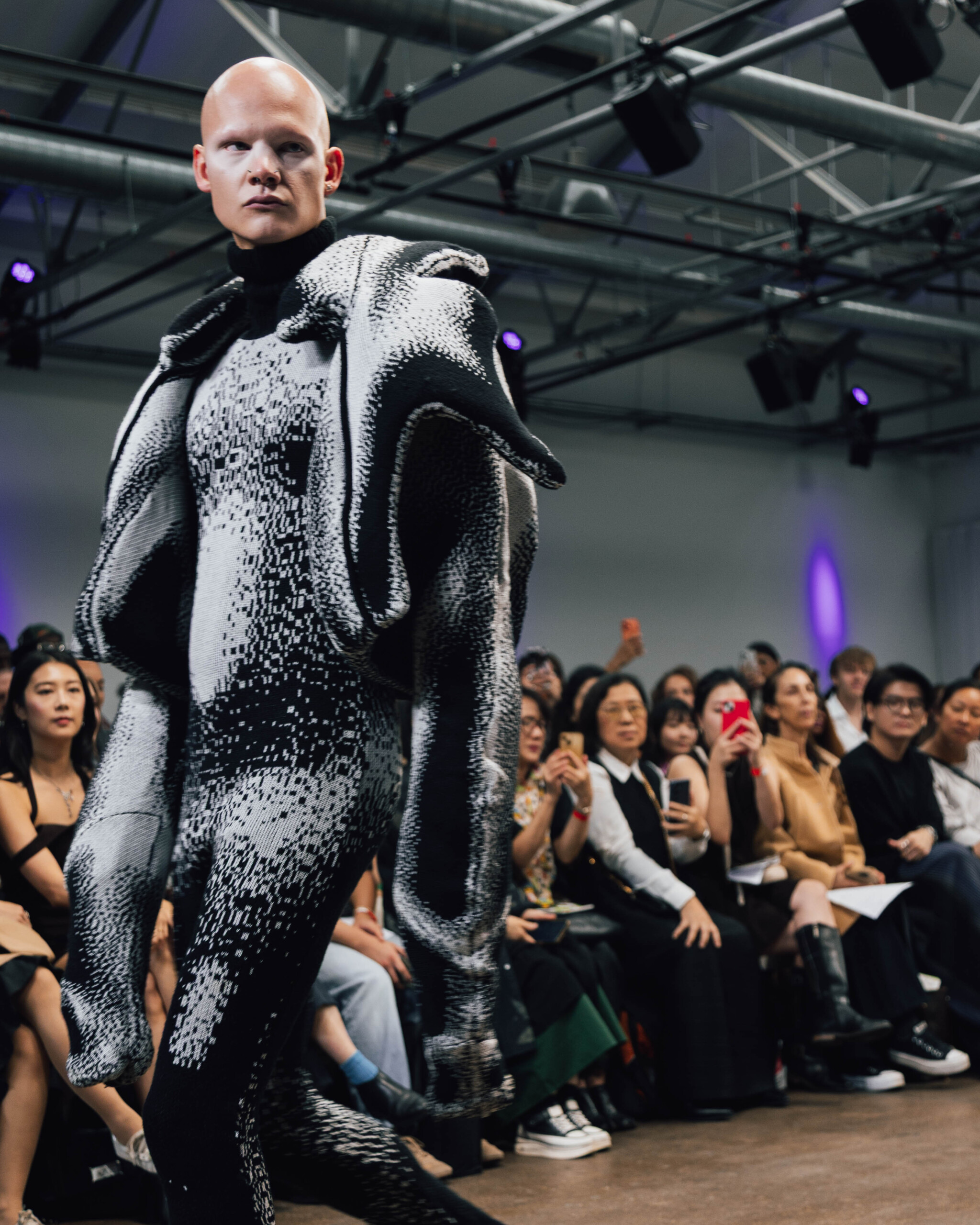
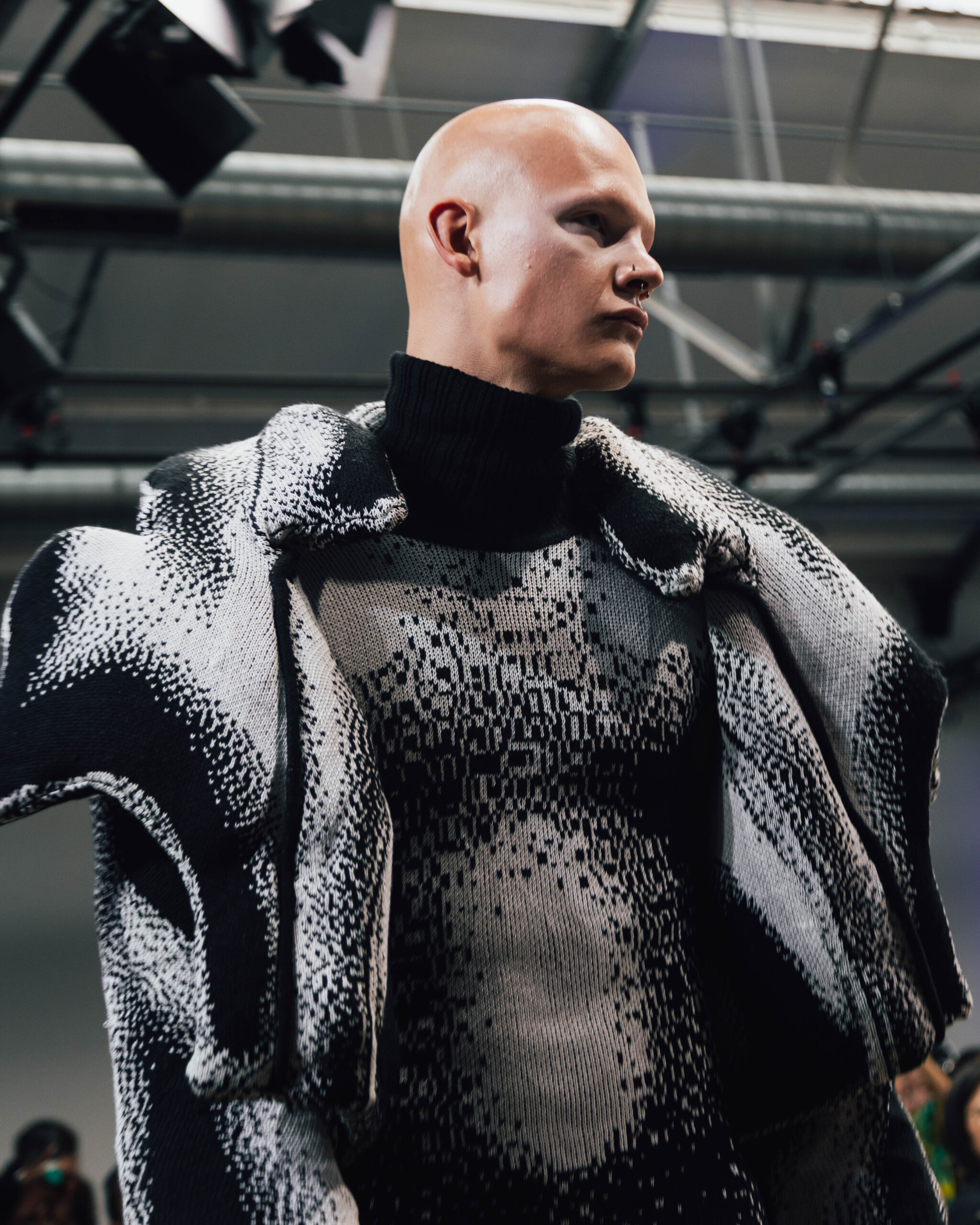
Ting Hsuan Chang’s Cochlea moves from the social body towards questions of belief and control. Inspired by parasitised snails, the collection imagines its own religion through elaborate ritualistic silhouettes and inverse-rib knits that create distorted optical surfaces. The strange biological starting point becomes a way of examining the tension between collective belief, individual consciousness and free will.

A Decade Beyond the Graduate Showcase
The anniversary presentation did more than introduce the 2026 group. FJU Talents also revisited designers who have passed through the programme, giving the London showcase a retrospective dimension and showing how practices developed after their original selection.
Among them was Lai’s earlier project Komorebi in Bloom, inspired by Wim Wenders’ Perfect Days and developed through photography, print and Lumen Print techniques. Xiaomo Chen, selected in 2020 before continuing her studies at Parsons School of Design in New York, was represented through Situated Knowledge, a project examining boundaries between human and object, reality and virtuality through a post-humanist perspective.
Zong Xing Liao’s Silence Mode draws on Eastern Zen philosophy and karesansui through minimalist silhouettes and a restrained greyscale palette. Work from Timmy Chou, Shun An Chen and Chihwen Kuo expands the retrospective further, moving respectively through Indigenous cultural references, resistance to social convention, and knitwear in which stitches and knots become records of memory and accumulation.
The contrast between these projects is significant to the anniversary itself. FJU Talents is not presenting a singular idea of what contemporary Taiwanese fashion should look like. Across the 2026 designers and returning alumni, textile experimentation becomes a vehicle for very different subjects: queer desire, gender, memory, spirituality, Indigenous reference, landscape and the politics of looking.
That plurality has become central to the platform’s role in London. Ten years after its launch, FJU Talents continues to use the city as a meeting point between designers educated in Taiwan and a wider international fashion audience. Its anniversary at Fashion Scout therefore operates in two directions at once: documenting how far previous participants have taken their individual practices while introducing the designers who will define the programme’s next stage.

FASHION FRONTIER
Fashion Frontier is a London-based digital fashion magazine exploring the edge of modern style, creativity, and culture. The platform features designer lookbooks, runway reports, event coverage, and stories redefining the future of fashion in the UK and beyond.
You may also like

Rocky Star Couture AW26/27 Brings Faded Opulence to London Fashion Week
Rocky Star Couture has unveiled its Autumn/Winter 2026/27 collection during London Fashion Week, bui

“Fashion as understanding”: London Fashion Day Season 7 turned the runway into a study of identity
On 1 May 2026, London Fashion Day returned to St John’s Church, Hyde Park with a seventh season th

POET-LAB SS27 ‘REMEMBER’ Turns Memory Into Architectural Form at London Fashion Week
POET-LAB presented its SS27 collection REMEMBER in London on 18 September during London Fashion Week




Post a comment