


Flair Fashion brought eight emerging brands to London Fashion Week on 19 September with its IGNITE Collective SS27 runway at 1 Great George Street, presenting a programme that moved from wearable technology and post-streetwear to couture, costume, textile experimentation and conscious design. Rather than imposing a single aesthetic across the showcase, the platform gave each designer a distinct space to address subjects including childhood vulnerability, cultural memory, work culture, transformation and the emotional process of letting go.
QUAREZ: Clothing as Protection and Escape
QUAREZ approaches clothing less as a conventional brand proposition than as a means of giving physical form to memory and imagination. The designer draws particularly on childhood, translating its freedom, awkwardness and vulnerability into exaggerated proportions and protective silhouettes.
For SS27, clothing becomes a kind of sanctuary for a shy child. Distorted forms allow the wearer to conceal, transform or disappear, while pre-existing materials introduce limitation and reuse directly into the creative process. The result places femininity somewhere between fantasy and defence, considering how a garment can simultaneously hide vulnerability and reveal something more private beneath it. @qu4rez


BERTH: 1970s Freedom Revisited
Founded by Afa Tsang in 2014, BERTH brought Gathering Of Dreamers to the runway, drawing on the free-spirited language of 1970s hippie and bohemian culture.
Layering, varied fabric combinations and cascading fringes create movement, while dream-catcher imagery, floral elements, embroidery and culturally inspired patterns build a wardrobe around individuality and spontaneity. The collection continues the UK-based label’s broader use of sculptural silhouettes, geometry, colour blocking and vintage references within contemporary clothing.


VELESPACE X THE KONG IS DEAD: Between Fabric and Screen
The collaboration between VELESPACE X THE KONG IS DEAD brings technology into contact with post-streetwear.
The Kong Is Dead’s Wounds In Blue takes inspiration from Lucio Fontana’s act of cutting through the canvas. Garment surfaces are similarly treated as something to penetrate rather than preserve: denim is opened to expose red beneath, branding cuts directly through a look and paint enters the construction. The work deliberately resists the appearance of a completely sealed or finished surface.
Velespace takes the conversation into the digital realm with its debut SPHERE 01. The brand’s Tech Charm uses a circular display capable of incorporating still and moving imagery into the look, allowing its visual content to change with the wearer.
VELESPACE: @velespace | Website
THE KONG IS DEAD: @the.kong.is.dead | Website


TRASHY PLANETS: Costume, Myth and Rebirth
London-based fashion and costume house TRASHY PLANETS, founded by self-taught designer and showgirl Bambi Blue, presented Ashes To Ashes.
Ancient royalty, mythology and ideas of rebirth inform dramatic forms, embellished surfaces and feathered details. The one-of-a-kind pieces connect costume-making techniques with sculptural fashion, continuing the label’s interest in transformation and in reworking discarded material into highly theatrical objects. @trashyplanets


UNE ENFANT: Remembering an Earlier Future
Founded in London in 2025, UNE ENFANT looks to the architecture and visual culture of the early 2000s for its latest collection.
Rather than approaching the period purely through nostalgia, the label revisits its optimism about the future. Clean silhouettes, restrained futuristic details and a cool urban palette become a way of considering how an imagined tomorrow from the past can remain present in contemporary dress.


GASHANI: From Roots to Golden Light
Supported by Grow Kosovo, GASHANI presented The Golden Hour for Spring/Summer 2027.
Made in Kosovo, the collection builds its narrative around a progression from earth towards sky. Sculpted corsetry, hand-worked roots and beadwork develop into butterfly-influenced silhouettes, golden petal forms and fluid references to water, concluding with chiffon painted in the colours associated with the golden-hour horizon.
The transition gives natural imagery a structural role: roots, wings, water and light become successive stages within the collection rather than isolated decorative motifs.


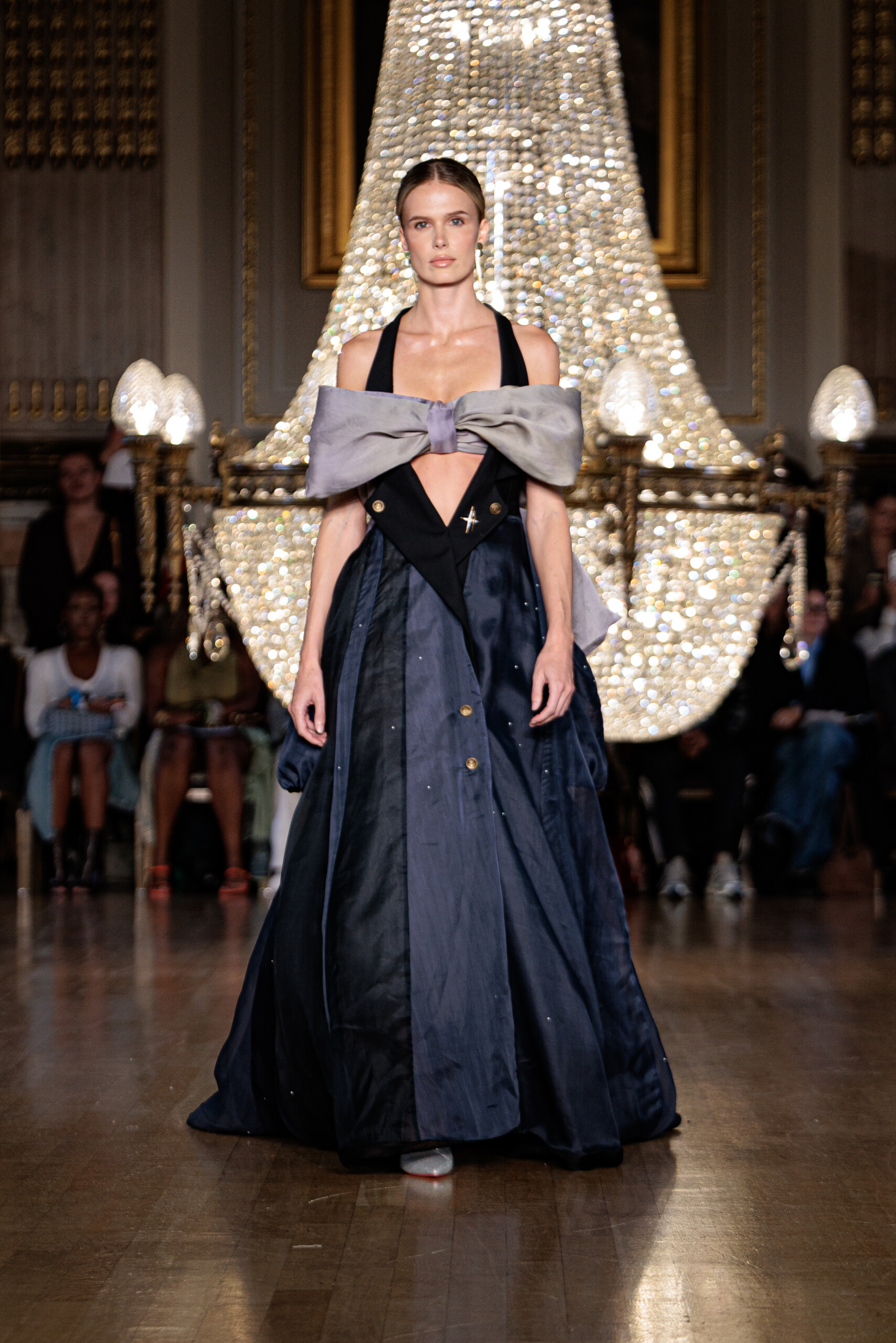
EL KHEMIE: An Anti-Corporate Night in Six Acts
Supported by Design Singapore Council, EL KHEMIE turns corporate culture into material for experimentation.
Founded by architect Kassandra after her return to corporate work, the label’s Department of Nocturnal Affairs follows a caffeine-fuelled worker from midnight towards dawn. Structured as six acts, the collection references Singaporean coffee and tea rituals, with black tea, chamomile and Peranakan butterfly pea tea hand-extracted and layered into silk organza.
Those tones develop alongside botanical greens, earthen shades and corporate navy tailoring, transforming materials associated with long working hours into part of the collection itself. The result frames clothing as an imaginative counterpoint to the routines and pressures of office life.


PSY LAU: The Art of Letting Go
Hong Kong-based streetwear label PSY LAU presented The Art of Letting Go, a collection informed by the Japanese philosophy of Danshari (斷捨離), associated with decluttering, releasing possessions and reclaiming space.
The idea extends beyond the wardrobe. PSY LAU uses letting go as a metaphor for relationships and personal change, questioning the assumption that growth must always be measured through accumulation. For a brand already concerned with limited production, sustainability and imperfection, the theme turns reduction into both an emotional and material proposition. @psylau.hk


Eight Designers Without a Single Formula
What makes IGNITE Collective SS27 coherent is not a common silhouette or trend. Its eight participants use very different tools: reused cloth, couture construction, cultural memory, digital displays, natural dyes, costume and streetwear.
That breadth also explains the function of a collective runway for emerging designers. Instead of asking several brands to conform to one seasonal image, Flair Fashion places materially and culturally distinct practices beside one another. Technology can follow handcraft; theatrical costume can sit beside restrained futurism; an exploration of childhood can precede a critique of corporate working culture.
For SS27, the resulting runway offered a snapshot of independent fashion that is increasingly difficult to reduce to a single aesthetic direction. The common element is creative autonomy: eight designers using clothing to construct their own languages rather than one collective attempting to speak with a single voice.

FASHION FRONTIER
Fashion Frontier is a London-based digital fashion magazine exploring the edge of modern style, creativity, and culture. The platform features designer lookbooks, runway reports, event coverage, and stories redefining the future of fashion in the UK and beyond.
You may also like

Bettie Haute Couture Presents “Bauhaus Reverie: Contemporary Elegance” at London Fashion Week AW25
Rising designer Bettie Haute Couture showcased her latest AW25 collection, “Bauhaus Reverie: Conte

“One of a Kind”: Odessa Fashion Day Season 32 kept Ukrainian fashion visible, individual and moving forward
Some cities refuse to go quiet. In May, Odesa became one of them again as Odessa Fashion Day held it

Jayne Pierson Showcases ‘Annwn’ Collection at London Fashion Week
Jayne Pierson unveiled her Spring/Summer 2025 collection, ‘Annwn’, at London Fashion Wee


Post a comment