


After presenting at London Fashion Week, INFDARK opens up about designing “in public” – not only the final look, but the evolution behind it. The conversation moves through deconstructed pattern-making, transformable garments that aim to reduce waste before it happens, and a creative practice built on reading, culture, and self-made narratives – with a sharp take on how trend cycles can dilute individuality.
– Your brand has just presented its latest collection at London Fashion Week. What did this moment represent for you personally and professionally?
– Personally, it basically means I can finally rest a little and just chill.
Professionally, I’m already thinking about what we’re going to present next time.
– For those discovering INFDARK for the first time, how would you define the essence and philosophy of the brand?
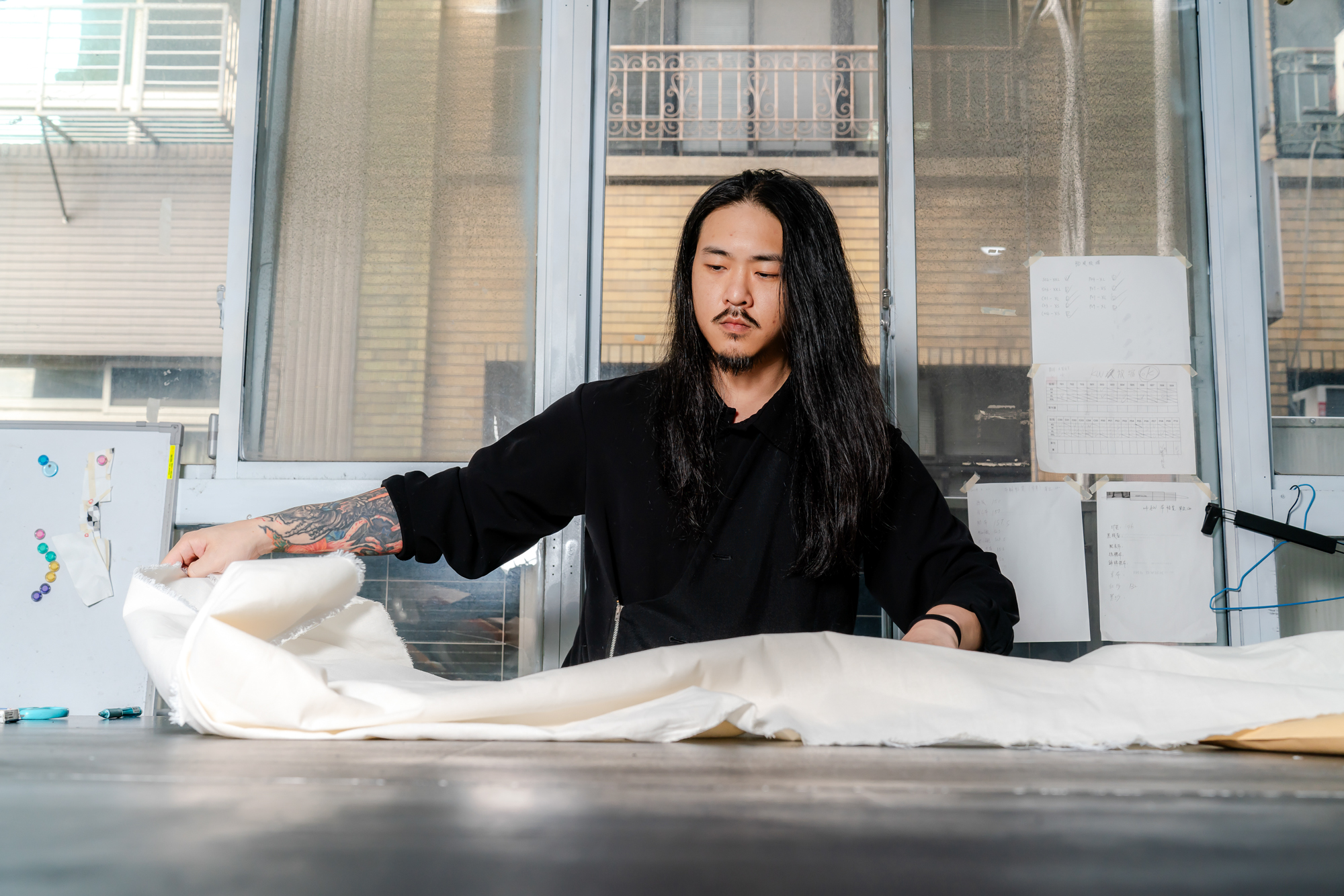
– INFDARK is built on deconstructed pattern-making. We create pieces with transformable functions – for example, a tote bag can turn into a T-shirt, and trousers can turn into a skirt – so they stay with the wearer longer and reduce fashion waste. We also use cultural elements in prints and details, and I hope every piece tells its own story.
– What was the core idea behind the collection you presented in London, and what emotions or reflections did you want the audience to experience?
– This collection is about showing the process of how design evolves, not only the final outcome. It was divided into small groups; each group shares the same design unit, but it’s presented in different ways. That makes the clothing feel more fluid, responsive, and alive.
I don’t want to tell people how to feel. By INF’s principle, people should see everything with their own eyes, digest it, and build their own feelings – not be instructed by anyone, even the designer. That’s the most important idea for fashion: freedom, and individuality, showing themselves.

– Your work often explores transformation and multifunctionality. How do these concepts reflect the way you see contemporary life?
– Fashion today is too “kidnapped” by digital trends. Everyone plays it safe instead of making genuinely new things – and I think it’s a designer’s duty to keep creating and to point toward new perspectives for the next decade.
– Sustainability is frequently discussed in fashion today. How does INFDARK approach responsibility – not as a trend, but as a long-term commitment?
– As I mentioned, INF doesn’t only use recycled materials – for example, 3D-printed shoes made from recycled plastic. The key is designing transformable pieces that can stay with the wearer longer and help prevent fashion waste. Instead of reacting after waste is created, we try to stop it from happening in the first place.
– How does your cultural background influence your creative language and aesthetic decisions?
– Taiwanese culture definitely shaped my design in some ways, but it’s not the only influence. I’m interested in cultures and stories worldwide – history, music, novels – and over time they’ve all become part of me.
– What does the creative process look like for you – from the first concept to the final runway piece?
– I always read before I start. I dive into the story behind a concept and try to dig further. Then I create my own version of that story out of older ones. Every design, print, and even makeup comes from the story I build.

– Many designers balance artistry and business. As both designer and brand owner, how do you navigate this dual role?
– We focus a lot on customers. Listening and talking with them helps you understand how they feel – we learn from each other. My favourite moment is when we launch a piece with three ways to wear it, and a customer comes back next season with a fourth or fifth way and says, “Aha – you didn’t think of that, did you?”
– In an era where fashion moves extremely fast, how do you protect depth and meaning in your work?
– I don’t create anything without a proper background story – and that will always be my way of designing.
– What does individuality mean to you today, and how can clothing empower identity?
– Individuality is being sacrificed by digital trends. Massive trends take over, and people get scared of being different. Younger groups use tags to label themselves to find identification, which is a pity. Life has so many possibilities – it’s important to keep trying new things and enjoy it, to be yourself.
– After presenting at London Fashion Week, how do you see the global positioning of INFDARK evolving?
– Once you start a business, there’s no stop. I don’t want to set one goal – we want to be everywhere we can.
– Looking ahead, what is the next chapter for you and for the brand?
– Hard to say. I’ll tell you with the next presentation.


FASHION FRONTIER
Fashion Frontier is a London-based digital fashion magazine exploring the edge of modern style, creativity, and culture. The platform features designer lookbooks, runway reports, event coverage, and stories redefining the future of fashion in the UK and beyond.
You may also like

BAÉ reworks adidas Baltic into sculptural AW26 womenswear in “Flame of the Forest”
For AW26, BAÉ has released a new collaboration with adidas Baltic, using upcycled sportswear materi

Stitching Humanity: London Fashion Day 2025 Ignites Sustainable Style in Hyde Park
The fifth season of London Fashion Day took place on 26 April 2025 in the historical setting of St J

FALVAON: Modern Vietnamese Luxury Rooted in Emotion, Craft and Time
Founded in 2022 and based in Vietnam, FALVAON is a contemporary womenswear brand connecting with wom




Post a comment