


For AW26, BAÉ has released a new collaboration with adidas Baltic, using upcycled sportswear materials to build a collection that moves between technical heritage and contemporary femininity. Titled “Flame of the Forest,” the collection reframes familiar athletic codes through a more directional silhouette language, turning existing materials into garments defined by structure, softness, and controlled statement dressing.
The design process begins with reconstruction. adidas Baltic performance fabrics, iconic stripes, and technical trims are taken apart and reworked through BAÉ’s own aesthetic, producing silhouettes that combine architectural tailoring with fluid draping. The collection features reassembled panels shaped into sculptural bodices, narrowed waists, and elongated lines, while layered textures add movement and depth to fabrics usually associated with performancewear.


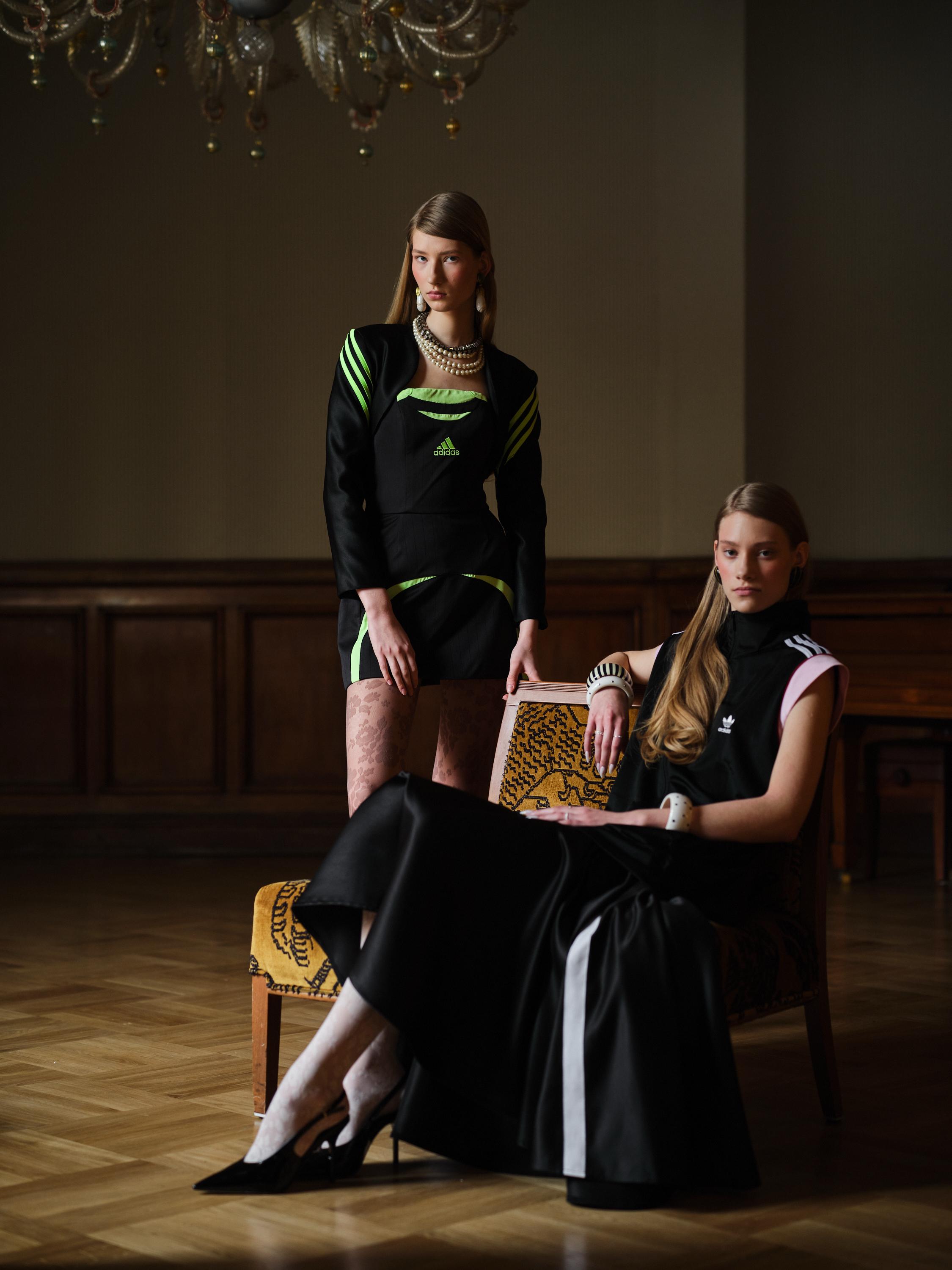


The result is less a direct sportswear crossover than a transformation project. BAÉ preserves traces of the original garments, but shifts them into a new fashion context — one that feels more refined, more feminine, and more emotionally expressive. In that sense, “Flame of the Forest” uses upcycling not only as a sustainability method, but as a visual language in itself.
That aligns with the brand’s wider philosophy. Founded by Katya and Marina, BAÉ was built around the idea of slow fashion and pieces made to mark special moments while remaining wearable beyond a single occasion. The label places particular emphasis on fit and adaptability, with dresses offered in both long and short cuts, adjustable straps for comfort, and removable accessories that allow the same garment to move between casual and more elevated styling.
BAÉ also links its production model to a more responsible fashion structure, pointing to local manufacturing, reduced transport impact, and a deliberate effort to challenge overproduction. In AW26, those values are given a stronger material form: not only through what is said about sustainability, but through a collection literally built from what already existed.

FASHION FRONTIER
Fashion Frontier is a London-based digital fashion magazine exploring the edge of modern style, creativity, and culture. The platform features designer lookbooks, runway reports, event coverage, and stories redefining the future of fashion in the UK and beyond.
You may also like

Enchanted Hearts Collection: A Whimsical Evolution in Fashion
The Enchanted Hearts Collection represents a mesmerizing progression in fashion, capturing whimsical

Mur Mur’s London Fashion Day show explored the quiet power of sensual minimalism
At London Fashion Day, Ukrainian brand Mur Mur presented a collection built around a clear emotional

Flapper6 frames SS26 around sculptural strength and fluid movement in “Flame of the Forest”
Luxury womenswear label Flapper6 is building its identity around a clear proposition: strong silhoue




Post a comment