


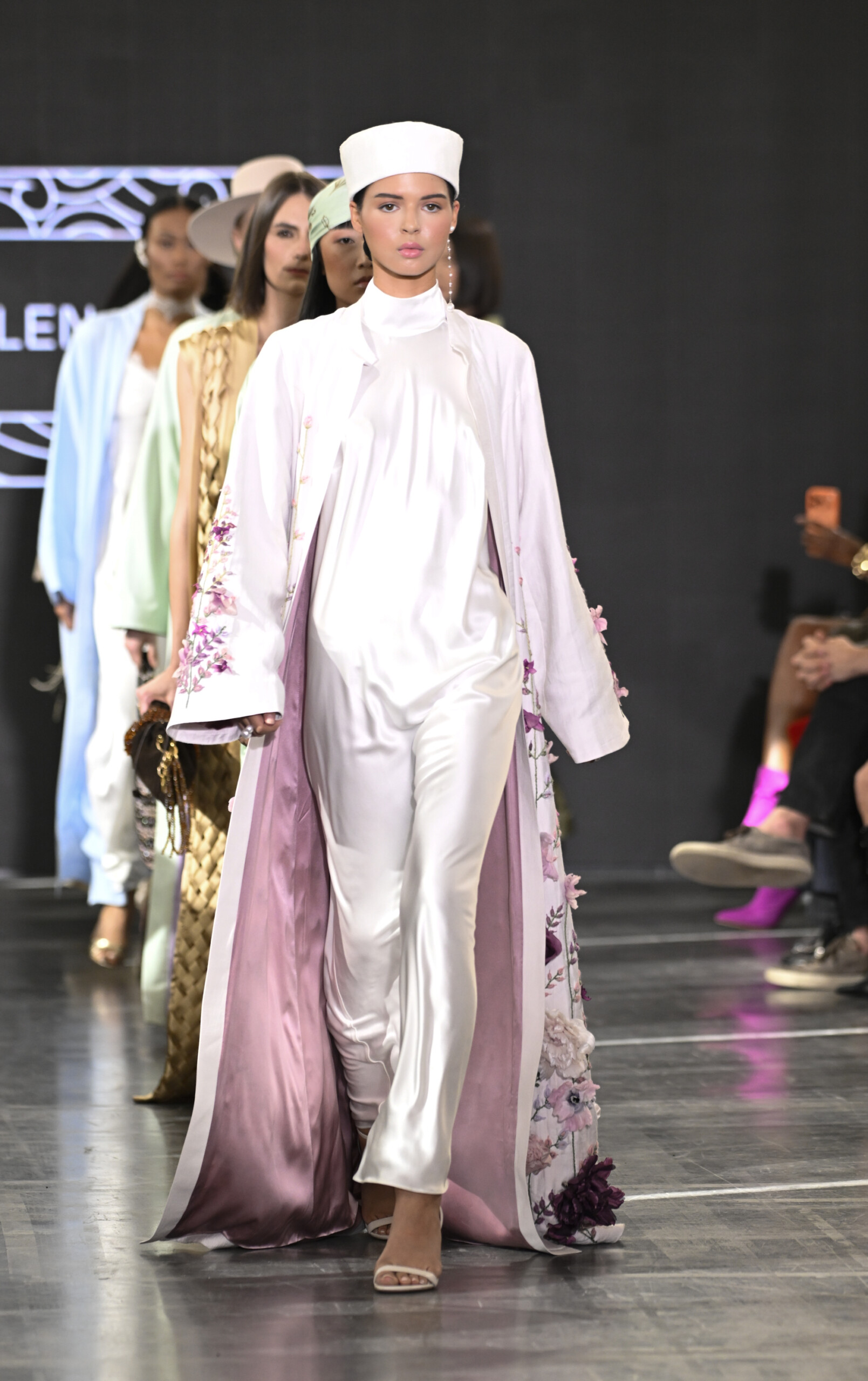
Ukrainian designer Olena Adam presented her Spring/Summer 2027 collection, BESSARABIA, in Paris on 5 October 2026, drawing on the multicultural heritage of the region where she grew up. Created and produced in Ukraine, the collection translates childhood memories, traditional craftsmanship and the landscapes of Bessarabia into fluid silhouettes, natural silk and linen, original prints, embroidery and handcrafted lace. Rather than reproducing historical dress, Adam examines how cultural inheritance can remain visible within a contemporary wardrobe.
Bessarabia as a Meeting Point of Cultures
Situated across parts of present-day southwestern Ukraine and Moldova, the historic region of Bessarabia has long been shaped by the coexistence of different communities. Ukrainian, Moldovan, Bulgarian, Gagauz, Lipovan, Jewish and Roma traditions have contributed to its cultural landscape, preserving distinct languages, customs and forms of craftsmanship.
For Adam, these references are not distant historical material. They belong to the environment in which her understanding of culture and identity developed.
That personal relationship provides the foundation for BESSARABIA. The collection explores the possibility of different cultural identities existing alongside one another without losing their individuality, using fashion to consider belonging as something more complex than a single national or aesthetic definition.
The approach is particularly relevant to a designer working internationally while maintaining production in Ukraine. Paris provides the setting for the presentation, but the collection’s visual language remains connected to the region that shaped Adam’s early life.



The Festan and the Language of Cultural Inheritance
One of the clearest connections between Adam’s heritage and her established design practice is the house’s signature Festan.
Its name derives from the Gagauz fistan, a traditional women’s dress. The reference connects the brand’s contemporary approach to femininity and movement with a specific element of Bessarabia’s multicultural clothing traditions.
Rather than using historical references as fixed templates, Adam develops them through softer proportions and fluid construction.
This distinction runs throughout SS27. Traditional forms and decorative techniques become starting points for contemporary garments, allowing the influence of the past to remain recognisable without restricting how the clothes are worn or interpreted.
Silk, Linen and the Colours of Bessarabia
Material and surface detail carry much of the collection’s narrative.
Natural silk and linen provide the foundation for original prints, embroidery, handcrafted lace and appliqué. Floral motifs, woven textures and organic forms reference the region’s artisanal traditions, while flowing silhouettes introduce lightness and movement.
The palette is similarly connected to the landscape. Milky white and expansive sky blue sit alongside warm earth tones and harvest gold, with fresh green, lilac and delicate pink adding softer accents.
These colours evoke open skies, cultivated fields and the changing textures of the natural environment rather than relying on literal representations of regional costume.
The interaction between fabric and embellishment is particularly important. Silk and linen establish a relatively restrained material vocabulary, while embroidery, lace and appliqué introduce the detail associated with objects made by hand and preserved across generations.
In BESSARABIA, craftsmanship becomes a way of connecting memory with the present, rather than simply adding ornament to a finished garment.
Beyond Nostalgia: A Collection About Coexistence
Although personal memory shapes the collection, its central argument extends beyond nostalgia.
Adam draws attention to Bessarabia’s history of cultural plurality, where different communities have maintained their own identities while contributing to a shared regional environment.
That idea informs the collection’s broader understanding of heritage. Cultural inheritance is not presented as something that must remain unchanged, nor as something that should disappear in the process of becoming contemporary.
Instead, BESSARABIA suggests that continuity and transformation can exist together.
For Ukrainian fashion, the collection offers a specific regional perspective that moves beyond broad national symbolism. By drawing on Gagauz dress traditions, local craftsmanship and the multicultural history of her childhood landscape, Adam presents heritage as a collection of distinct experiences rather than a single uniform identity.
Created in Ukraine and presented in Paris, BESSARABIA brings that perspective to an international setting. Its strongest statement is not simply the preservation of the past, but the possibility of carrying different cultural histories forward through design.
Photography: @arunnevader

FASHION FRONTIER
Fashion Frontier is a London-based digital fashion magazine exploring the edge of modern style, creativity, and culture. The platform features designer lookbooks, runway reports, event coverage, and stories redefining the future of fashion in the UK and beyond.
You may also like

Flair Fashion Names Nine Visionary Labels in a New Showcase for Designer-Led Fashion
Flair Fashion has launched a new curated showcase spotlighting nine emerging design voices, framing

Mur Mur’s London Fashion Day show explored the quiet power of sensual minimalism
At London Fashion Day, Ukrainian brand Mur Mur presented a collection built around a clear emotional

London Fashion Day Announces Date for Third Season, Opens Registration for Designers
London Fashion Day, renowned for providing a stage for emerging designers, fresh talent, and avant-g




Post a comment