


Fashion Scout’s Ones To Watch: Edition 02 brought eight emerging designers to Protein Studios on 19 September during London Fashion Week, placing heritage, identity and craft at the centre of its second anniversary-season showcase. From Ukrainian artisanal production and Chinese ink painting to Indian textile lineage, Nigerian Aso-oke and Adire, Japanese making and circular British tailoring, the designers demonstrated that working with heritage does not necessarily mean reproducing the past. Here, inherited techniques and cultural references became material for new silhouettes, processes and ways of thinking about contemporary dress.
Craft Becomes a Starting Point
Kyiv-born designer Anastasiia Pozhydaeva’s ACIDSIIIA works with traditional techniques without treating them as fixed rules. Sculptural proportions, tactile surfaces and precise construction are developed in limited series using deadstock materials, with pieces handcrafted in collaboration with Ukrainian artisans. The emphasis is therefore as much on how a garment is made as on the cultural references behind it.


Tokyo-based GaMi Lew approaches individuality through another form of hand-making. Each garment begins from one of the label’s recurring silhouettes, but variations in draping prevent the pieces from becoming exact repetitions. The process connects sewing and styling with storytelling, allowing the hand of the maker to remain visible in the final form.


For Label Astha Garg, textile knowledge is personal as well as technical. Indian-born designer Astha Garg draws on a family history connected to garments while investigating material innovation, emotion, perception and the relationship between the senses and the body. Rather than separating heritage from experimentation, the practice positions inherited familiarity with fabric as a foundation from which new material questions can emerge.


Identity Across More Than One Place
Sanjana Ghosh brings a different understanding of cultural identity to the programme. Having grown up across five countries, the conceptual womenswear designer addresses the experience of third-culture adults: people whose identities have been shaped by multiple cultural environments rather than a single place.


Her garments are described as vehicles for storytelling, with material innovation used to explore experiences intended to move across cultural boundaries. That position makes heritage less about returning to one origin and more about negotiating several histories simultaneously.
Serina Lee, meanwhile, works between Singapore and London and brings years of studying Chinese ink painting into fashion. Having practised the medium since childhood, Lee translates its visual principles through artisanal craft and technological experimentation, asking how systems of visual language can move from painting into something worn on the body.


Together, these practices broaden what cultural influence can mean within an emerging designer showcase. Heritage appears not only through recognisable motifs or traditional textiles but also through methods of seeing, making and understanding identity.
Intimacy, Control and the Body
For Shuwen Song / SONG SONG, the focus shifts from cultural inheritance towards emotional states. Across six looks, wrapped ribbons, red cords, tulle and exposed skin examine the tension between intimacy, security and control. Black, red, white and silver provide the palette, while attachment and entanglement become physical through materials that wrap, bind or expose the body.
The collection deliberately places beauty alongside instability. Rather than presenting romance as uncomplicated softness, Song uses fragility, collapse and theatricality to explore the point at which closeness can begin to resemble restriction.


Reworking Textile Heritage for Contemporary Dress
Founded in Lagos by Zainab Kolawole, Styled by ZK directly addresses the contemporary use of Nigerian textiles. Fabrics including Aso-oke and Adire, traditionally associated with particular occasions and cultural contexts, are adapted into clothing intended for a modern wardrobe. The approach asks how culturally specific textiles can retain their identity while participating in more versatile forms of everyday dress.


Tyler Von Greenston closes another loop within Edition 02 by looking at the material already generated through tailoring. Instead of allowing cutting waste to disappear from the design process, off-cuts are reconsidered and returned to garments. Material limitation becomes a creative parameter, connecting British tailoring with a wider question about how luxury might assign value to what already exists.


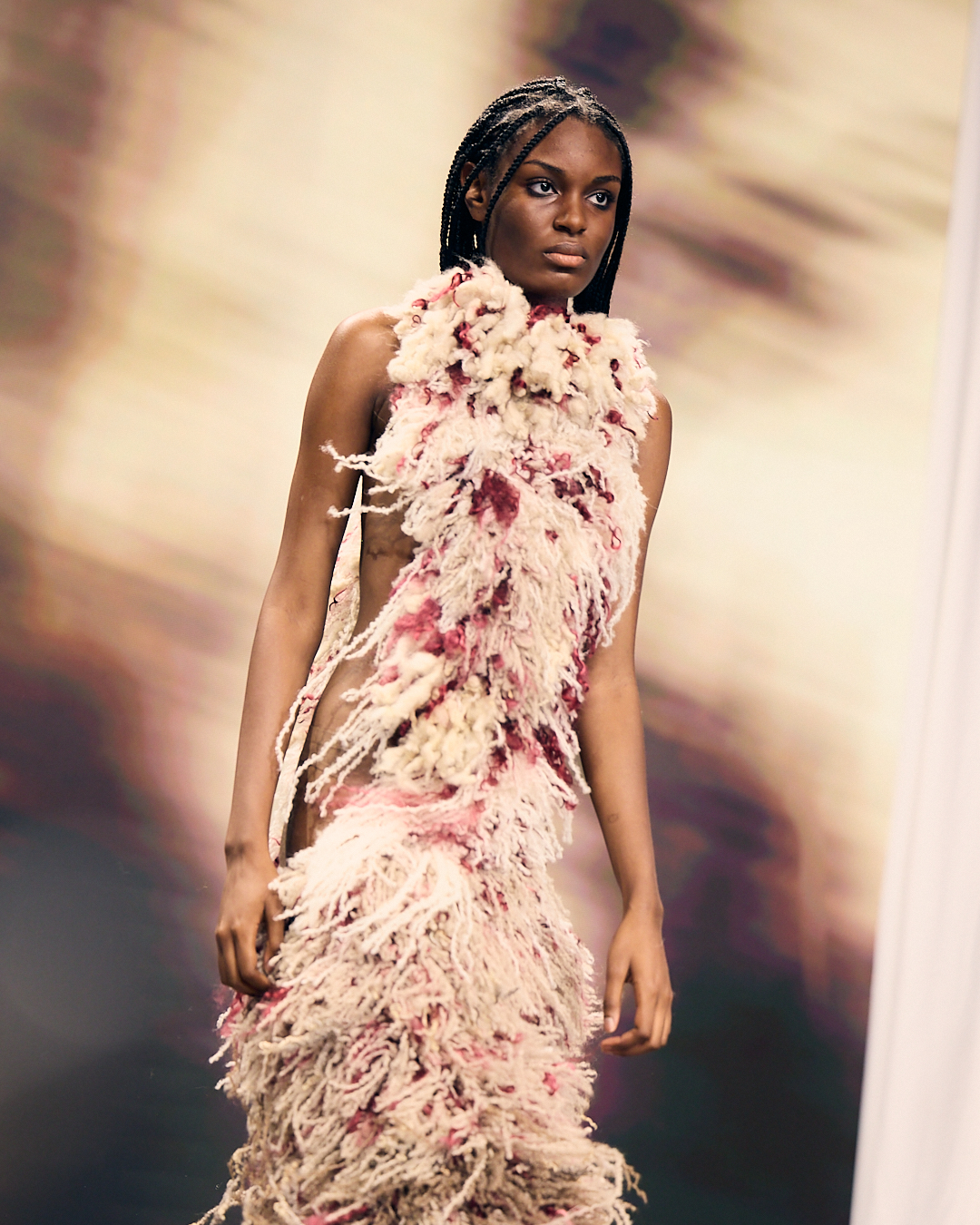


That question provides a useful way of reading Edition 02 as a whole. The eight designers are not united by one aesthetic, nationality or method. What connects them is a willingness to treat existing knowledge, whether a craft technique, textile tradition, family history, painting practice or discarded piece of cloth, as something capable of further transformation.
Fashion Scout presented the show as part of its largest emerging-talent programme to date and its 20th-anniversary season. Previous names associated with the wider Fashion Scout programme include Iris van Herpen, David Koma and Phoebe English, while Ones To Watch alumni cited by the organisation include Eudon Choi, Susan Fang, Maximilian Raynor and Orange Culture.
Edition 02 therefore made its point through plurality rather than a single forecast for fashion’s next generation. Ukrainian craftsmanship, Japanese hand-making, Indian material histories, Chinese painting, Nigerian textiles and circular tailoring were not treated as interchangeable references. Each designer approached them from a different personal and technical position, turning heritage into an active design process rather than a finished image from the past.

FASHION FRONTIER
Fashion Frontier is a London-based digital fashion magazine exploring the edge of modern style, creativity, and culture. The platform features designer lookbooks, runway reports, event coverage, and stories redefining the future of fashion in the UK and beyond.
You may also like

Temperley London Presented Autumn/Winter 2025 at London Fashion Week
For Autumn/Winter 2025, Temperley London embarks on a journey through the world of the Napoleonic er

Flair Fashion IGNITE Collective SS27 Brings Eight Global Voices to London Fashion Week
Flair Fashion brought eight emerging brands to London Fashion Week on 19 September with its IGNITE C

“One of a Kind”: Odessa Fashion Day Season 32 kept Ukrainian fashion visible, individual and moving forward
Some cities refuse to go quiet. In May, Odesa became one of them again as Odessa Fashion Day held it




Post a comment